

Honeysuckle Clover
Five reputations, one plant, and the secret that ties them is underground
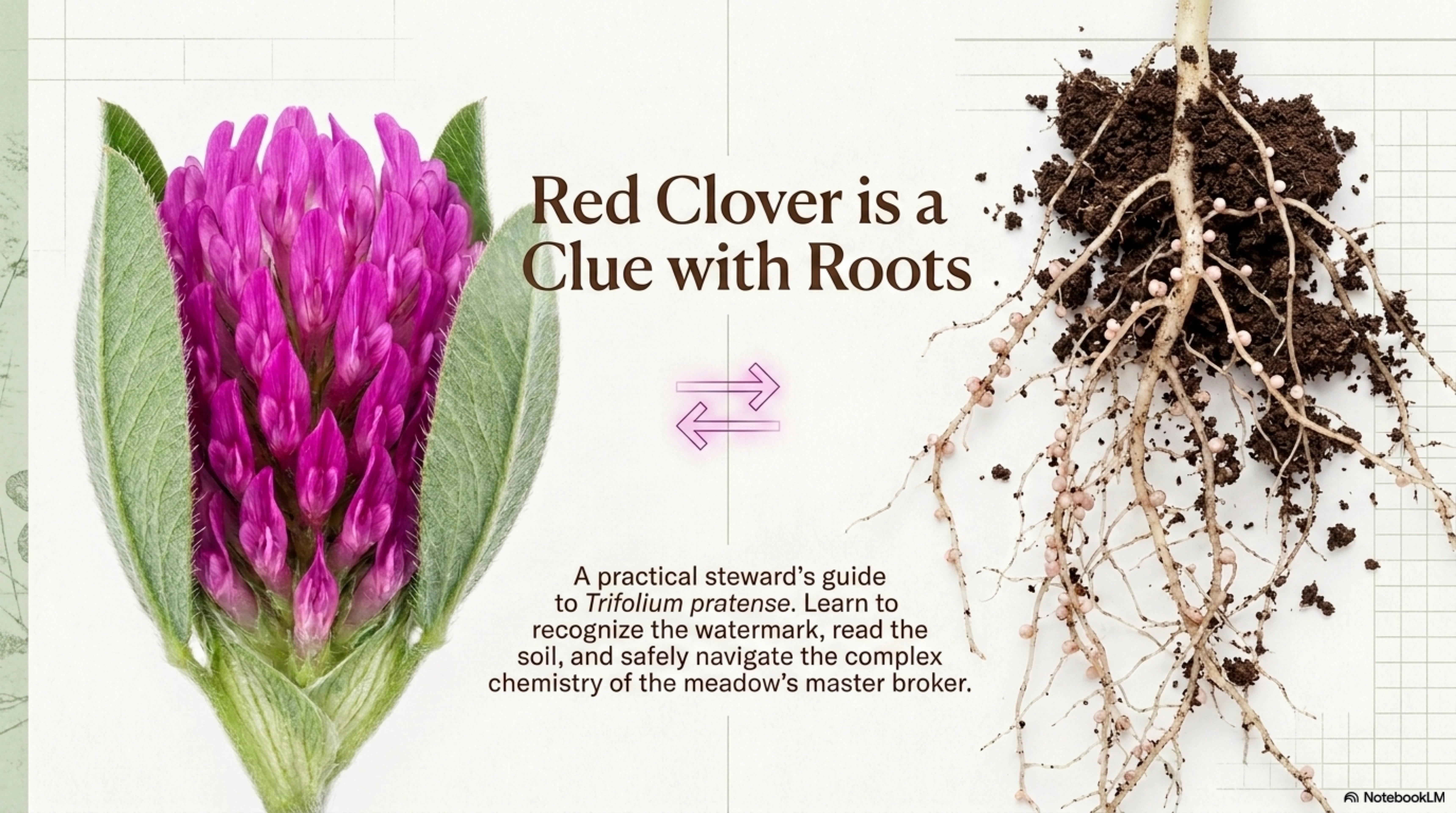
A child kneels in a June meadow, pinches one magenta floret from a clover head, and pulls it through her lips for the bead of nectar at its base. That’s where the folk name comes from, honeysuckle clover, sugar-plum, and half the temperate world has done some version of the same. Pull on the plant the way she does, and depending on who you are, something different comes loose.
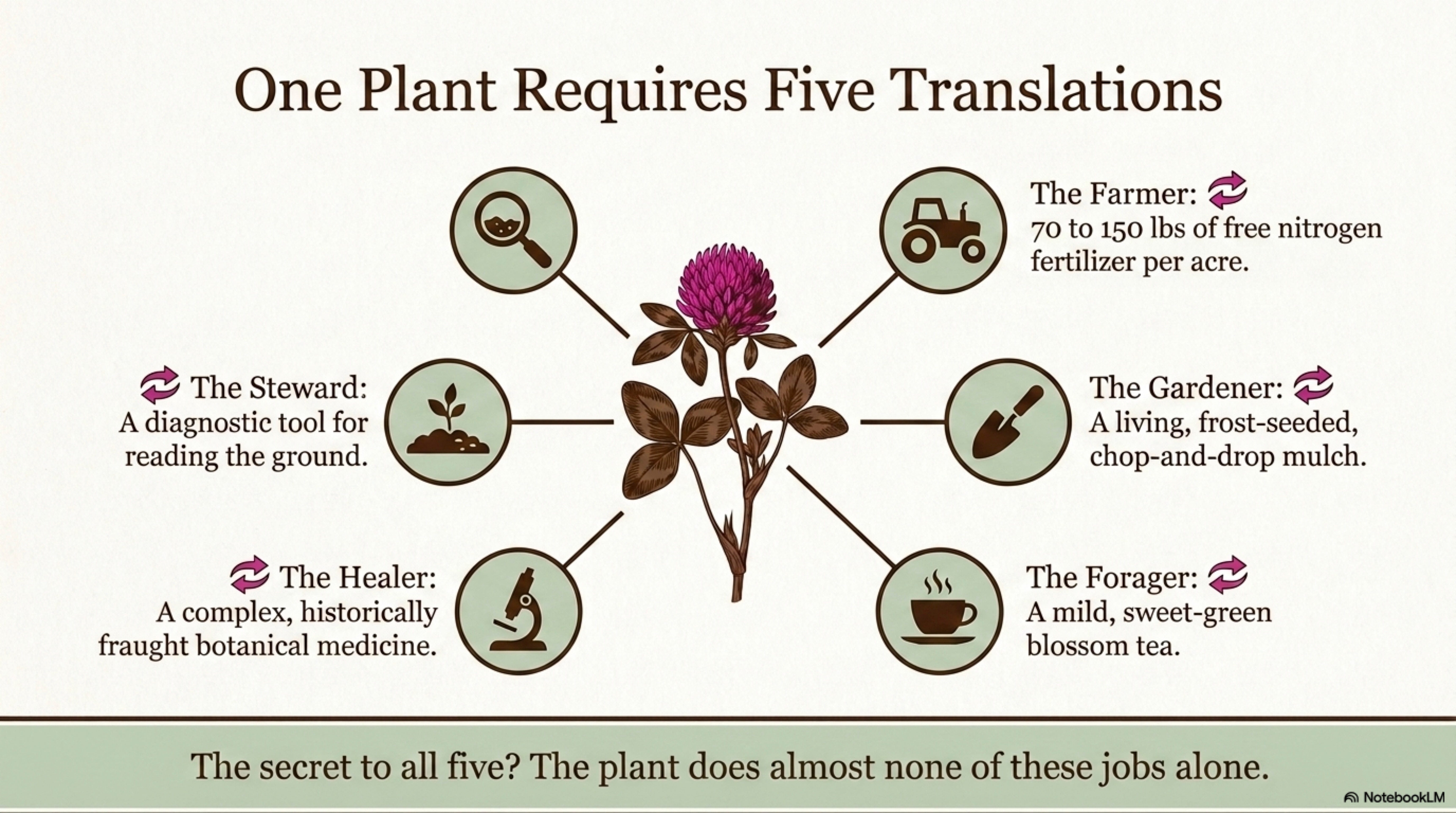
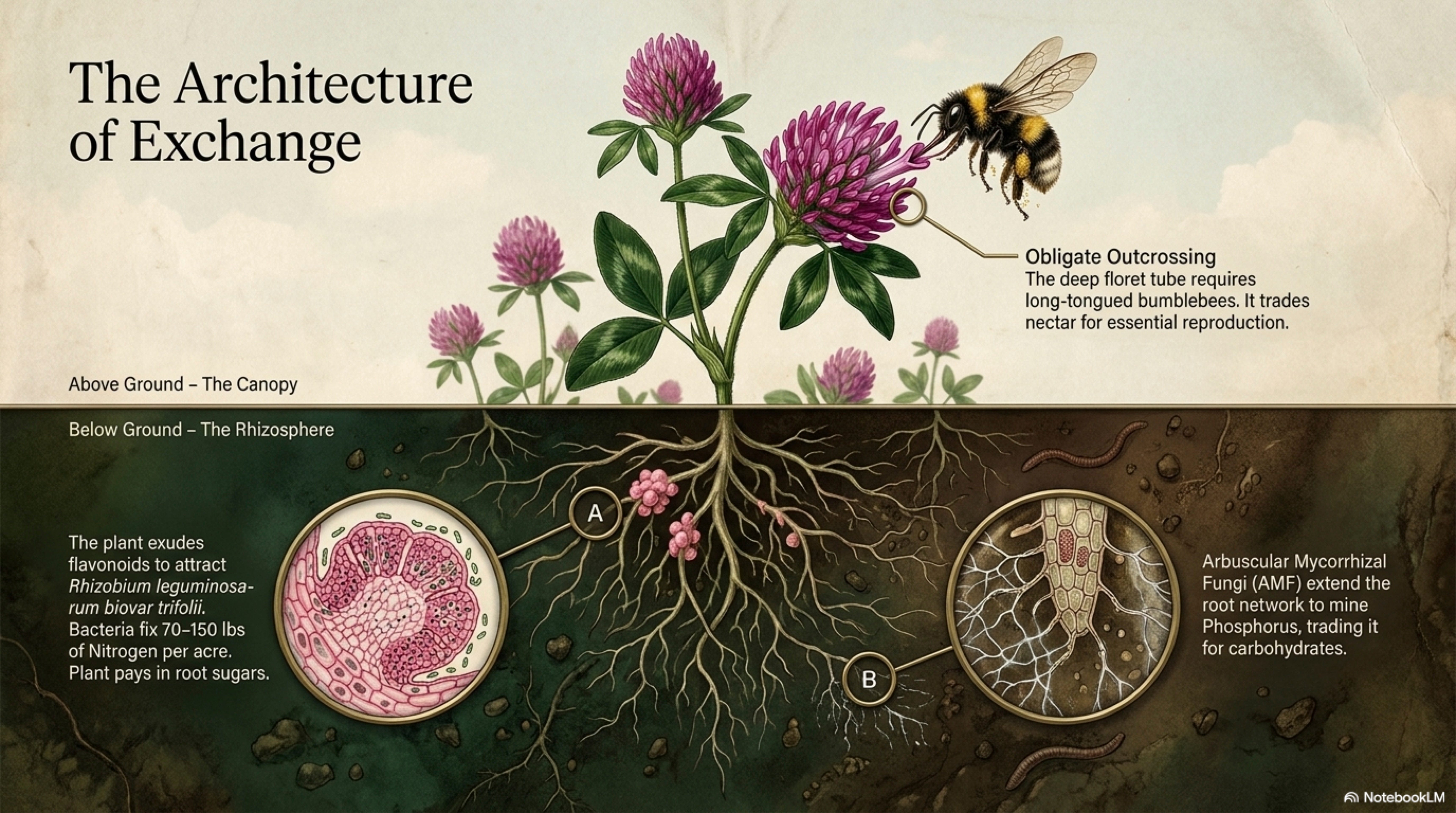
If you farm, you’re holding free fertilizer: red clover pulls 70 to 150 pounds of nitrogen an acre out of thin air and hands it to the next crop, on top of being a premier high-protein hay.
If you garden, it’s a nitrogen-fixing living mulch you can frost-seed onto frozen February ground and chop-and-drop in summer.
If you forage, it’s a mild, sweet-green blossom tea, and, behind a wall of cautions, one of the most storied women’s-health herbs in the Western record.
If you teach, it’s the plant that quietly powered Europe’s agricultural revolution before anyone knew nitrogen existed, and got itself named the state flower of Vermont for the trouble.
And if you’re just curious, it’s a diagnosis: where red clover thrives, the soil is near-neutral, moderately fertile, recently disturbed, evenly moist, the plant is reading the ground for you.
All five are true. And here’s the splinter worth following: red clover does not, on its own, do a single one of them.
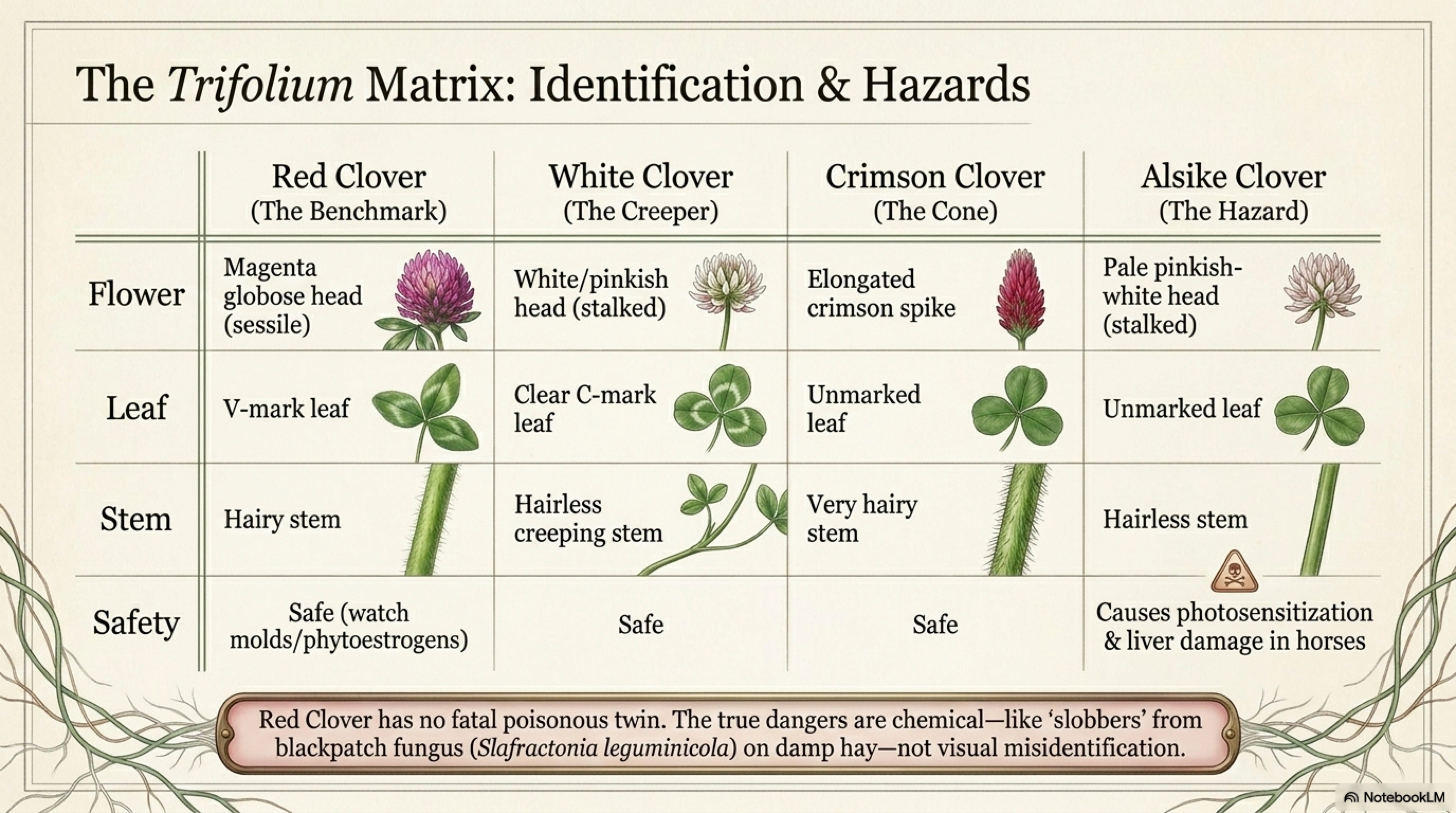
Run a hand across a stand and the first thing is the softness, fine hairs on stem and leaf, a meadow gone faintly woolly. Then the eye finds the watermark: a pale, ghostly chevron, a “V” written in lighter green across each leaflet, as if the plant had been touched by a thumb dipped in milk. That mark is how you know it. Confirm it with the flower, a dense globe of rose-to-magenta, two to three centimeters across, sitting sessile, clasped right in the cup of the topmost pair of leaves. That stalkless, clasped head is the single cleanest separator from white clover and alsike clover, whose paler heads stand up on stalks.
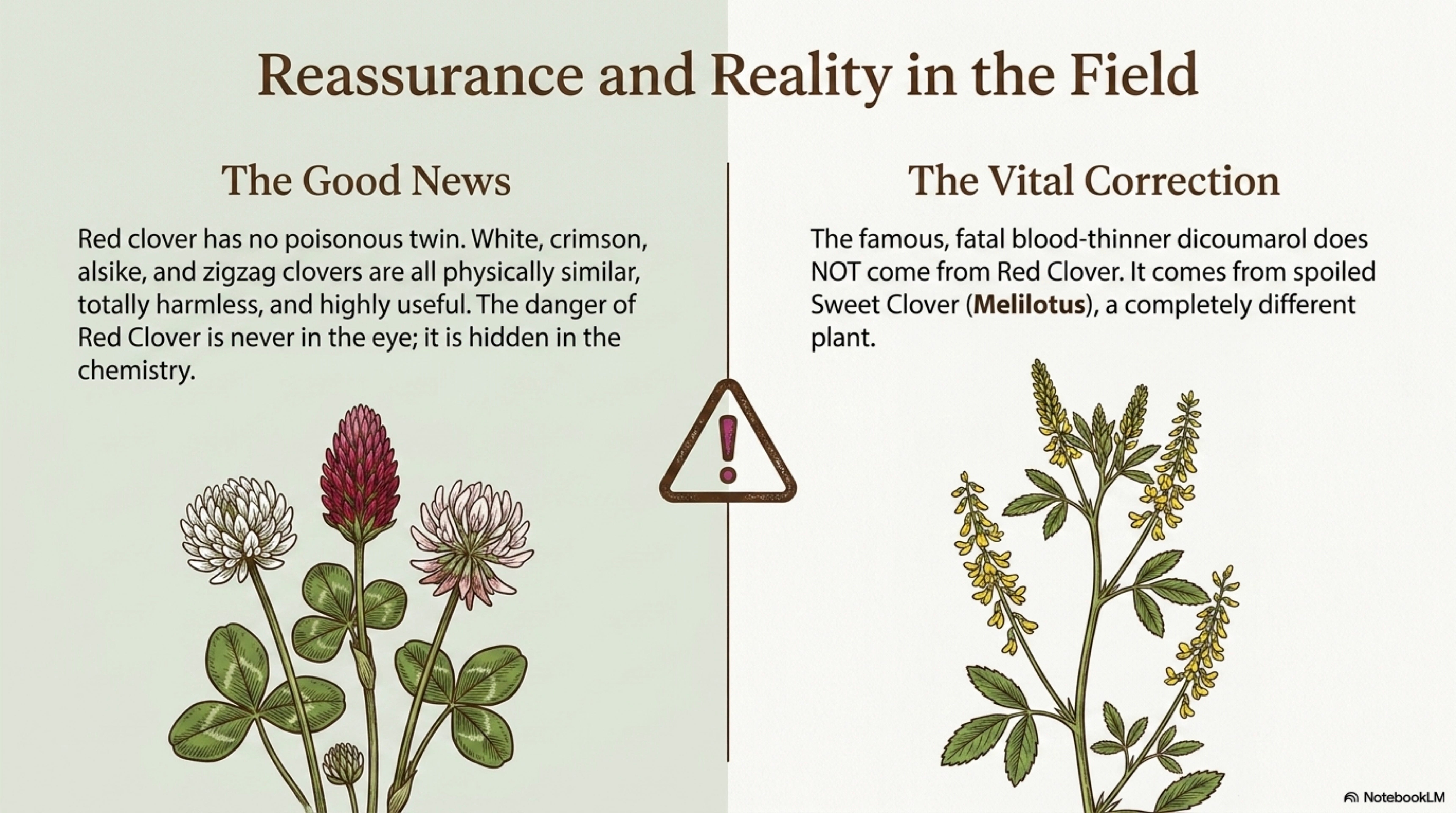
And here’s the reassuring part, which is also the warning. Red clover has no poisonous twin. The clovers you might confuse it with, white, crimson, alsike, zigzag, are all harmless, all useful. Which tells you exactly where this plant keeps its cautions: not in the eye, but in the chemistry. Hold that thought.
The safest, most useful thing you can do with red clover asks for no health claims at all. Sow it as a cover crop and green manure, where it will fix nitrogen, build organic matter, drive a deep taproot through compacted subsoil, and feed pollinators all summer before you turn it under. For the table, the blossoms make a mild, faintly sweet tea, and the young leaves are edible cooked. Leave some heads standing, the plant can’t fertilize itself, so a stand reseeds only through what the bumblebees carry from flower to flower. Next year is literally in their flight path. The plant’s deeper medicine, the famous one, travels with cautions, and it belongs on the other side of this.
Because two things about red clover don’t add up from the meadow’s surface. The first: how does one short-lived weed earn five separate reputations, fertilizer, forage, state flower, medicine, soil-gauge, for work it has just quietly told you it cannot do alone? The second: that storied women’s-health herb turns out to carry a molecule shaped startlingly like the human hormone estrogen, and a meadow plant has no obvious business doing that. One of those facts hides underground. The other hides inside a single chemical coincidence. Both are the real plant.
That’s the other side.


