We can spend an afternoon looking for a four-leaf clover without giving the three-leaf ones much thought. We turn a leaf, count, and move on, searching for the one that makes us feel lucky.
I wanted to pause among all the ones we pass over.
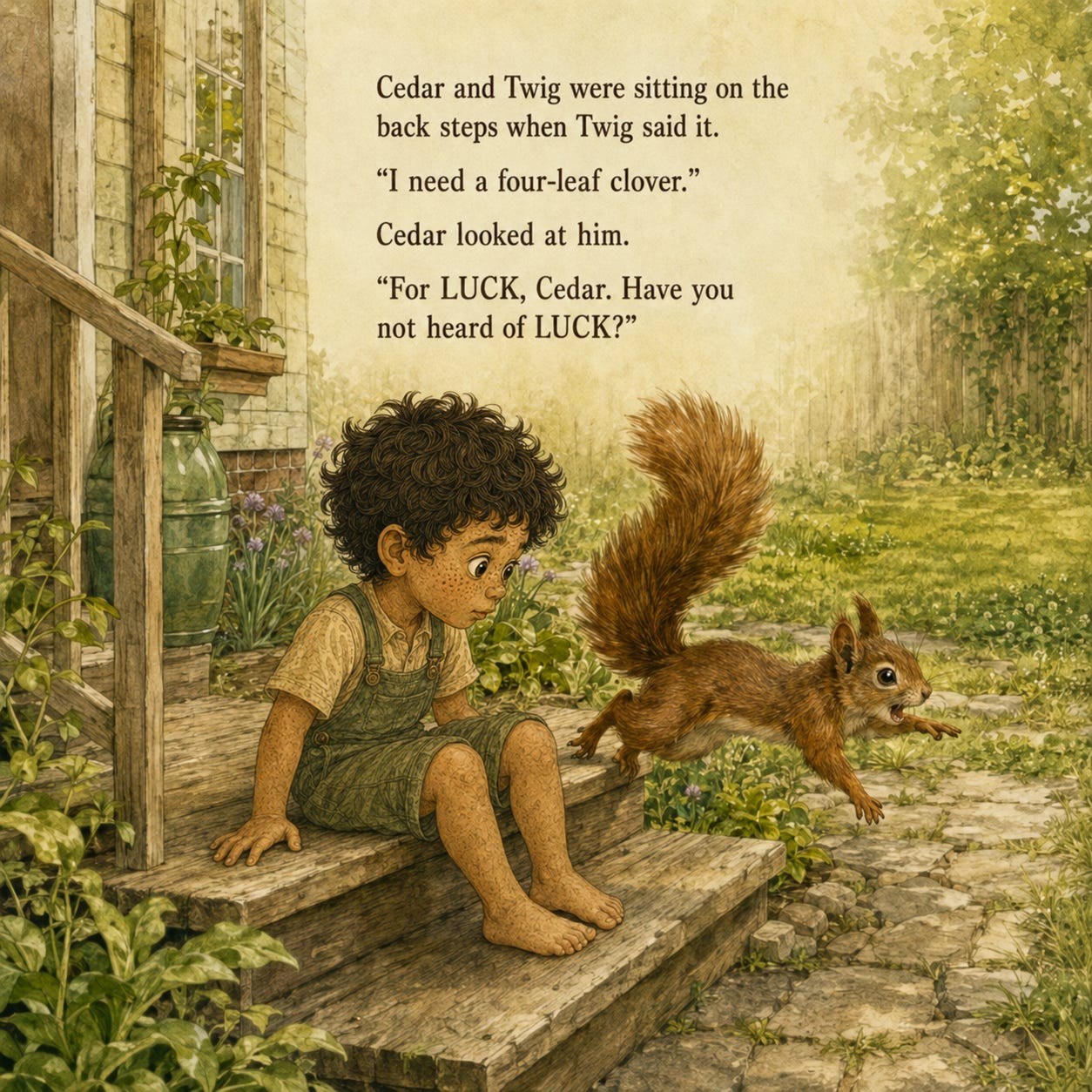
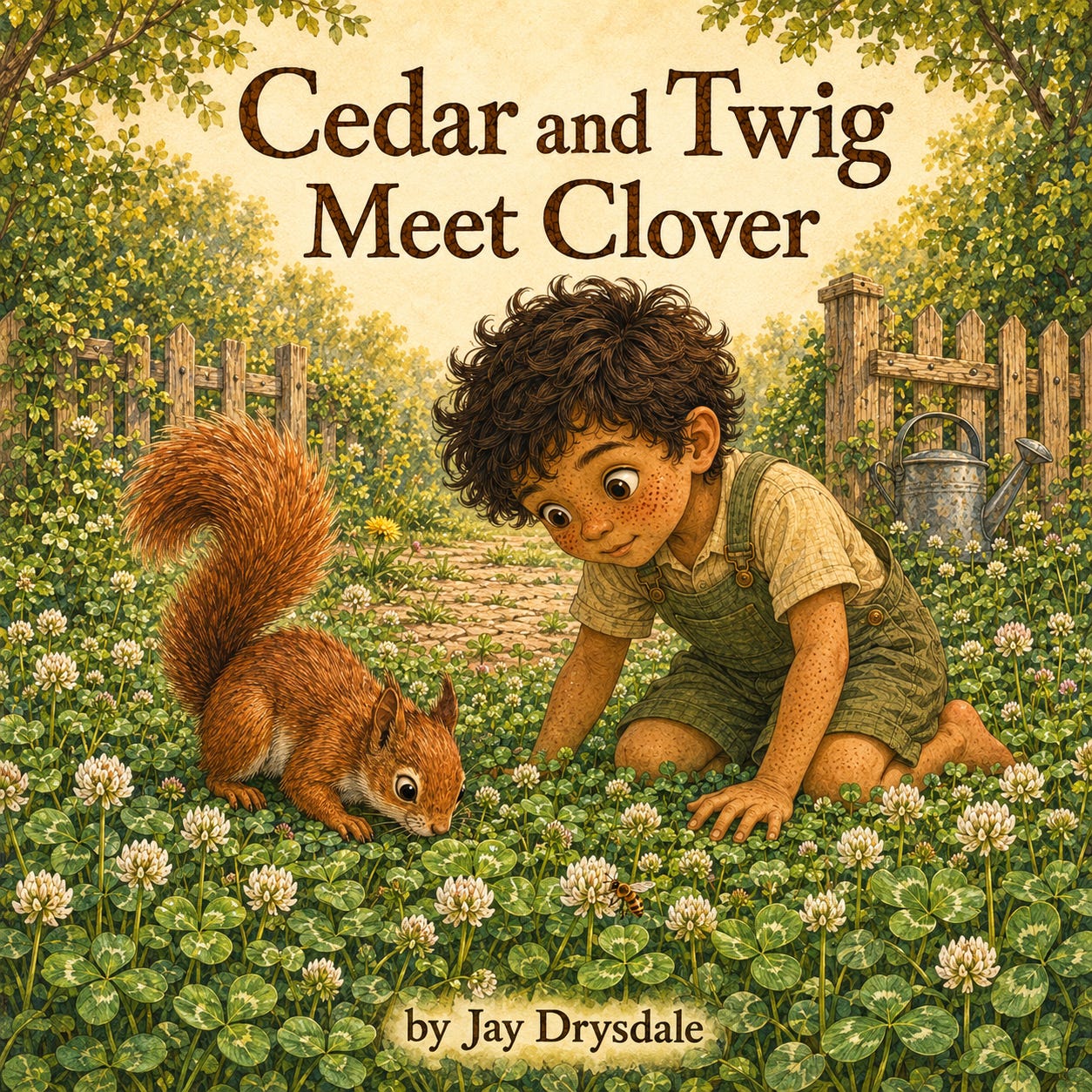
In Cedar and Twig Meet Clover, Twig has decided he needs a four-leaf clover. He approaches the search with his usual enthusiasm and approximately none of the patience it requires. Cedar, meanwhile, is beginning to notice something in the patch beneath their feet.
That familiar childhood treasure hunt gave me a way into a question I wanted to explore: what do we miss when we are certain we already know what we’re looking for?
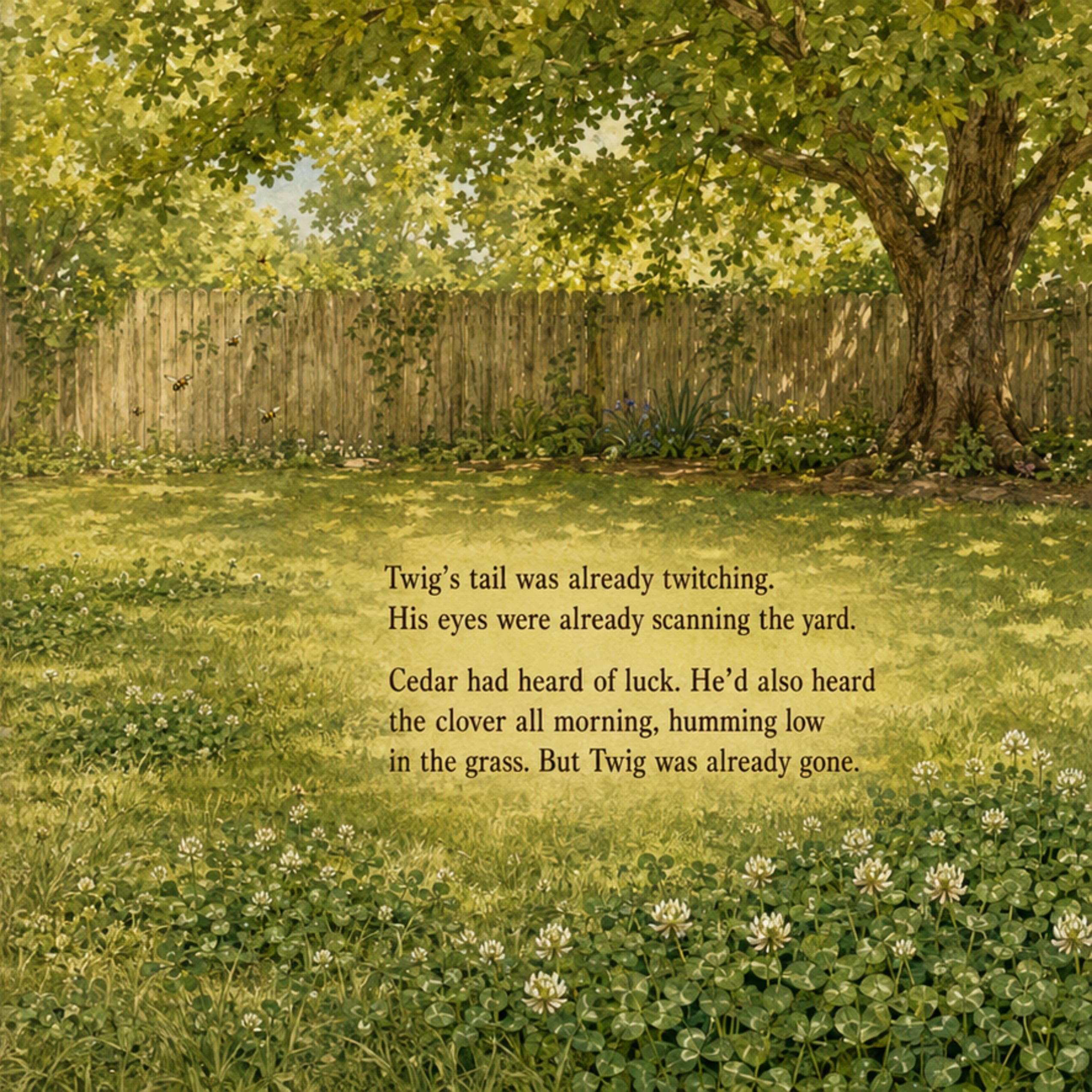
With Dandelion, the story began when Cedar stopped beside a plant they were about to walk past. With Clover, I wanted to spend more time discovering the relationships around a plant: the visitors to its flowers, its neighbours in the grass, and the small partnerships hidden underground.
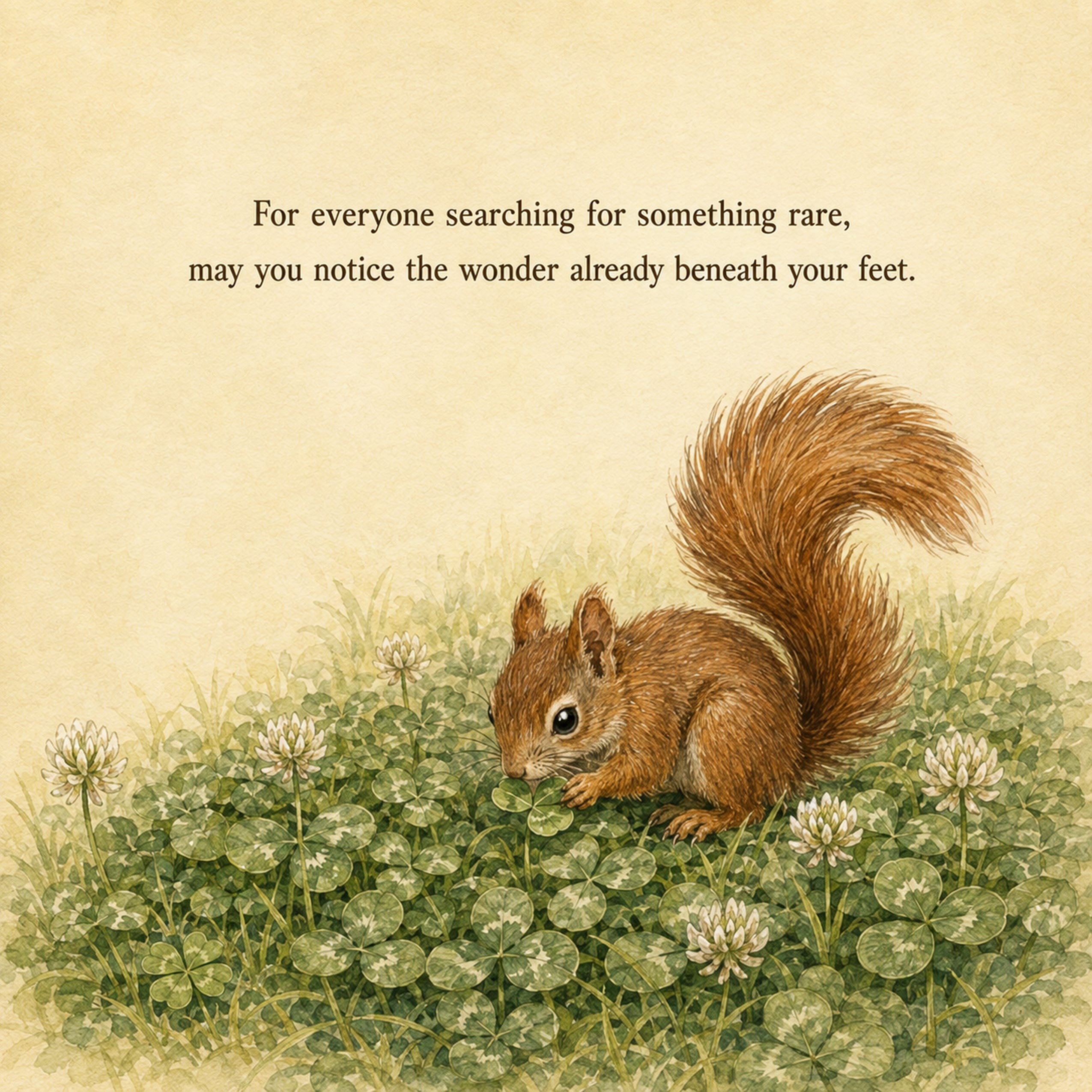
There is real pleasure in finding something rare. I wanted to keep that delight while giving the ordinary clovers a chance to become interesting in their own right. Perhaps a child searching for four leaves might begin to notice the pale markings on three, or stop to watch a bee at work.
Today, I’m sharing pages from the 39-page book, the second in the Cedar and Twig series. Between the images, I’ll offer a look at the choices and ideas that shaped this story, and why I wanted a patch of clover to feel like a whole neighbourhood worth getting to know.