What this familiar plant can tell us about the ground beneath it, and what to do before the wind takes over
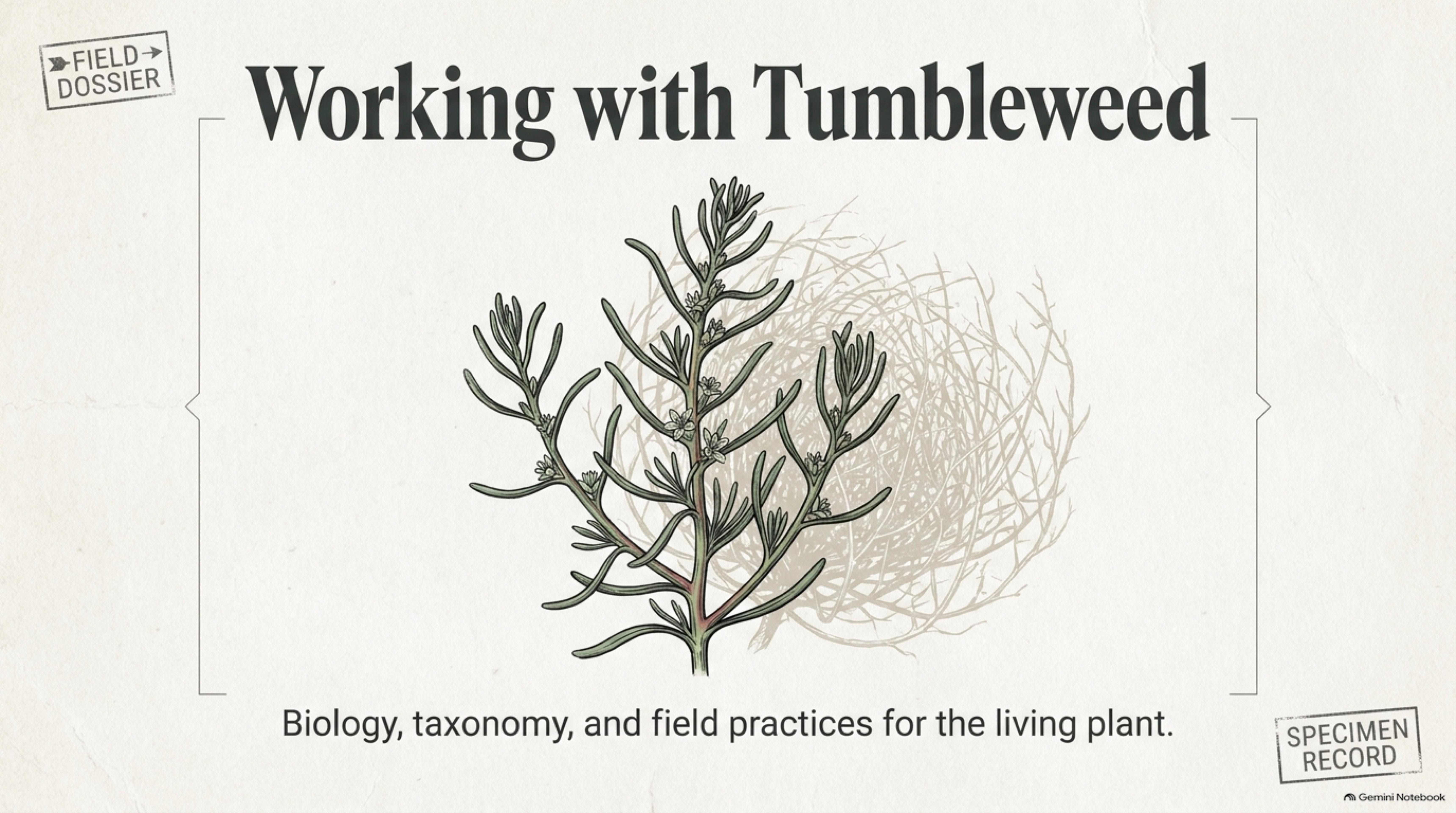
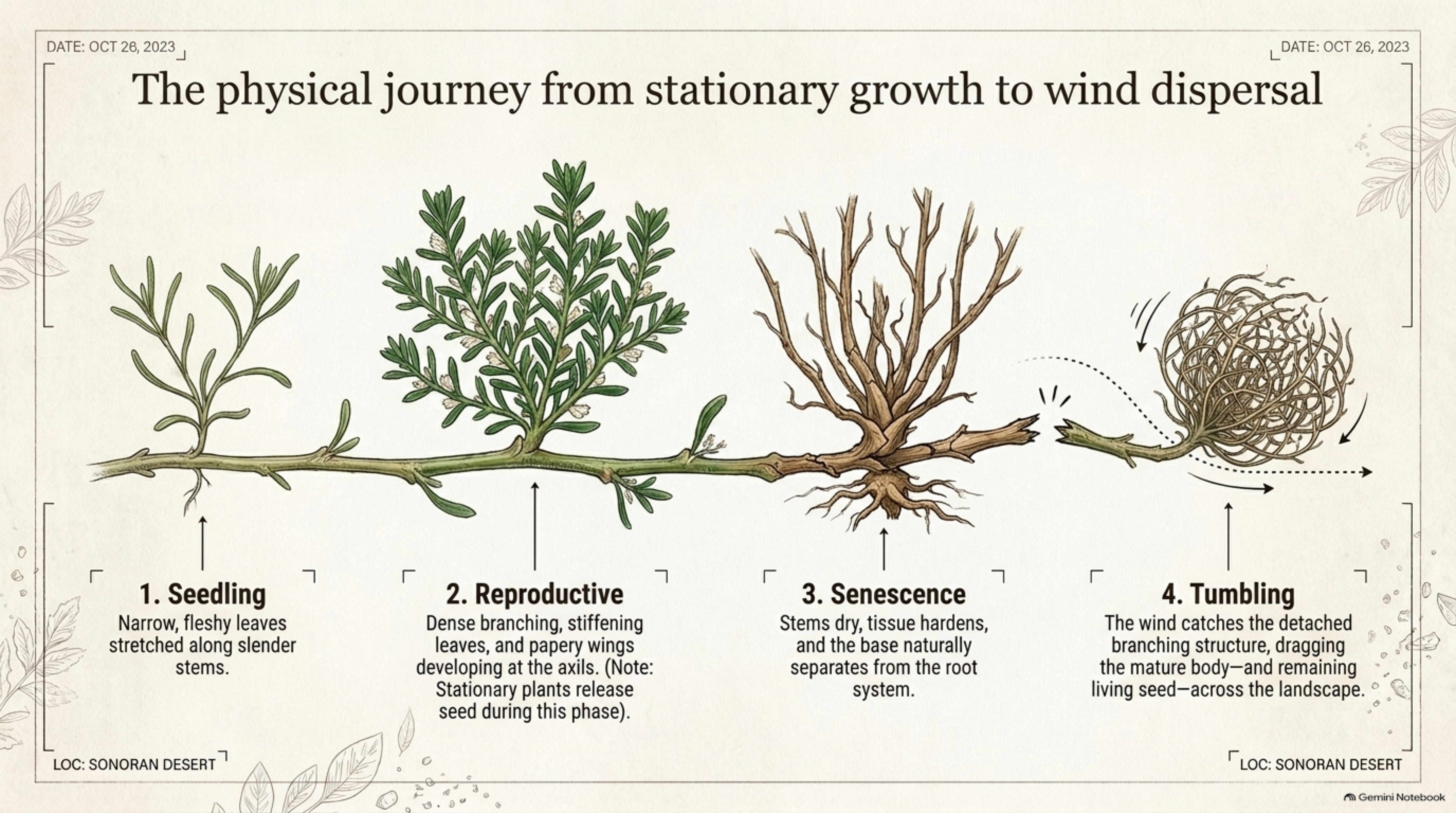
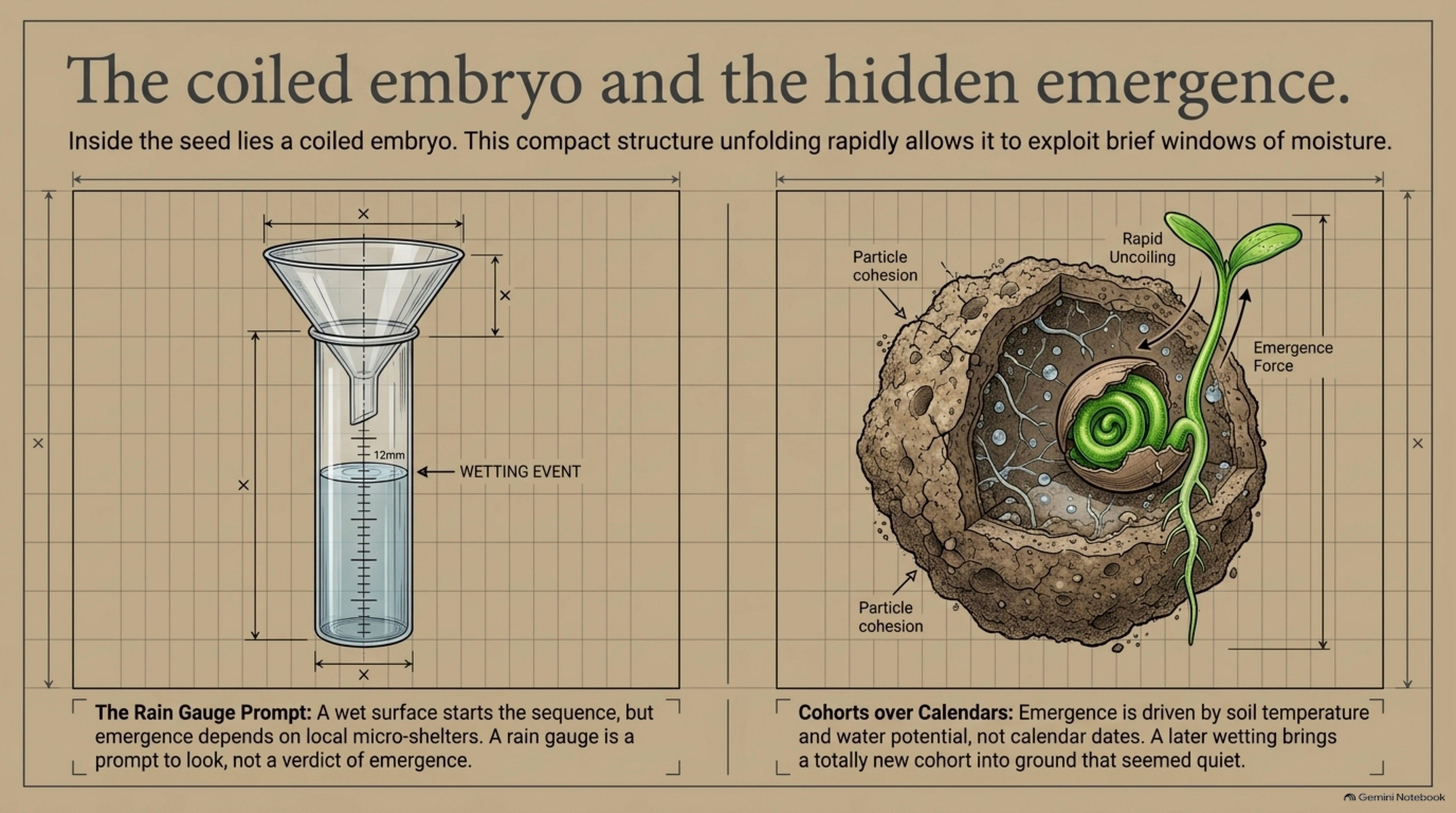
It’s tumble season. Somewhere in dry country, a round, wiry plant is standing in the field where it grew. Its branches have stiffened. At the soil line, the tissue holding it in place is drying out. One good gust and it lets go.
It rolls, catches a fence, comes loose again. Behind it is the rooted base.
The globe heading for the fence is a dead plant on its last job.
We tend to notice tumbleweed when it starts moving. By then, most of the decisions that shaped its year have already happened. It found a place to germinate, used water, grew branches and produced seed. The rolling is the part we photograph.
The more useful questions begin while it’s still standing: What is this plant doing here? What needs protecting around it? And what should happen next?
A newcomer in a familiar landscape
The tumbleweed in this story is Russian thistle, Salsola tragus. Despite the name, it isn’t one of the familiar prickly thistles with purple flower heads. It belongs to the amaranth family.
Its North American story is usually traced to contaminated flax seed arriving in South Dakota in the 1870s. It spread rapidly through a landscape of settlement, transport routes and cultivated ground. [1]
That arrival overlaps the later years of the Old West. The plant wasn’t absent from the entire era, but the timeless Western landscape we imagine includes a relatively recent arrival.
There is something worth sitting with there. A plant can become so familiar that we stop asking how it got here, or what its presence means now.
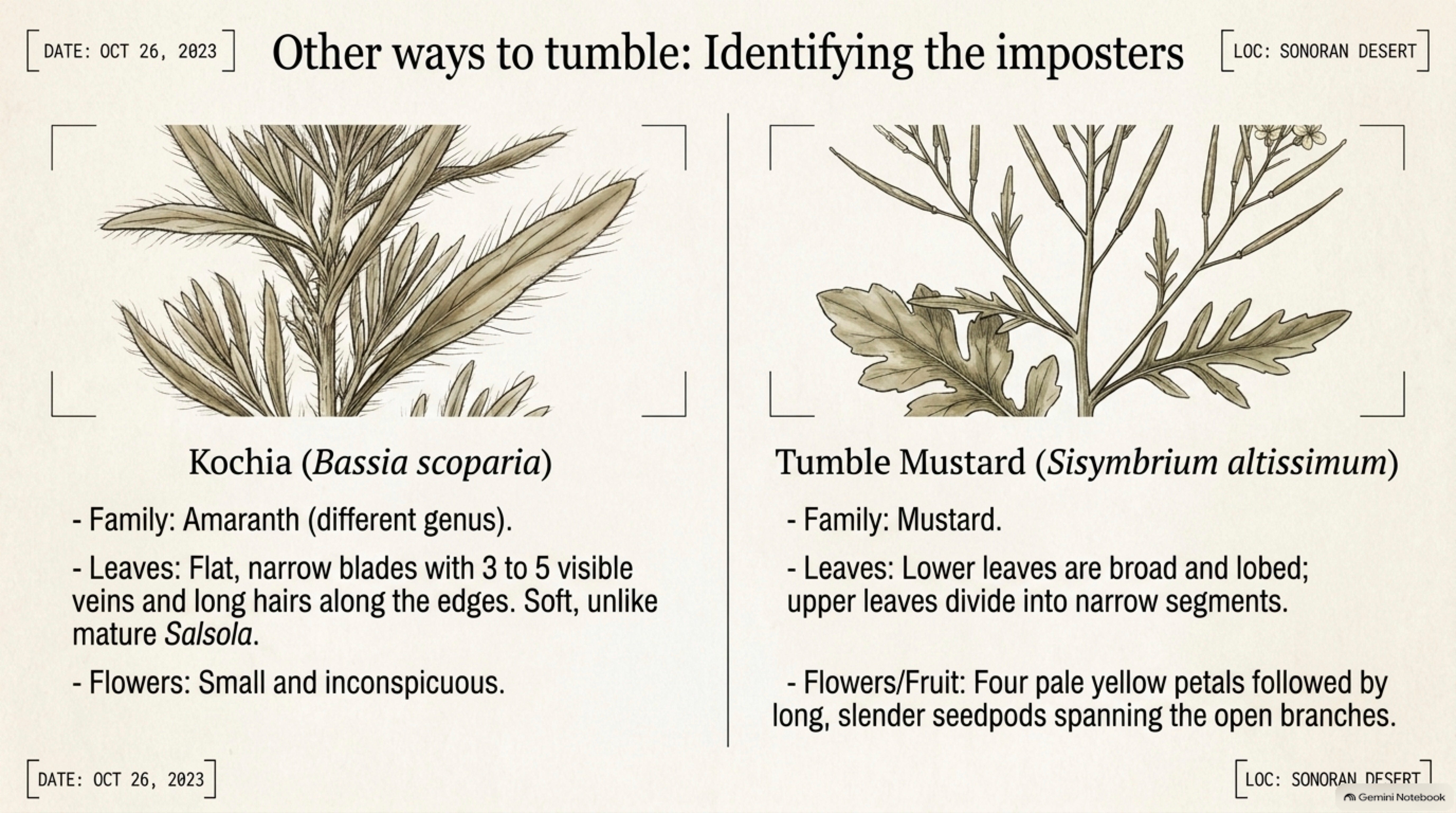
Its other name, tumbleweed, describes a way of travelling rather than a single species. Several unrelated plants tumble. Knowing that something rolls won’t tell you enough to eat it, feed it to animals or decide exactly how to manage it.
Start with the living plant
Young Russian thistle can be soft and surprisingly delicate. With age, it becomes a branching, prickly structure. Look for narrow leaves, often reddish striping along the stems, and later the small fruits surrounded by papery wings. [1]
Use the whole plant and a regional identification reference. Two familiar-looking features aren’t a reliable identification rule, especially among related Russian thistles. Seedlings can be difficult, and close relatives and hybrids complicate the picture further. You may also encounter the name Kali tragus in older or alternative treatments. Kew currently accepts Salsola tragus. [2]
If you’re unsure, photograph the whole plant, its lower stem, leaves and reproductive structures. Include a scale. A local herbarium, knowledgeable botanist or agricultural adviser can work with those details much better than with a photograph of a dry ball against a fence.
For a first walk, accurate stage recognition may be more immediately useful than memorising every botanical term. Is the plant still making leaves? Are there flowers or developing fruits? Is it dry? If you cannot confidently rule out seed, keep that uncertainty with the plant when you move it.
Ask what is keeping the ground open
Russian thistle often finds opportunity where vegetation is sparse. A cultivated strip, a graded shoulder, drought-thinned grass or an unsuccessful planting can all offer space.
That makes it worth noticing. It doesn’t make it a verdict on the person tending the land.
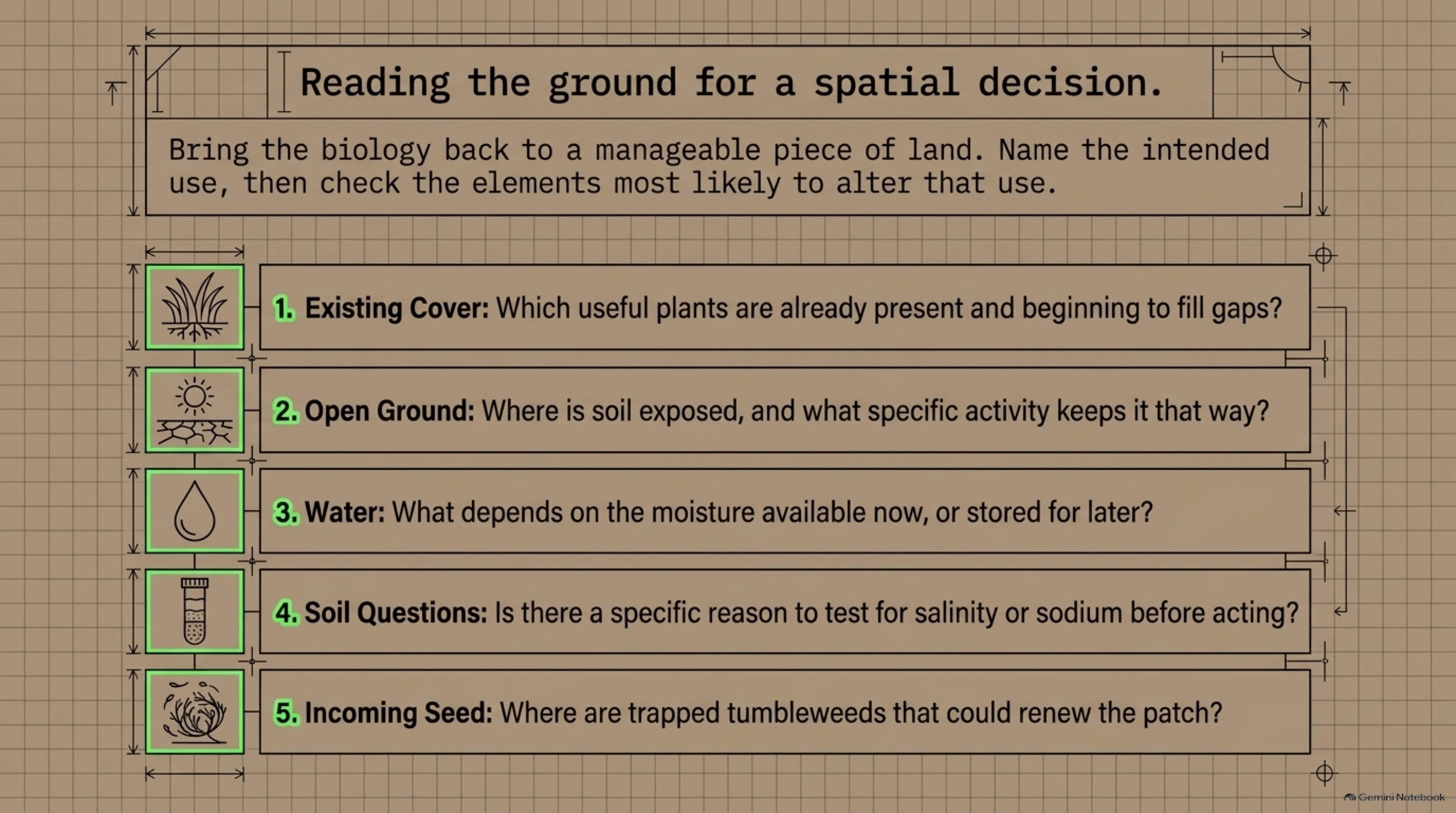
A patch beside a gate might reflect repeated traffic. A patch in a new planting might point to poor establishment. Along a fence, incoming plants and seed may matter as much as anything happening beneath your feet. Naturally harsh conditions can keep vegetation open, too.
Look beyond the thistle. Where is other cover doing well? Where does it stop? Are the plants concentrated in wheel tracks, on one side of an irrigation line, or where last year’s grass failed?
Salt tolerance doesn’t make the plant a soil salinity test. Its presence doesn’t prove compaction, contamination or overgrazing. Those questions need their own evidence.
Even its ecological effects vary with circumstances. Research has documented competition with other plants, but a Wyoming field study also found plants identified under the older name Salsola kali helping grass establishment under harsh conditions. That finding belongs to its setting and historical identification. A useful reading of a patch leaves room for effects to vary. [3]
The question I would carry into the field is simple: What is keeping this ground open, and what could realistically occupy it next?
A useful walk before the wind
You don’t need to turn every patch into a research project. Take your phone, wear gloves and clothing suited to the spines, and choose a small area you can actually revisit. If the pollen triggers your allergies, arrange the work around that limitation rather than pushing through it.
First, look at the whole patch. Notice paths, buildings, fences, young trees, crops and useful ground cover. Dry accumulations against structures need attention because they add fuel. Don’t begin by shaking a seed-bearing plant to see how loose it is.
Second, separate the stages. Young plants without flowers offer different options from flowering, fruiting or dry plants. A loose crown tells you the plant may detach; it does not reliably tell you when its seeds matured or how many remain. Standing plants can shed seed, and old dry bodies can retain viable seed well into the following year. [4]
Third, choose the most useful small job. Perhaps it’s clearing a gateway, protecting newly established grass, or removing an isolated patch before it produces seed. Finish that job well rather than disturbing everything and leaving the material in a heap.
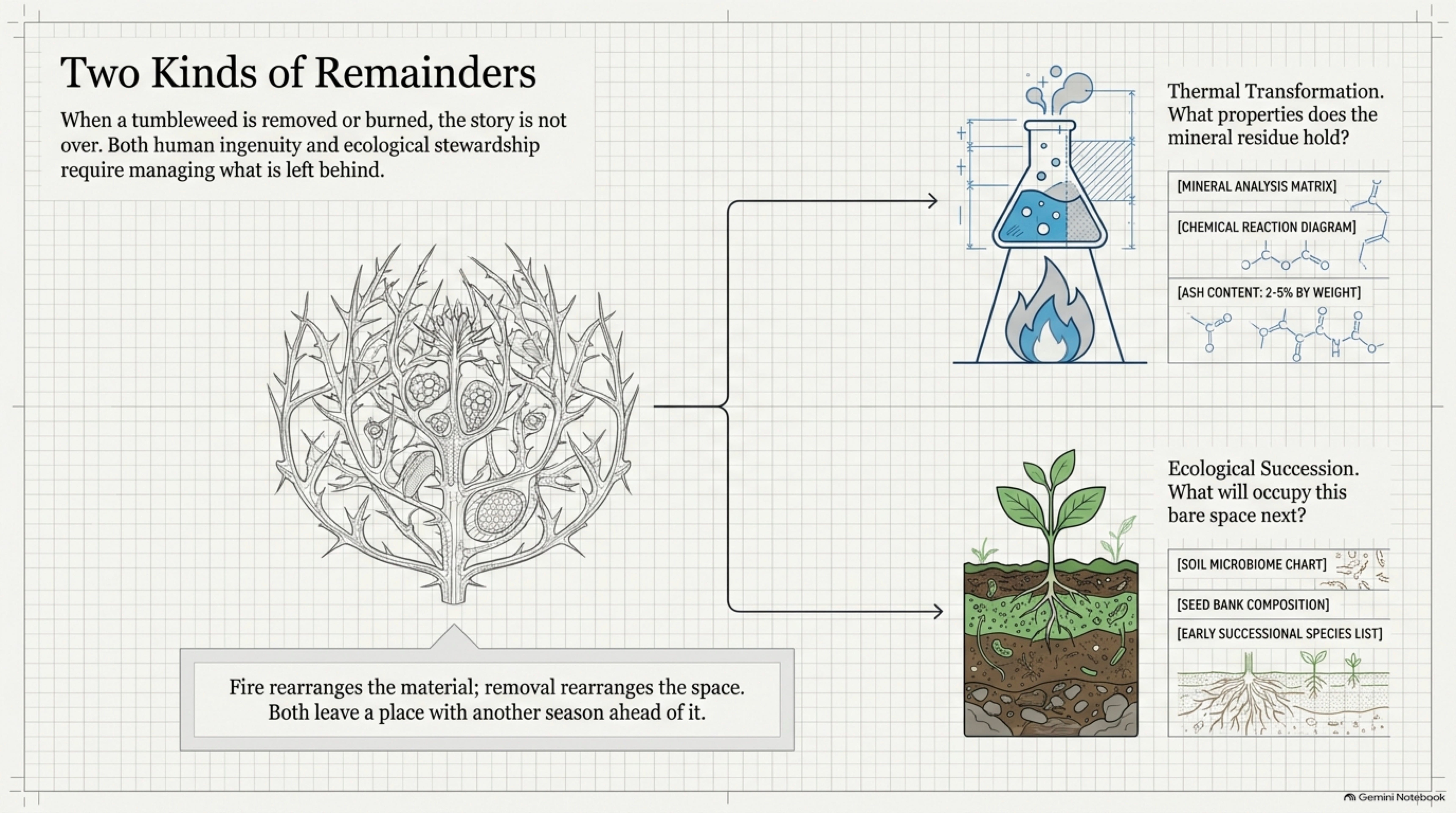
Fourth, decide where the plants will go before pulling them. Known-source plants removed before flowering can usually enter ordinary mixed compost. Seed-bearing or uncertain material needs containment and an accepting disposal or managed processing route. Keep material from suspect ground separate.
Finally, take one photograph and set a return date. Check for survivors, fresh seedlings and plants blown in from elsewhere. A second photograph from the same place will tell you more than a vague memory of how bad it looked.
The aim is a manageable next step, with somewhere for the material to go and a reason to come back.
Before anything goes into a kitchen or a feed trough
Young Russian thistle has a documented food and forage history. That deserves recognition. It also deserves more care than a promise that the plant is safe during the right week. [1]
For food, identity and source come first. Soft young shoots are the relevant material, but tenderness and height don’t establish chemical safety. Avoid plants from roadsides, industrial ground or other places with unresolved contamination or treatment histories. Oxalate is a particular concern, especially for people with an oxalate-related kidney condition. I haven’t found a species-specific household cooking method that makes an unknown batch reliably safe. A history of eating a plant doesn’t give us a universal safe portion.
For livestock, nitrate and oxalate can be important hazards. Young, green or well-watered plants are not automatically safe, and drying does not reliably remove nitrate. Have a representative sample assessed and the results interpreted for the animals and ration involved before deliberately feeding a substantial amount. A veterinarian or livestock nutrition adviser can help decide what needs testing and how to sample it. [5]
None of that prevents us from learning about the plant. It gives the learning somewhere sound to stand.
The rest of this piece follows three practical decisions: when and how to intervene, where the removed material can go, and which possible uses deserve more investigation.
If you need one of these answers for your land or your animals and can’t pay, reply and ask. I’ll send it.