

The Unsung Hero of the Farm: Why Purslane Deserves a Spot in Your Garden
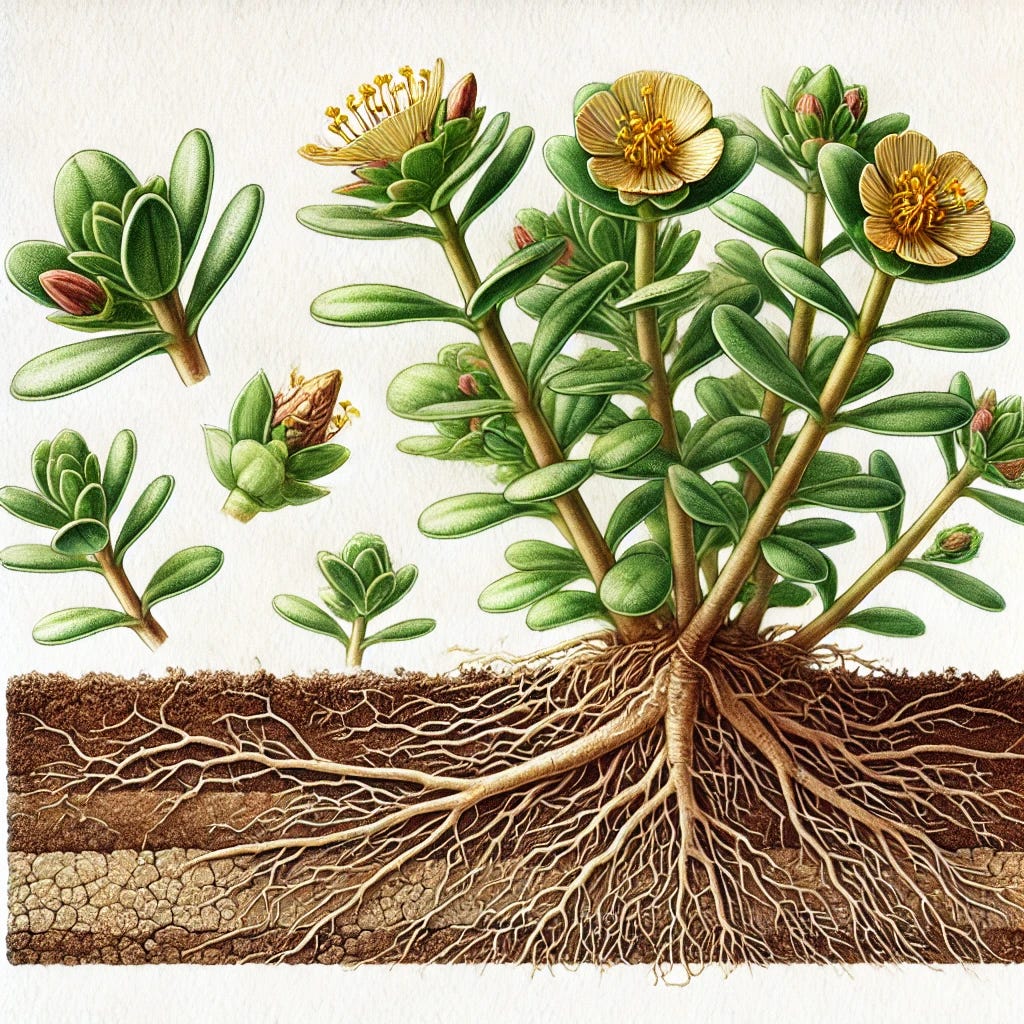
When you think of weeds, what comes to mind? Probably something you’d rather pull out and toss aside. But what if I told you that one of the most common “weeds” in your garden is actually a soil superhero, a nutritional powerhouse, and a climate-resilient warrior? Meet Purslane (Portulaca oleracea), one of the unsung heroes of regenerative farming.
In this blog post, we’ll explore why purslane is so much more than a weed and how you can harness its incredible benefits to improve your soil, boost your crops, and even add a nutritious greens to your dinner table.
What Is Purslane?
Purslane is a low-growing, succulent plant with fleshy leaves, reddish stems, and tiny yellow flowers that bloom in the morning sun. It’s often found in gardens, fields, and even cracks in the sidewalk—proof of its incredible adaptability.
While it’s native to the Middle East and India, purslane has spread across the globe, thriving in warm climates and poor soils. It’s like the ultimate survivalist of the plant world, able to grow where other plants struggle.
Why Purslane Is a Soil Superhero
1. The Water-Wise Wonder
Purslane is a master of water conservation. It uses a special type of photosynthesis called CAM** (Crassulacean Acid Metabolism), which allows it to open its tiny leaf pores at night to minimize water loss. Think of it as a plant that sips water like a fine wine, rather than guzzling it down.
Succulent Leaves: Its thick, juicy leaves store water, making it drought-resistant.
Soil Moisture Retention: By covering the ground, it acts like a living mulch, reducing evaporation and keeping the soil cool.
2. The Soil Protector
Purslane doesn’t just survive in tough conditions—it improves them.
Erosion Control: Its dense mat-like growth protects soil from wind and water erosion.
Soil Temperature Moderation: It acts like a natural sunshade, keeping the soil cooler in hot weather.
Nutrient Cycling: It pulls up nutrients from deep in the soil and makes them available to other plants when it decomposes.
3. The Microclimate Creator
Purslane creates a microclimate—a small, beneficial environment—around it. It’s like a tiny ecosystem engineer, providing shade, moisture, and habitat for soil microbes and insects.
Purslane in Regenerative Agriculture
1. Living Mulch
Purslane is the ultimate living mulch. It covers the soil, suppresses weeds, and conserves moisture—all while adding organic matter when it decomposes. Think of it as a green blanket for your soil.
2. Companion Planting
Purslane is a great companion plant. It grows well with crops like tomatoes, corn, and peppers, providing shade and moisture retention. It’s like the helpful neighbor who waters your plants when you’re away.
3. Soil Microbiome Support
Purslane supports beneficial soil microbes through its root exudates (sugars and compounds it releases into the soil). It’s like throwing a dinner party for the microbes that keep your soil healthy.
The Nutritional Powerhouse
1. Omega-3 Fatty Acids
Purslane is one of the highest plant sources of omega-3 fatty acids, which are usually found in fish. It’s like a vegetarian salmon growing right in your garden.
2. Vitamins and Minerals
Vitamin C: Boosts immunity.
Vitamin E: Protects cells from damage.
Magnesium, Potassium, Calcium: Essential for plant and human health.
3. Antioxidants
Purslane is packed with antioxidants like betalains and glutathione, which fight oxidative stress. It’s like a natural detoxifier for your body and your soil.
How to Use Purslane on Your Farm or Garden
1. As a Cover Crop
Benefits: Improves soil structure, prevents erosion, and adds organic matter.
How to Use: Let it grow between rows or as a ground cover, then chop and drop it to decompose.
2. In Compost
Benefits: Adds nutrients and speeds up decomposition.
How to Use: Mix purslane leaves and stems into your compost pile.
3. As Food
Culinary Uses: Add fresh leaves to salads, sauté them like spinach, or pickle them for later use.
Nutritional Boost: It’s a free, nutrient-dense food source for you and your family.
4. In Fermented Plant Juice (FPJ)
Benefits: Creates a nutrient-rich foliar spray for your crops.
How to Make: Ferment purslane with sugar and water, then dilute and spray on plants.
Purslane and Climate Change
Purslane is a climate-resilient plant. It thrives in hot, dry conditions, making it a valuable ally in the face of climate change. It’s like a plant version of a climate activist, working tirelessly to protect the soil and support biodiversity.
Drought Tolerance: It can survive with minimal water.
Carbon Sequestration: Its rapid growth helps capture carbon from the atmosphere.
Biodiversity Support: It provides habitat and food for pollinators and beneficial insects.
Conclusion: Embracing Purslane
So, the next time you see purslane growing in your field or garden, don’t pull it out—celebrate it! This humble plant is a soil guardian, a nutritional treasure, and a climate warrior. By integrating purslane into your farming practices, you’re not just growing a crop—you’re building a resilient, regenerative ecosystem.
Let’s reframe how we see weeds. As the saying goes, “A weed is just a plant whose virtues have not yet been discovered.” Purslane’s virtues are many, and it’s time we give it the recognition it deserves.
Call to Action
Have you used purslane in your garden or farm? Share your experiences in the comments below! And if you’re new to this amazing plant, why not give it a try this season? Your soil—and your dinner plate—will thank you.
Happy farming! 🌱
For further clarification on CAM
Part 1: What Is CAM? (Crassulacean Acid Metabolism)
CAM is a specialized form of photosynthesis that helps plants conserve water in hot, dry environments. Here’s how it works:
Nighttime:
CAM plants open their stomata (tiny leaf pores) at night to take in CO₂.
The CO₂ is converted into malic acid and stored in the plant’s cells.
Daytime:
The stomata close to prevent water loss.
The stored malic acid is broken down, releasing CO₂ for photosynthesis.
The CO₂ is used to produce sugars and other carbohydrates.
Why It’s Special:
Water Efficiency: CAM plants lose up to 90% less water than regular plants.
Drought Tolerance: They thrive in arid conditions where other plants struggle.
Versatility: Some CAM plants can switch between CAM and regular photosynthesis (C3) depending on water availability.
Examples of CAM Plants:
Succulents: Cacti, agaves, aloe vera.
Edible Plants: Pineapple, purslane.
Ornamentals: Orchids, sedums.
Part 2: How to Use CAM Plants for Farming
CAM plants like purslane can be incredibly useful in farming, especially in dry or marginal lands. Here’s how to leverage their unique traits:
1. As a Cover Crop or Living Mulch
Why: CAM plants like purslane are drought-tolerant and form dense ground cover, protecting soil from erosion and evaporation.
How:
Plant purslane between rows or as a ground cover in orchards or vegetable gardens.
Let it grow to suppress weeds and retain soil moisture.
Chop and drop it to add organic matter to the soil.
2. In Regenerative Agriculture
Why: CAM plants improve soil health by adding organic matter, supporting soil microbes, and cycling nutrients.
How:
Use purslane as part of a cover crop mix to enhance soil fertility.
Incorporate it into crop rotations to break pest and disease cycles.
Allow it to grow in fallow fields to prevent soil degradation.
3. For Soil Remediation
Why: CAM plants can grow in poor, degraded, or saline soils, making them ideal for land reclamation.
How:
Plant purslane or other CAM plants in areas with poor soil quality.
Let them grow to stabilize the soil, add organic matter, and improve microbial activity.
Over time, the soil will become more fertile and suitable for other crops.
4. In Water-Scarce Regions
Why: CAM plants require minimal water, making them perfect for dryland farming.
How:
Grow CAM crops like purslane or agave in arid or semi-arid regions.
Use them as forage for livestock or as food crops for humans.
Pair them with other drought-tolerant plants to create a resilient farming system.
5. For Carbon Sequestration
Why: CAM plants are efficient at capturing and storing carbon, even in harsh conditions.
How:
Plant CAM species like agave or cacti in marginal lands to capture atmospheric CO₂.
Use their biomass for bioenergy or compost to lock carbon into the soil.
6. In Integrated Pest Management (IPM)
Why: CAM plants like purslane can attract beneficial insects and act as trap crops for pests.
How:
Plant purslane around the edges of fields to lure pests away from main crops.
Use it to support pollinators and predatory insects that control pest populations.
7. For Food and Nutrition
Why: Many CAM plants, like purslane and pineapple, are highly nutritious.
How:
Grow purslane as a leafy green for salads, stir-fries, or soups.
Use it as a nutrient-rich addition to compost or animal feed.
8. In Fermented Plant Juice (FPJ) or Compost Tea
Why: Fermenting CAM plants like purslane can create nutrient-rich inputs for soil and plants.
How:
Make FPJ by fermenting purslane with brown sugar and water, then dilute and apply to crops.
Brew compost tea with purslane to boost microbial activity and soil health.
Practical Tips for Using CAM Plants in Farming
Choose the Right Species: Select CAM plants suited to your climate and farming goals (e.g., purslane for cover cropping, agave for bioenergy).
Monitor Growth: While CAM plants are low-maintenance, they can spread quickly. Manage their growth to avoid invasiveness.
Combine with Other Practices: Use CAM plants as part of a broader regenerative farming system, including crop rotation, composting, and agroforestry.
Conclusion
CAM plants like purslane are nature’s solution to farming in challenging environments. Their ability to conserve water, improve soil health, and thrive in harsh conditions makes them invaluable for sustainable agriculture. By integrating CAM plants into your farming practices, you can build a more resilient, productive, and eco-friendly system.
Whether you’re growing them as cover crops, using them in ferments, or harvesting them for food, CAM plants are a powerful tool for the future of farming. 🌱
Recipe
Purslane and Quinoa Superfood Salad
This salad is a perfect blend of fresh, wholesome ingredients that will leave you feeling energized and satisfied. It’s vegan, gluten-free, and packed with nutrients!
Ingredients (Serves 4)
For the Salad:
2 cups fresh purslane leaves and tender stems (washed and chopped)
1 cup cooked quinoa (cooled)
1 cup cherry tomatoes (halved)
1 cucumber (diced)
1 avocado (diced)
1/4 cup red onion (finely chopped)
1/4 cup toasted pumpkin seeds (or sunflower seeds)
1/4 cup dried cranberries (or raisins for a touch of sweetness)
For the Dressing:
3 tablespoons extra-virgin olive oil
1 tablespoon apple cider vinegar (or lemon juice)
1 teaspoon Dijon mustard
1 teaspoon honey (or maple syrup for a vegan option)
1 clove garlic (minced)
Salt and pepper to taste
Instructions
Prepare the Quinoa:
Rinse 1/2 cup of quinoa under cold water.
Cook according to package instructions (usually 1 part quinoa to 2 parts water, simmered for 15 minutes).
Let it cool completely.
Toast the Seeds:
In a dry skillet, toast the pumpkin seeds over medium heat for 2–3 minutes until lightly golden and fragrant. Set aside.
Make the Dressing:
In a small bowl, whisk together the olive oil, apple cider vinegar, Dijon mustard, honey, minced garlic, salt, and pepper. Adjust seasoning to taste.
Assemble the Salad:
In a large bowl, combine the cooked quinoa, purslane, cherry tomatoes, cucumber, avocado, red onion, toasted pumpkin seeds, and dried cranberries.
Drizzle the dressing over the salad and toss gently to combine.
Serve:
Divide the salad among plates or bowls.
Garnish with extra pumpkin seeds or a sprinkle of fresh herbs (like parsley or cilantro) if desired.
Why This Recipe Is Nutrient-Dense
Purslane: Rich in omega-3 fatty acids, vitamins A, C, and E, and minerals like magnesium and potassium.
Quinoa: A complete protein, providing all nine essential amino acids, plus fiber and iron.
Avocado: Packed with healthy fats, fiber, and potassium.
Pumpkin Seeds: High in zinc, magnesium, and plant-based protein.
Cherry Tomatoes and Cucumber: Provide hydration, vitamins, and antioxidants.
Dressing: Olive oil adds healthy fats, while apple cider vinegar aids digestion.
Serving Suggestions
As a Main Dish: This salad is hearty enough to be a meal on its own.
As a Side: Pair it with grilled chicken, fish, or tofu for a complete meal.
Meal Prep: Make a big batch and store it in the fridge for up to 2 days (add avocado just before serving to prevent browning).
Variations
Add Protein: Toss in chickpeas, grilled shrimp, or feta cheese for extra protein.
Switch the Greens: Mix purslane with other leafy greens like spinach or arugula.
Spice It Up: Add a pinch of chili flakes or a dash of hot sauce to the dressing for a kick.
Conclusion
This Purslane and Quinoa Superfood Salad is a delicious way to enjoy the incredible nutritional benefits of purslane. It’s quick to make, versatile, and perfect for anyone looking to add more nutrient-dense foods to their diet. Plus, it’s a great way to introduce purslane to friends and family who might not be familiar with this amazing plant!
Purslane is so good, I don’t understand why more folks in the US don’t eat it. I ran an urban community farm for years and we would have several new American families come collect bags and bags of purslane from our fields. We were able to get it into our 250 member CSA once, which felt like an accomplishment!
One of my very favorite "weeds" for sure. I knew an old hippie farmer in northern California who kept bringing it to farmers market until he had built a following for it. He never had to seed it of course -- just decide where to let it grow every year. He also had a variety that grew upright instead of prostrate so it didn't get dirty.