

Last week I sent paid subscribers a deep dive into sunflower, 4,000 years of ethnobotanical wisdom, phytochemical intelligence, and ecological partnership. This week, I want to share what all that research taught me.
Before we get to the practical guides below (for paid subscribers), I want everyone to hear these four lessons. Because sometimes the most useful knowledge arrives not as instruction, but as recognition, seeing clearly what was always there.
The Sunflower Teaches: Four Lessons
What the Ancestors Knew
Three thousand years ago, someone noticed a wild thing turning its face each morning, yellow petals rough as a farmer’s hands.
They saved the seed. Fed it to children. Ground it into meal when the buffalo moved on. Crushed it for oil that wouldn’t spoil in summer heat.
The Aztecs saw warrior shields in every bloom, xochitl tonatiuh, flower of the sun god, hammered gold placed at temple thresholds where light met stone.
Russian peasants learned to press it during Lent when butter was forbidden. Orthodox priests never banned what grew from dirt and prayer.
In China they call it xiang ri kui, “the fragrant one who follows the sun”, steep the leaves for coughs that rattle ribs, feed the seeds until lungs gone dry.
The Cherokee poulticed crushed stems on wounds. The Zuni made dye from petals. The Hopi grew them in six colors because beauty feeds more than the belly.
Every culture that met this plant found something to heal, something to eat, something worth saving through winter.
What the Molecules Say
Inside each seed: linoleic acid, the fat that softens arterial walls, vitamin E standing guard against rust, selenium whispering to the thyroid.
The leaf holds chlorogenic acid, same compound that gives coffee its bite, loosens phlegm, cools fever, tells inflammation to quiet down.
Phenolics in the root leak into soil, chemical sentences saying not here to lamb’s quarters and pigweed. The plant writes its own boundaries.
Spiny pollen grains scrub parasites from bumblebee guts. Not mercy, architecture. The flower feeds what feeds it.
Sesquiterpene lactones, flavonoid glycosides, phytosterols blocking cholesterol uptake, the language of survival spelled in carbon chains, read by human bodies that remember when food was also pharmacy.
What the Land Learns
Taproot drives two meters down, cracking hardpan like a jackhammer made of light. Where nothing else will anchor, sunflower plants a flag: I can start here.
Potassium drawn up from depths where topsoil gave up centuries ago. When the stalk falls, ash returns three times what corn could pull.
At Chernobyl they planted fields to drink cesium from poisoned water. Ninety-five percent gone in one season, the flower holds what humans fear to touch, stores radiation in stem and leaf like a saint taking on sin.
But don’t compost that biomass. Some gifts must be burned or buried deep.
The bees know this plant by sound, a hum that pulls them from a mile away. Goldfinches wait for seed-set, balance on dried heads through first snow, cracking hulls with bills built for this work.
Mycorrhizae web through roots, trading phosphorus for sugars. Ladybugs hunt aphids in the understory. One plant, a hundred relationships, each filament humming the same tune: feed and be fed.
What the Story Holds
Clytie loved the sun too much, turned her face skyward until roots grew through her feet, petals replaced her hair.
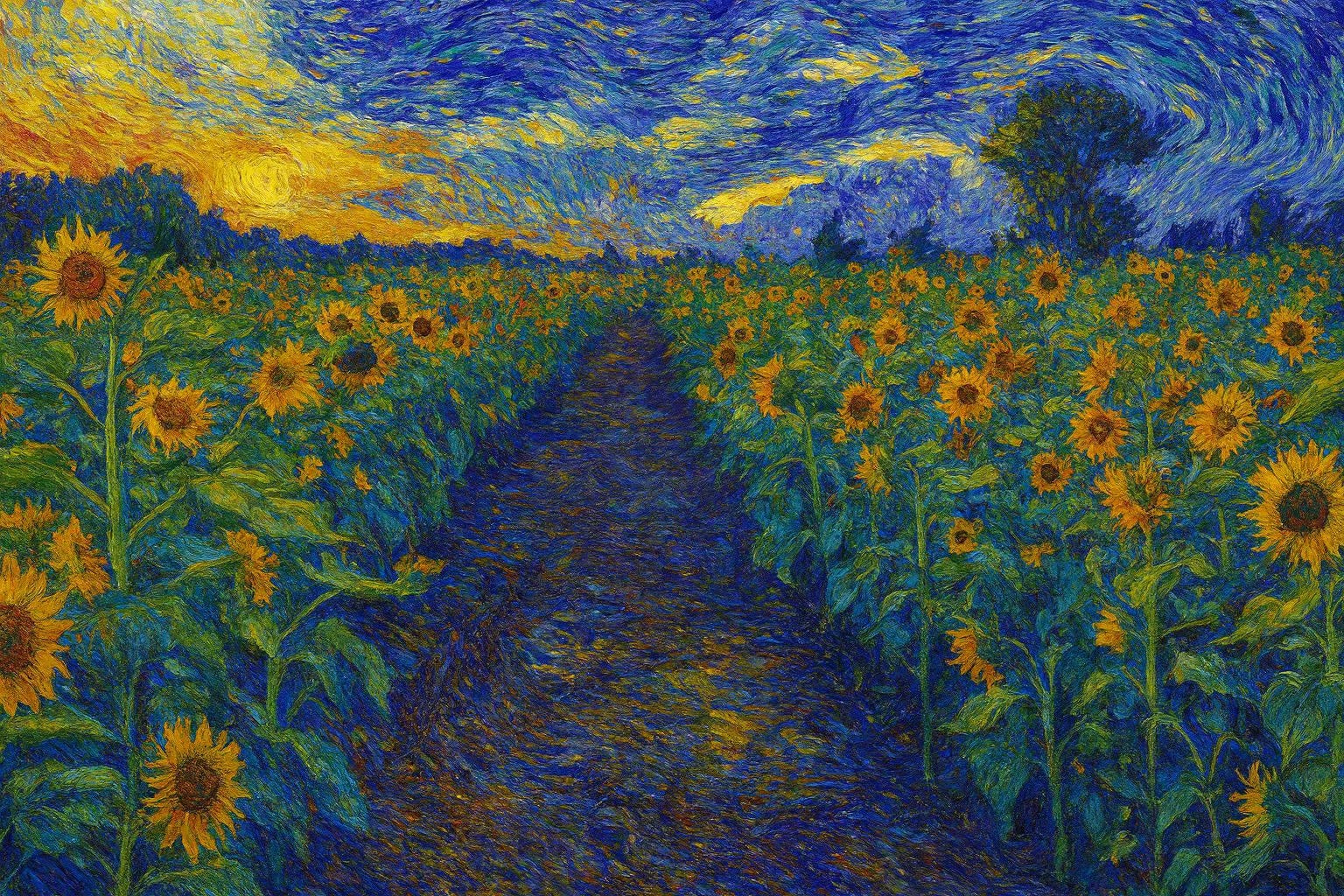
Van Gogh painted them like prayers, yellow thick enough to taste, each brushstroke a day closer to madness, each flower facing the window where his brother’s letters came.
After Chernobyl, after Fukushima, they planted fields as statements: Life insists. Growth answers fallout. Even poisoned ground can bear witness.
Ukraine made it their national bloom, painted seeds on protest signs, gave bouquets to soldiers, planted them on mass graves where the soil remembers what tongues cannot say.
Kansas claimed it. Iowa called it a weed. Same plant, different politics. The flower doesn’t care about borders.
You can eat the young buds pickled. You can press seeds into oil. You can steep leaves for a cough. You can cut stalks for biochar. You can watch which way it faces and know where east lives.
Or you can stand in a field at dawn, seven feet tall and nodding under goldfinch weight, and understand what it means to be useful, beautiful, wild, and still turning toward light.
The sunflower teaches what every healer knows: nourishment and medicine grow from the same root. The body that feeds also mends. The land that gives also remembers. And the light we face each morning shapes what we become.
These lessons live in the body, in stem and seed and root. If you want to bring them into your garden, your homestead, your healing practice, the guides below will show you how.
For paid subscribers: Everything that follows is practical application. The field guide, the regenerative strategies, the zero-waste harvest, how to translate ancient wisdom into dirt-under-fingernails work.
🌻 Below the Paywall: Your Complete Sunflower Partnership Guide
20 minutes of field-tested intelligence, from identification to phytoremediation, zero-waste harvest to fermented plant juice. Everything I’ve learned about working with this plant in one place.
Part 1: The Field Guide (8-minute read)
At-a-Glance Identification (so you know it when you see it)
What It Needs to Thrive (soil, water, light, spacing)
What It Does in Your Garden (pollinator magnet to phytoremediator)
Playing Well with Others (companion planting that actually works)
Beyond the Garden (edible parts, medicine, crafts, animal feed)
Turning Sunflower into Fertility (FPJ, potash ash, FPE recipes)
Troubleshooting Guide (what your plant is telling you)
Part 2: Stewarding with Sunflower (12-minute read)
The Underground Work: Taproot as bio-tillage, cycling potassium
The Lateral Work: Fourth Sister guilds, living trellises, companion strategies
The Sacred Work: Phytoremediation protocols (with critical safety information)
Zero-Waste Harvest: Timing, technique, and using every part
Advanced Applications: FPJ deep-dive, citizen science opportunities
What Sunflower Teaches: Resilience, generosity, orientation, catastrophe insurance