

An evergreen everyone walks past, and the colour it hides that no one sees from the trail, Oregon Grape.
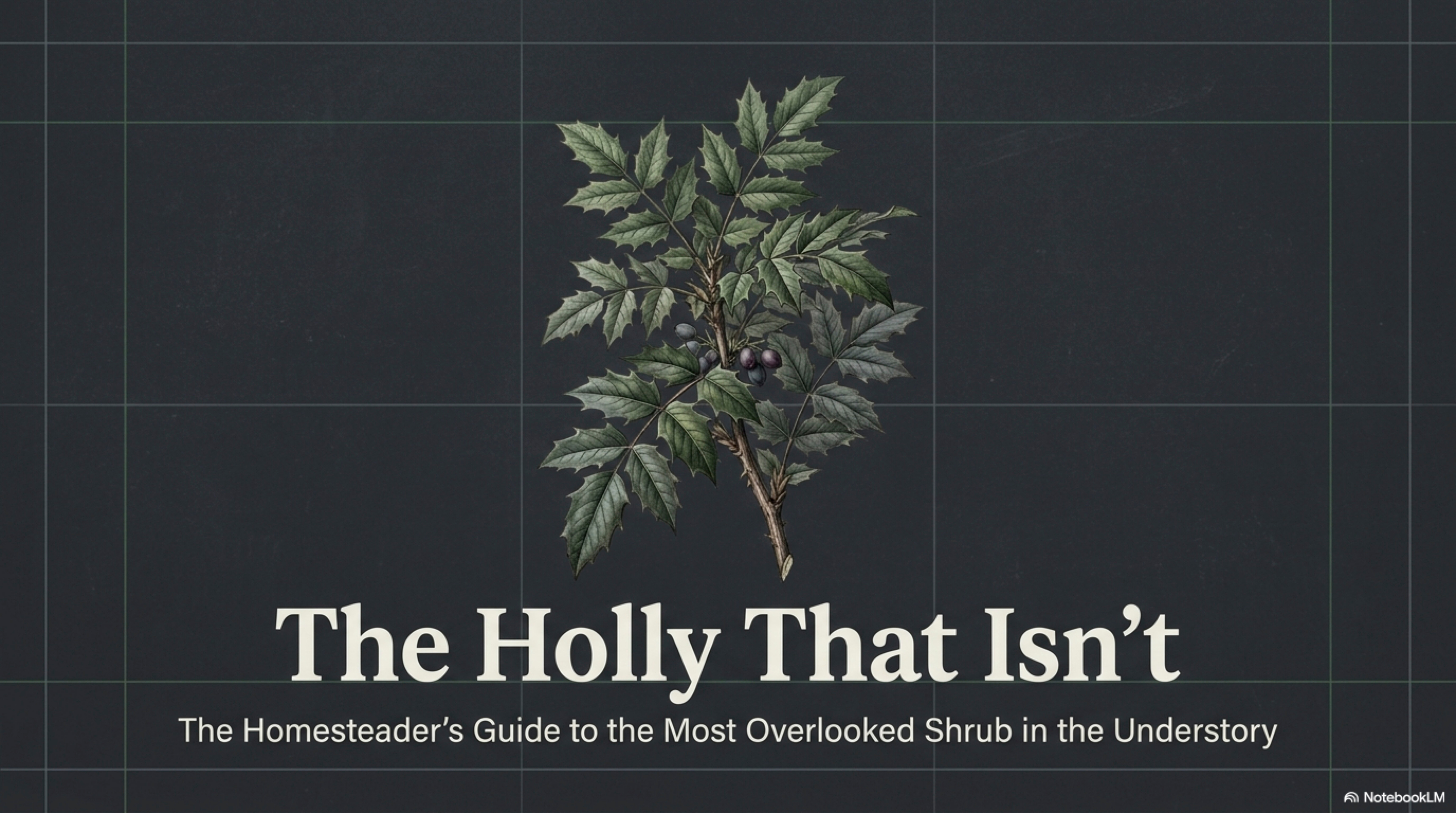
Walk a Douglas-fir glade on a cool spring morning and you’ll pass it a dozen times without looking twice: a knee-high evergreen with glossy, spine-edged leaves like holly, sprays of small yellow flowers, and, if the season’s right, clusters of dusty blue berries the color of a grape’s skin. It pricks your ankle as you pass, keeps its green through the snow, turns burgundy in a hard frost, and asks you for nothing. Oregon grape. The most overlooked shrub in the understory, standing exactly where the work gets done. Brush past it the way you would any hedge, and depending on who you are, something different comes loose.
If you farm, you’re looking at a slope anchor: a deep taproot and a dense fibrous mat that grip disturbed ground so well European engineers have tested it against landslides on highway cuts, plus a drought-tolerant, deer-resistant native hedge that asks for almost no water once it’s rooted.
If you garden, it’s one of the earliest things to bloom, its fragrant yellow flowers feeding native bees in the lean weeks when little else is open, then feeding birds with berries by midsummer.
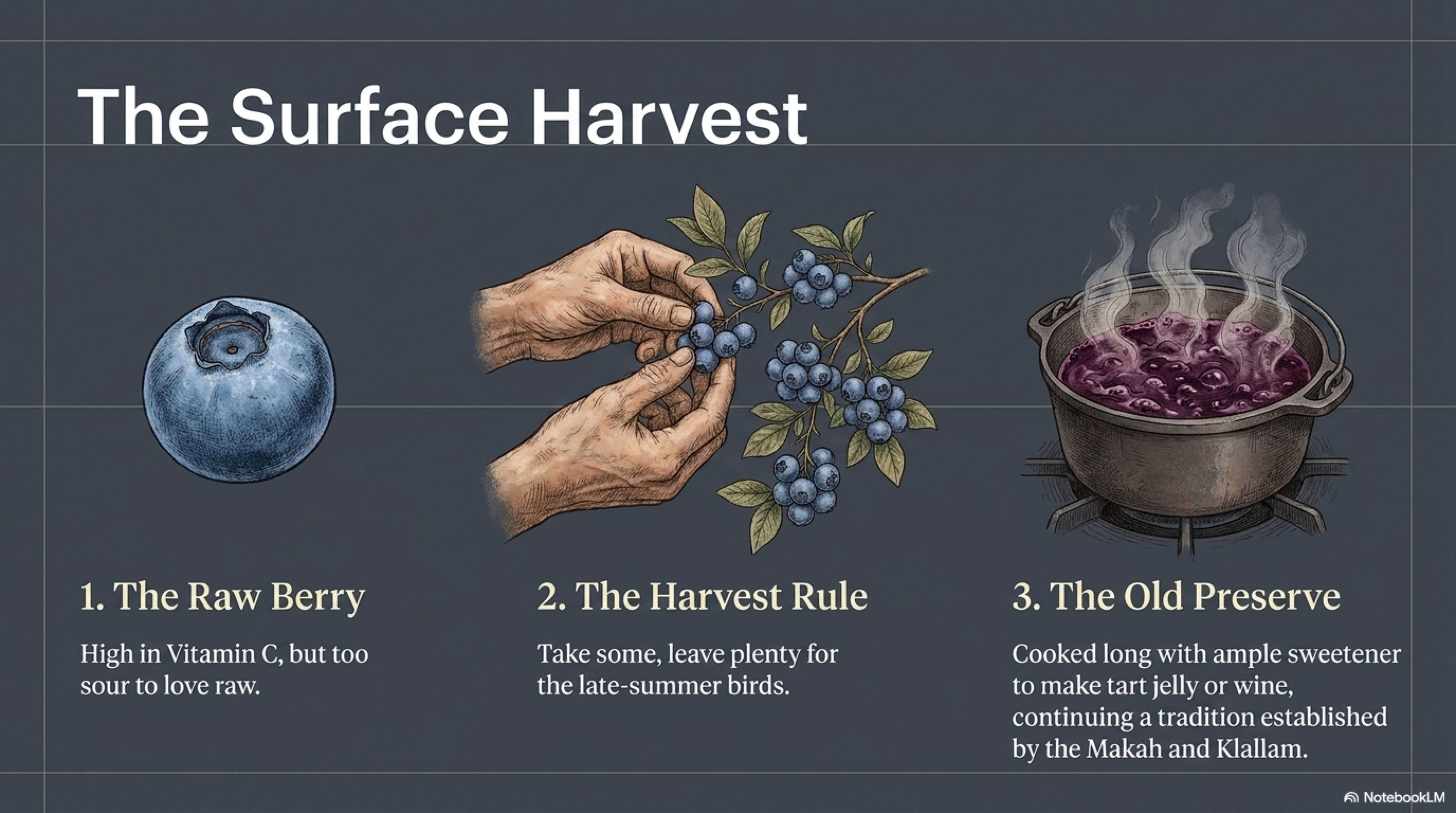
If you forage, it’s a sharp, tart blue berry, too sour to love raw, but high in vitamin C and, cooked down with enough sweetener, a jelly or wine the Makah and Klallam were making long before you got there.
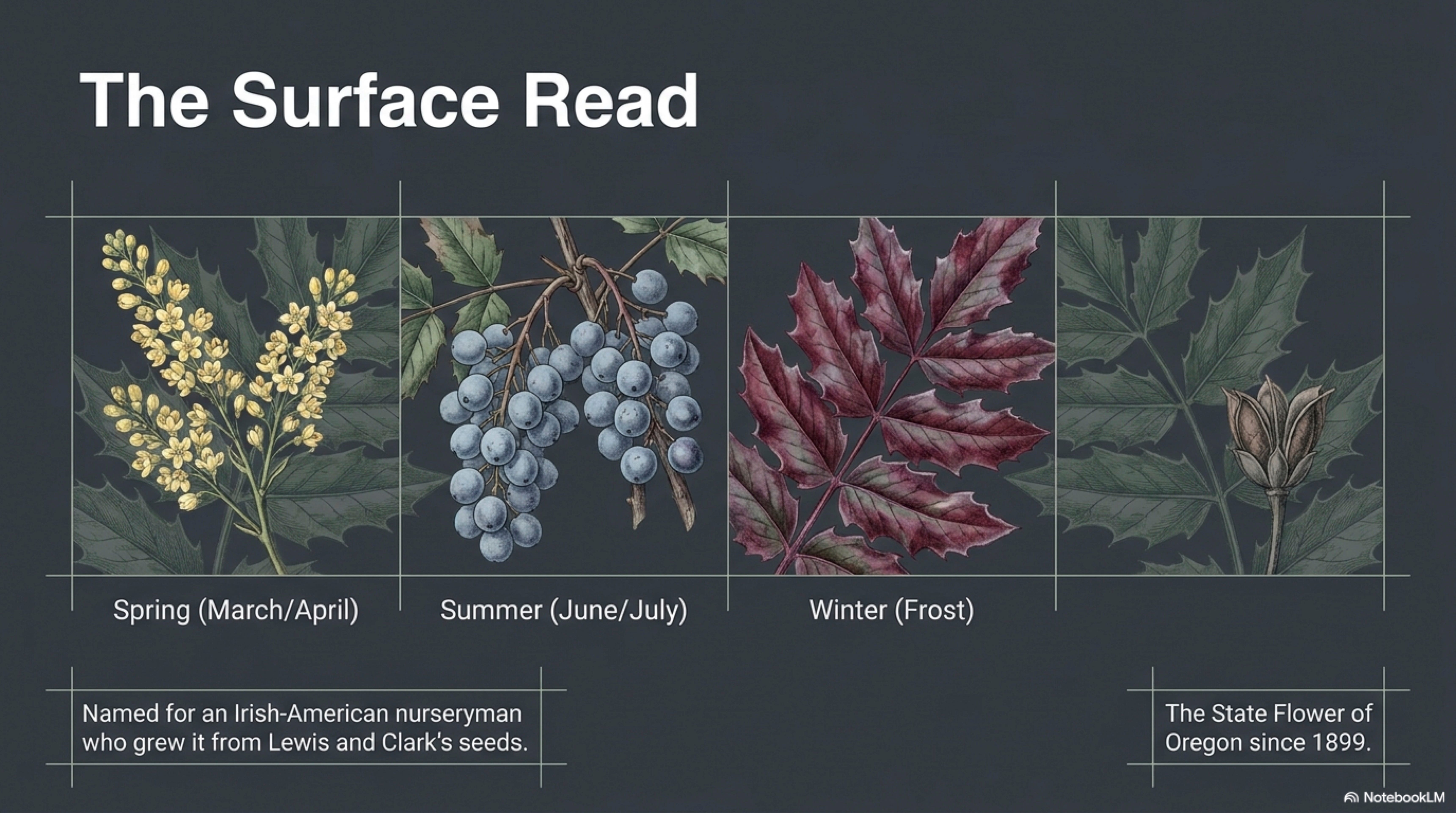
If you teach, it’s the state flower of Oregon since 1899, named for an Irish-American nurseryman who grew it from Lewis and Clark’s seeds, and a plant that Northwest tribes traded across whole territories, not for its fruit, but for a color locked inside it.
And if you’re just curious, it’s a diagnosis: where tall Oregon grape thrives on its own, the ground beneath it tends to be well-drained, slightly acidic, coarse and rocky, moderately fertile, its fungal networks intact. The plant is reading the soil for you.
Nearly every one of those reputations, the medicine, the dye, the trade value, even the bitterness that keeps the deer off, runs back to a single thing you cannot see from the trail.
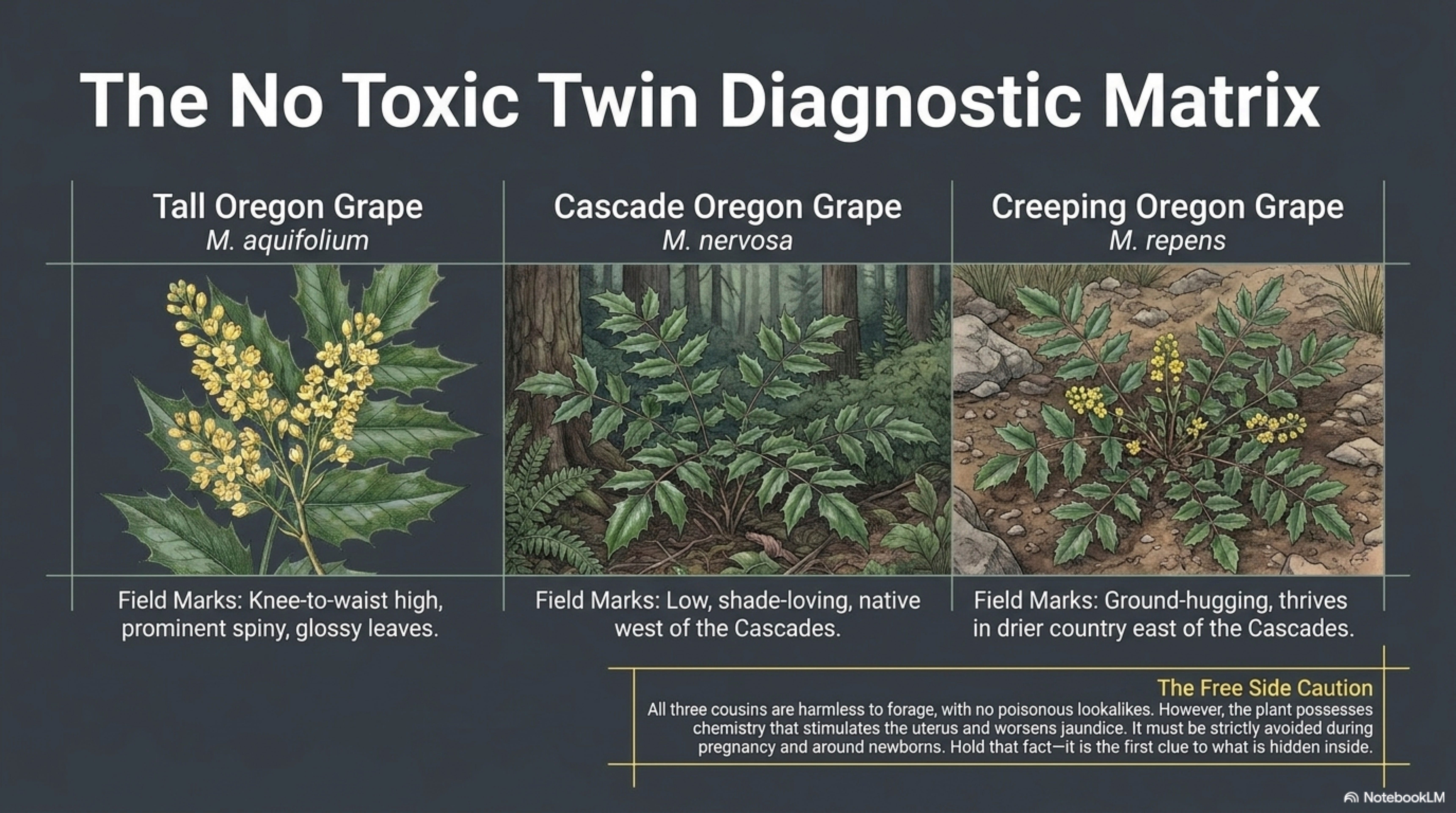
Get down and look at it properly first, because it earns the look. The leaves are pinnately compound, several leathery, wavy-margined leaflets down a central stem, each tipped with small spines, so like English holly that early colonists called it “holly-leaved barberry.” That spiny, glossy, evergreen leaf is your first field mark. Confirm it by season: yellow flower racemes in March and April, blue berries by June or July, and in winter a wash of red-purple across leaves that never drop. The lookalikes are its own cousins, the low, shade-loving Mahonia nervosa west of the Cascades, and the ground-hugging M. repens in the drier country east of them, and here’s the reassuring part: all three “Oregon grapes” are harmless, and there’s no toxic twin waiting to catch you. But there is one caution that belongs out here in the open, not behind any wall. The same chemistry that makes this plant a medicine makes it genuinely unsafe for one group: it should be strictly avoided in pregnancy and around newborns, where it can stimulate the uterus and worsen the kind of jaundice that harms infants. Hold that fact. It’s your first clue about what’s really inside this plant.
The safest, most useful thing you can do with Oregon grape asks for no medicine at all. Plant it where the ground is trying to slide, a raw slope, a streambank, a berm, a bare patch after fire or logging, and let its roots do bioengineering for free, holding topsoil, softening the blow of winter rain, and covering ground that grass won’t hold under a conifer canopy. Leave it to feed the early bees and the late-summer birds. And if you want the berries, take some and leave plenty; cook them long with sweetener into a tart jelly, the way the old preserves were made. That’s the free, safe use, and it’s a real one. The plant’s famous medicine, the reason herbalists reach for it, the reason it was traded across mountains, is a different animal, and it travels with cautions. It belongs on the other side of this.
Because two things about Oregon grape don’t add up from the surface. The first: how does one modest, unshowy understory shrub earn so many separate jobs, erosion armor, dye pot, medicine chest, food, state emblem, when it never seems to be doing much of anything? The second: why did tribes whose own land had no Oregon grape trade for its roots across territory lines, while the Makah, who traded for exactly those roots to make dye, called the berries “raven food” that would make children ill? Same plant. Same people. Prized and warned about in the same breath. The answer to both questions is a single color, hidden underground, and what that color turned out to be is one of the more useful coincidences in the Northwest woods. Neither is on this side of the page.
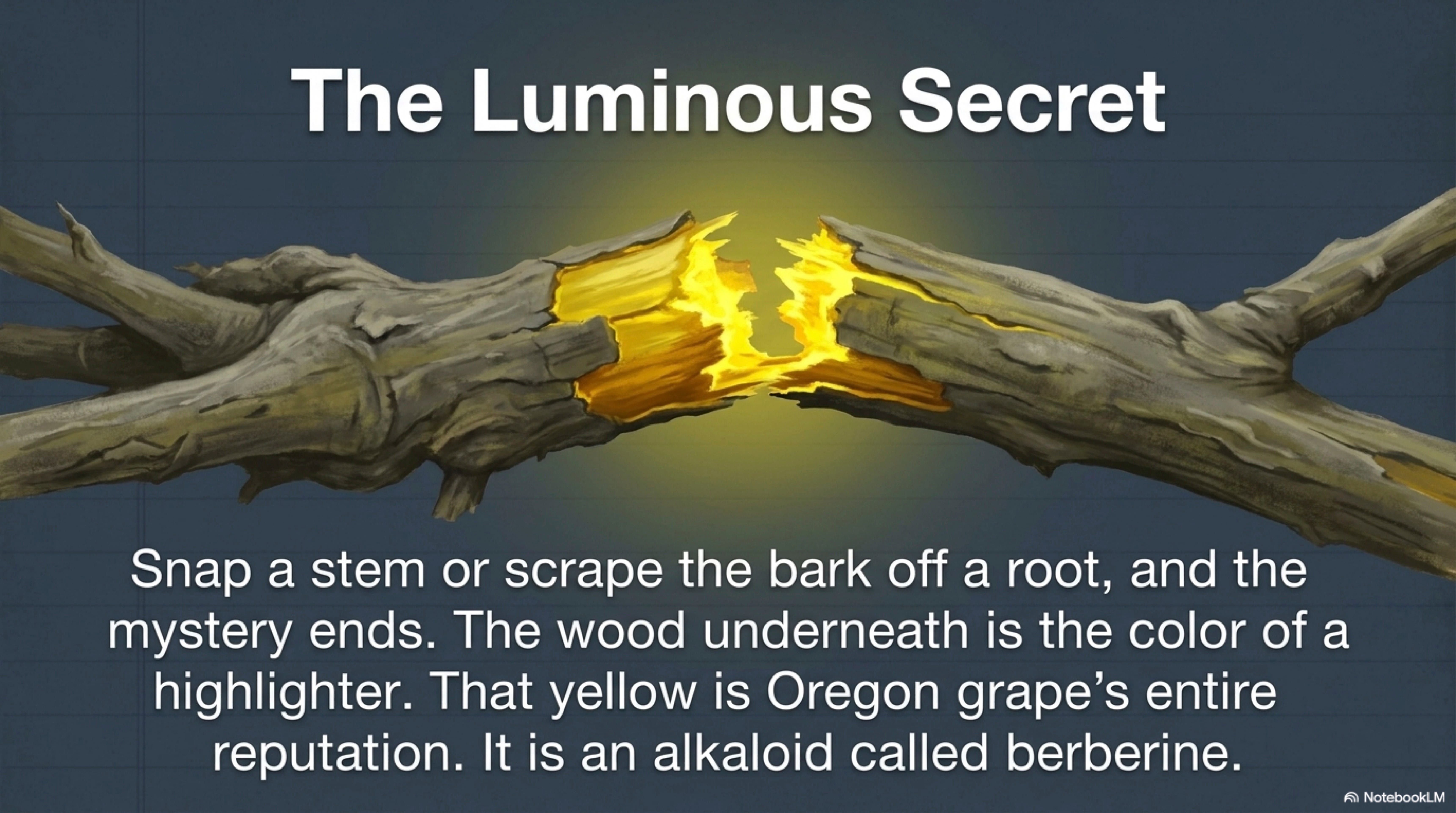
That’s the other side.