

Sunflower (Helianthus annuus): A Living Plant Wisdom Profile
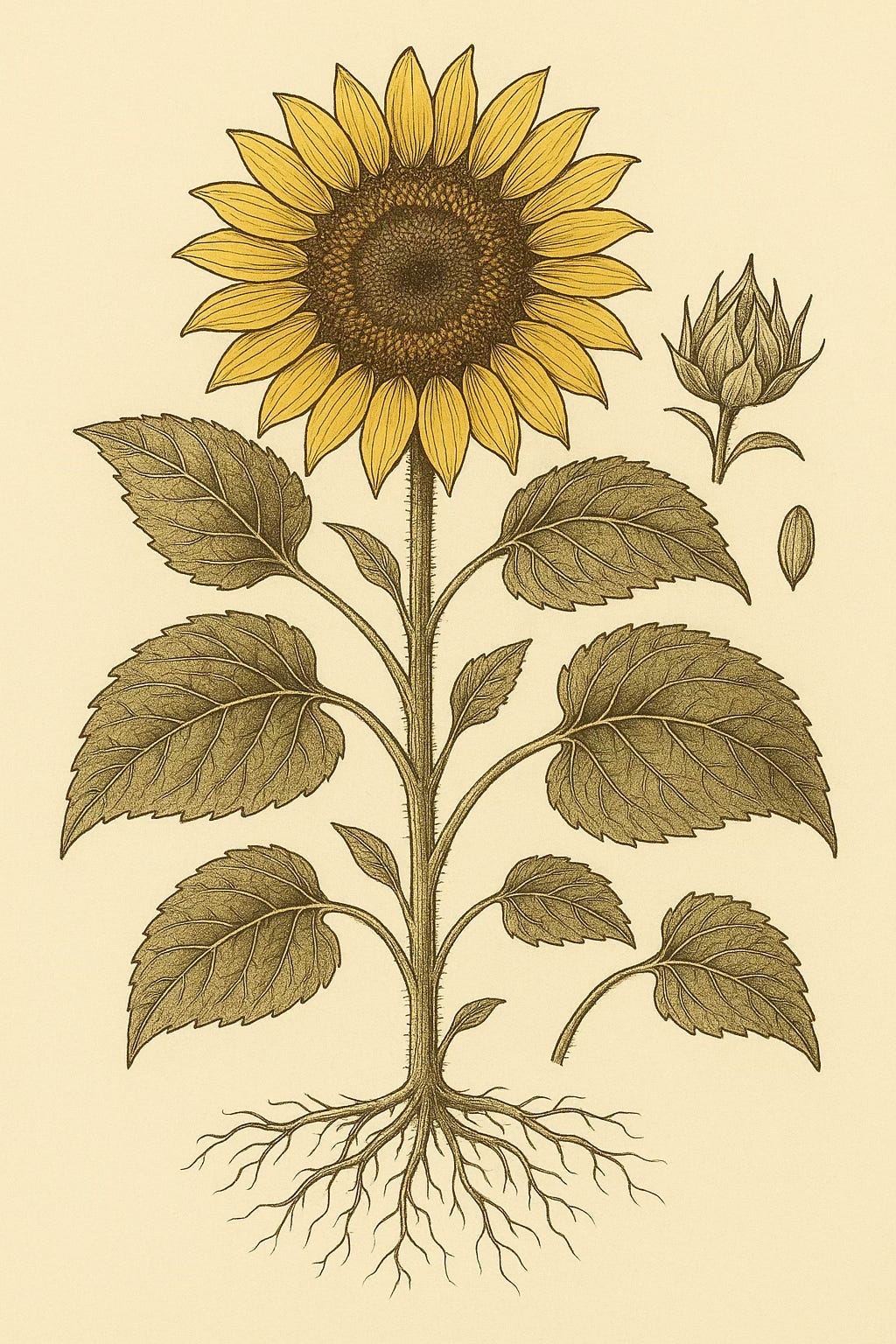
We needed some inspiration. The world feels noisy lately, too much static, not enough signal. And then, as if on cue, the sunflower rose again. It always does. Every season, it pushes through what looks like ruin, finds the light, and keeps turning toward it. In that steady devotion, it cleanses the soil beneath it, drawing up what poisons and returning what nourishes. The sunflower doesn’t just survive disturbance; it reorganizes it.
Watching it this year, I realized how much we need that kind of energy right now. Amid all the heaviness and division, the sunflower stands as proof that positivity isn’t naïve, it’s necessary. It keeps facing the sun even when the sky turns gray, and in doing so, reminds us that joy, too, is a form of resistance.
I’ve come to see it as both healer and engineer, myth and molecule, a golden compass that points us back toward balance. It bridges what the earth still remembers with what we, in our hurry, have forgotten.
So this is a thank-you, to the sunflower, to the soil, and to you for being here. This is its story, and an invitation to meet it anew: as a plant of resilience, restoration, and radiant direction in an unsteady age.
Table of Contents
1. Meeting the Sunflower — Turning Toward the Light
An introduction to radiance and renewal.
Where noise fades, light begins. Each stalk creaks skyward, bees hum gold, and sunflower shows us how to orient with grace. Here we explore its nature as both teacher and mirror, reminding us to turn toward what sustains.
2. Cultural Lineage — Myths, Medicine & Meaning
The sacred roots of a global icon.
Long before oil fields, sunflower crowned temples and guided time. From the Aztec sun god to the Russian steppes, we trace its path as symbol, food, and cosmic compass connecting sky and soil.
3. Ethnobotany — Folk Wisdom & Ancestral Use
When nourishment was medicine.
Seeds that fed nations, roots that soothed fevers, leaves steeped in ritual. Indigenous and early agrarian traditions reveal sunflower as kin, woven through sustenance and ceremony alike.
4. Science Meets Story — The Modern Mirror
Data confirming ancient design.
Today’s research echoes ancestral insight: sunflower heals. It draws toxins from the earth, revives microbial life, and feeds pollinators in distress, proof that generosity has measurable form.
5. Crossing the Threshold — From Knowing to Belonging
The moment curiosity becomes relationship.
We move beyond admiration into participation, an invitation to learn not just about sunflower, but with it.
🌻 [Paywall Begins] Working Together
6. Working Together — The Living Experiment
Becoming co-workers in restoration.
Learn to plant, ferment, and design alongside sunflower’s innate intelligence. This is the practice of partnership, between human hands and the self-healing earth.
7. Biochemistry & Nutritional Gifts — Blueprint of Vitality
The molecular language of resilience.
Vitamin E, selenium, essential fats, proteins: the same compounds that fortify soil fertility nourish our own systems. Sunflower’s internal design becomes a guide for balanced life.
8. Ecological Intelligence — Soil, Guilds & Partnerships
Architecture of a regenerative ally.
Deep roots fracture clay, stalks structure soil, blooms shelter fungi and bees. We explore how sunflower engineers fertility and harmony across ecological layers.
9. Research Frontiers — Citizen Science & Climate Resilience
The global experiment in hope.
From Chernobyl’s cleanup to backyard pollinator plots, sunflower anchors a worldwide study in renewal. Readers are invited to join the evolving science of recovery.
10. Sacred Economics — Reciprocity & Right Livelihood
An economy seeded in gratitude.
Sunflower models an ethic of giving and receiving in balance, through community oil presses, seed cooperatives, and regenerative trade.
11. Sensory Ecology — Learning Through the Senses
When perception becomes devotion.
Taste roasted seeds, hear stalks crackle in wind, smell resin in the sun. Through sensory intimacy, ecological awareness becomes embodied.
12. Legal & Regulatory Landscape — Growing with Integrity
The pragmatic field guide.
For growers, herbalists, and restoration stewards: navigating seed laws, environmental planting rights, and phytoremediation frameworks with sovereignty and ethics.
13. Parting Wisdom — The Beauty of Return
Every light must be given back.
When fields bow in autumn, sunflower completes its gesture, returning what it gathered to the soil. Stewardship, too, is this cycle of offering.
14. References — The Field of Knowing
A synthesis of evidence and tradition.
Ethnobotanical, scientific, and historical sources interwoven, bridging observation, myth, and modern ecological insight.
The Myth We Need to Kill First
Let’s get one thing straight before we go any further: sunflower is not a weed.
Yes, it volunteers where you didn’t plant it. Yes, it towers over your tidy rows with shameless enthusiasm. Yes, Iowa’s noxious weed list includes it (right alongside Kansas’s state flower, a contradiction so rich you could spread it on toast). But calling sunflower a weed is like calling a Swiss Army knife “clutter” because it has too many tools.
This is the problem with industrial thinking: anything that doesn’t behave like a monocrop gets labeled trouble. Anything with its own agenda gets the boot. But Helianthus annuus didn’t domesticate itself for 5,000 years just to play nice in your expectations. It came here to work, and the work it does makes most of our “tidy” agricultural systems look like amateurs playing farmer.
What Sunflower Actually Is
Stand in a field of them on a July afternoon. The air vibrates with bee-song. The soil beneath your feet is being drilled open by taproots punching a few feet down, breaking hardpan your tractor couldn’t touch. Those rough, dinner-plate leaves? Nutrient pumps pulling potassium from depths no annual has a right to access. The golden heads tracking east at dawn? Solar panels optimized by 50 million years of evolution, warming themselves to seduce pollinators before your coffee gets cold.
This is not a weed. This is a living infrastructure. A bee hospital. A soil surgeon. A phytoremediator that cleaned Chernobyl’s water. A drought-resistant oilseed that feeds people when corn throws a tantrum in the heat.
Sunflower is what you plant when you’re done fighting nature and ready to partner with it.
The Ally You’ve Been Overlooking
Here’s what the regenerative farmers already know: sunflower doesn’t just grow in your system, it improves it. Mine its nutrients from the subsoil, chop it down, and suddenly your potatoes have the potash they need. Let it flower, and watch your whole farm’s pollinator population spike. Use it as a trap crop, and aphids abandon your beans for those sticky stems like moths to a porch light.
Beauty? Sure. Those faces could sell a thousand seed packets. But beauty’s the side effect, not the point. The point is function dressed in petals, ecology wearing a smile.
This plant doesn’t ask permission. It finds the crack in your concrete, the neglected corner of your field, the contaminated brownfield everyone gave up on, and it says: I’ll start here. Then it gets to work. Aerating. Accumulating. Attracting. Building soil from the bottom up while the rest of us are still arguing about amendments.
What This Guide Offers
What follows is not a love letter (though there’s affection). It’s a field manual for partnership. You’ll learn how sunflower sees, how it feeds, what it asks for, what it gives back, and how to weave it into your land in ways that make both of you stronger.
You’ll find the biochemistry that explains why indigenous healers used it for fevers (spoiler: they were right). The companion planting strategies that turn it from “pretty flower” to “ecosystem engineer.” The fermentation recipes that transform its biomass into liquid fertility. The economic models where one plant provides cut flowers in July, edible seeds in September, and chicken feed in October, while improving your soil the entire time.
This is about stewarding with intention, not by accident. It’s about recognizing that when sunflower volunteers in your garden, it’s not invading, it’s applying for the job. And maybe, just maybe, you should interview it before you pull it out.
The Invitation
So here’s the deal: read this like you’d walk a field, slowly, noticing what’s underfoot and overhead, what’s obvious and what reveals itself only when you stop and listen. Sunflower has been teaching people for millennia. Indigenous farmers bred it from scraggly prairie wildflower to food crop over thousands of seasons. Russian peasants made it the oil that fed a nation. Ukrainian farmers planted it on nuclear missile sites as an act of hope.
Now it’s your turn. Not to tame it. Not to tolerate it. But to collaborate with it.
Because in the world we’re building, hotter, drier, more uncertain, we need allies who know how to thrive in chaos, who bring life wherever they land, who turn disaster into bloom.
We need sunflowers. And they’re ready to work.
Let’s begin where all good partnerships do: with a proper introduction.
Your Introduction
Common belief holds that sunflowers always turn to follow the sun’s path, but in truth a mature sunflower fixes its face eastward to greet each new day.
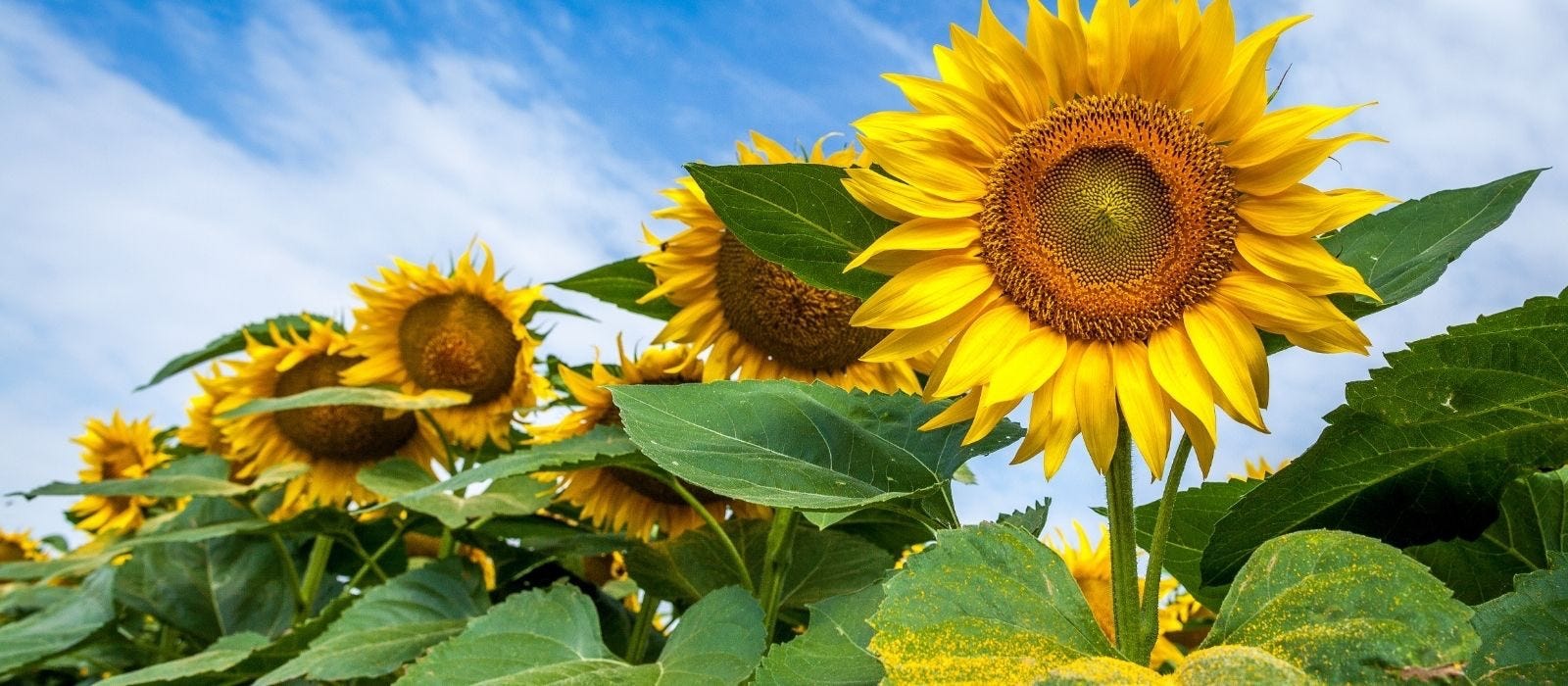
You step into a mid-summer field brimming with sunflowers. The air is alive with the dry hum of cicadas and the buzzing of contented bees. Sight: Golden heads of Helianthus annuus tower above, some well over 2 meters (6+ feet) tall, each radiant bloom haloed by yellow rays around a dark, seed-packed center. The morning sun ignites the upper petals into a glow, while lower leaves cast jagged shadows on the soil. Sound: Leaves as broad as dinner plates rustle against stout, hairy stems in the breeze, a papery whisper underlaid by the gentle drone of pollinators. Smell: There is a subtle green scent, a mix of sun-warmed straw and resin, especially if you brush against a sticky bud exuding protective sap. Touch:You reach out to a rough, heart-shaped leaf; its surface is sandpapery and bristled, catching slightly on your skin. A smear of yellow pollen clings to your fingertips after patting the plush central disk of a bloom. In this moment of encounter, the sunflower feels less like an inanimate crop and more like a host in its own domain, vibrant, sturdy, and attentive.
Your first impression is of an ally, a cheerful sentinel welcoming you with open petals. There’s a playful aspect too: young sunflowers, before blooming, do track the sun from east to west each day, almost as if performing a slow, secret dance at noon when no one’s watching. But come full bloom, they stand fixed, each blossom an amber compass pointing East at dawn. This plant’s energy is both resilient and generous. To a farmer it might first appear a nuisance weed when it volunteers along a fence line, yet by late summer that same farmer finds herself smiling at the bright faces peeking over the rows of corn. To a beekeeper or herbalist, sunflower is a healer, quietly feeding bees with rich pollen and offering medicinal uses in its leaves and seeds. There’s a trickster side too: sunflowers will pop up where birds drop seeds, choosing their own niche in garden or field – a reminder that they were never truly tamed by humans, only befriended. The overall presence is of a stalwart friend: standing tall through heat and drought, inviting life to gather around it.
What does this first meeting teach us? It teaches that to meet a plant is to sense the world it creates, here, an oasis of light, warmth, and nourishment buzzing with life. It shows that sunflower greets us as more than an observer; it greets us as part of the living community it sustains.
Getting to Know Them
Names & Nicknames: The sunflower carries many names. Its scientific name Helianthus annuus comes from Greek helios (“sun”) and anthos (“flower”), a nod to both its sun-like appearance and the old belief that it always turns toward the sun. In English we simply say Sunflower, evoking the image of a flower that embodies the sun’s image. Spanish-speaking countries call it girasol or mirasol (meaning “turns toward sun” or “looks at sun”), and in French it’s tournesol, with the same meaning – all reflecting the striking heliotropic behavior of young sunflowers. Among older European texts it was sometimes dubbed “Marigold of Peru” or Chrysanthemum peruvianum, hinting at its New World origins. Indigenous North American peoples have their own names: in Nahuatl (Aztec language) it was called Chimalxochitl, literally “shield-flower”. This name makes poetic sense, a fully seeded sunflower disk resembles a round shield, and indeed Aztec warriors painted sunflowers on their battle shields as symbols of the sun’s power. Other folk names include Common Sunflower (to distinguish it from its perennial relatives), Wild Sunflower, and region-specific terms like Kansas Sunflower (it’s the state flower of Kansas). The Hopi cultivated a special variety with deep purple-black seeds known as “Hopi Black Dye Sunflower,” cherished for producing a purple dye. No matter the language or culture, the names reveal a reverence: nearly all draw on the sunflower’s relationship to the sun or its striking form. To speak its name is to recall light.
Appearance & Habits: Helianthus annuus is an annual for the daisy family (Asteraceae) that germinates, flowers, seeds, and dies within a single growing season. In favorable conditions, it grows 1–3 m tall (3–10 ft), occasionally even up to 3.6 m (12 ft) in giant varieties. The stems are erect, sturdy and rough to the touch, covered in coarse hairs. Often unbranched in domesticated field cultivars, the wild form and many garden varieties branch freely, each branch bearing a smaller flower head. Leaves are arranged alternately on the stem (the lower leaves sometimes opposite each other early on). They are broadly ovate to heart-shaped with pointed tips, 10–30 cm (4–12 inches) long, with serrated or sometimes smooth edges. The leaf surface is rough and sandpapery, owing to stiff hairs, and each petiole (leaf stalk) can be several inches long, allowing the leaves to flutter and reposition slightly. If you look closely, some sunflower leaf hairs have tiny glands at their base, exuding resin – one of the plant’s small defensive tricks against pests.
Most iconic are the flower heads, which botanically are not single flowers at all but composite inflorescences typically 7.5–15 cm (3–6 in) across in wild-types and often larger (20–30 cm/8–12 in across) in cultivated giants. Each “head” is a disk containing hundreds of tiny tubular disk florets at the center (usually brown, purple, or black) and encircled by bright yellow ray florets that look like petals (typically 15–30 rays on wild sunflowers, up to 40 or more in ornamental varieties). The ray florets are sterile; the real work of seed-making happens in the center. As the head matures, each little disk floret will yield one seed (an achene). A single large sunflower head can produce over a thousand seeds if fully pollinated. The flower heads open over several days, and intriguingly, young sunflower buds exhibit heliotropism, they rotate to face the sun as it moves, but once the flower blooms and pollen is shed, the stem stiffens and the head usually remains facing east. Facing east is thought to warm the flowers earlier each morning, making them more attractive to pollinators and increasing seed yield (indeed, east-facing mature heads produce larger, better-filled seeds than west-facing ones [Confirmed]). This habit confounded many observers historically, contributing to the myth that sunflowers “follow the sun” even in bloom.
Sunflower’s phenology follows the turning of seasons: seeds germinate in spring once soil temperatures reach about 7°C (45°F). The seedlings have ovate cotyledons (baby leaves) that soon give rise to true leaves which are heart-shaped. Through late spring and early summer, the plant races upward (it’s a fast grower, some varieties can grow 5–10 cm per week in warm weather). Buds appear by mid-summer, and by July to August the classic golden heads bloom, drawing bees, butterflies, and beetles in droves. By late summer to early fall (August–October), the petals may wilt and drop as seeds develop and ripen. The plant often loses its lush green by harvest time, leaves browning at the edges as it channels energy into the seeds. With the first hard frosts of autumn, any remaining foliage blackens and the great stalk bows, returning its nutrients to the soil. In this way sunflower completes its cycle with the season’s end.
In terms of habitat, Helianthus annuus is originally native to North America, found in prairies, plains, and open woodlands. It thrives in disturbed soils – historically appearing along buffalo wallows and wildfire clearings, and today along roadsides, field edges, and any patch of open ground with sun. It’s remarkably adaptable: it grows in light sandy soils, medium loams, even heavy clays, so long as drainage is decent. It prefers near-neutral pH (around 6.0–7.5) but tolerates mildly acid or alkaline conditions. Sunflowers are sun-loving (no surprise), full sun exposure yields the tallest stems and biggest blooms, though they can manage in light partial shade. They have moderate water needs: they grow best with consistent moisture but are drought-tolerant once established, courtesy of deep taproots that mine for water. In fact, a healthy sunflower root can delve over 1.5–2 m (5–6 ft) down given loose soil, anchoring the plant and tapping subsoil moisture [Confirmed]. They tolerate high heat well, making them suited to continental summers and even semi-arid regions (sunflowers are often grown in places too dry for corn). Conversely, they are not frost-hardy– a single frost will kill a young plant – which is why they are planted after the last frost in temperate zones and grown as summer annuals. The species has now been introduced worldwide – it’s common in Europe, Asia, Africa, and South America as a crop and sometimes a roadside escape. In some climates with mild winters, sunflowers can even sprout in fall and overwinter as seedlings, but generally they die with cold. Wherever they grow, they tend to appear “opportunistically.” It’s not unusual to find a sunflower sprouting from a crack in the city sidewalk or on a slag heap, a testament to its pioneer personality. And if your bird feeder spills sunflower seeds, expect a cheerful patch of “bird-planted” sunflowers next summer.
Reputation: How do people speak of the sunflower? That depends on who you ask, this plant wears many hats. Farmers might know it as both a valuable crop and a tenacious weed. In large-scale agriculture, sunflower is a major oilseed and birdseed crop, celebrated for its high yields of healthy oil and its role in crop rotation. But wild sunflowers can also appear in corn and soybean fields uninvited; in parts of the U.S. Midwest they are considered “common weeds of cultivation”. The State of Iowa even lists wild sunflower as a Secondary Noxious Weeds because it can reduce yields by competing with crops. (A famous anecdote: when Iowa added sunflowers to its noxious weed list, a Kansas legislator joked about opening a hunting season on Iowa’s state bird, the goldfinch, since goldfinches love sunflower seeds! This captures the farmer’s ambivalence: a nuisance plant in one context is food for beloved wildlife in another.) Organic and regenerative farmers, on the other hand, often welcome sunflowers on their farm edges or garden beds. They see them as insectary allies – drawing pollinators and predatory insects that help nearby crops, and as soil improvers that break up hardpan and accumulate nutrients. Many farmers note how sunflowers seem to “bring in the bees” and provide a natural windbreak or shade for more delicate plants. In community gardens, sunflowers are often planted with corn and beans as living trellises and pollinator lures (though one must be mindful of their allopathic effect on some vegetables, more on that later).
Healers and herbalists regard sunflower with a kind of affectionate respect. It’s not the first herb one learns in Western herbal medicine, sunflower is no superstar like lavender or chamomile, yet it has a quiet pedigree. Traditional herbalists know that sunflower leaf tea can help lower fevers and ease lung congestion, and sunflower seed oil has been used as a base for salves and massage oils for centuries. Some herbalists call sunflower a “forgotten medicinal”, noting that much of its traditional use (for respiratory ailments, for instance) has fallen out of popular knowledge. But modern herbal skincare has certainly not forgotten the sunflower: its oil is prized as a carrier oil that is light, nourishing, and unlikely to cause allergic reactions, often recommended for eczema and infant massage. In the holistic health community, sunflower seeds are celebrated as a nutritive food-as-medicine, rich in protein, healthy fats, vitamin E, selenium, and other minerals that support heart and immune health. Dietitians and healers alike praise a handful of sunflower seeds as a daily “vitamin” from nature. TCM practitioners classify sunflower seed as a mild tonic and moistening food, used to support digestion and relieve dryness. All told, healers see sunflower as a supporter – not a dramatic cure-all, but a reliable, sustaining presence for health.
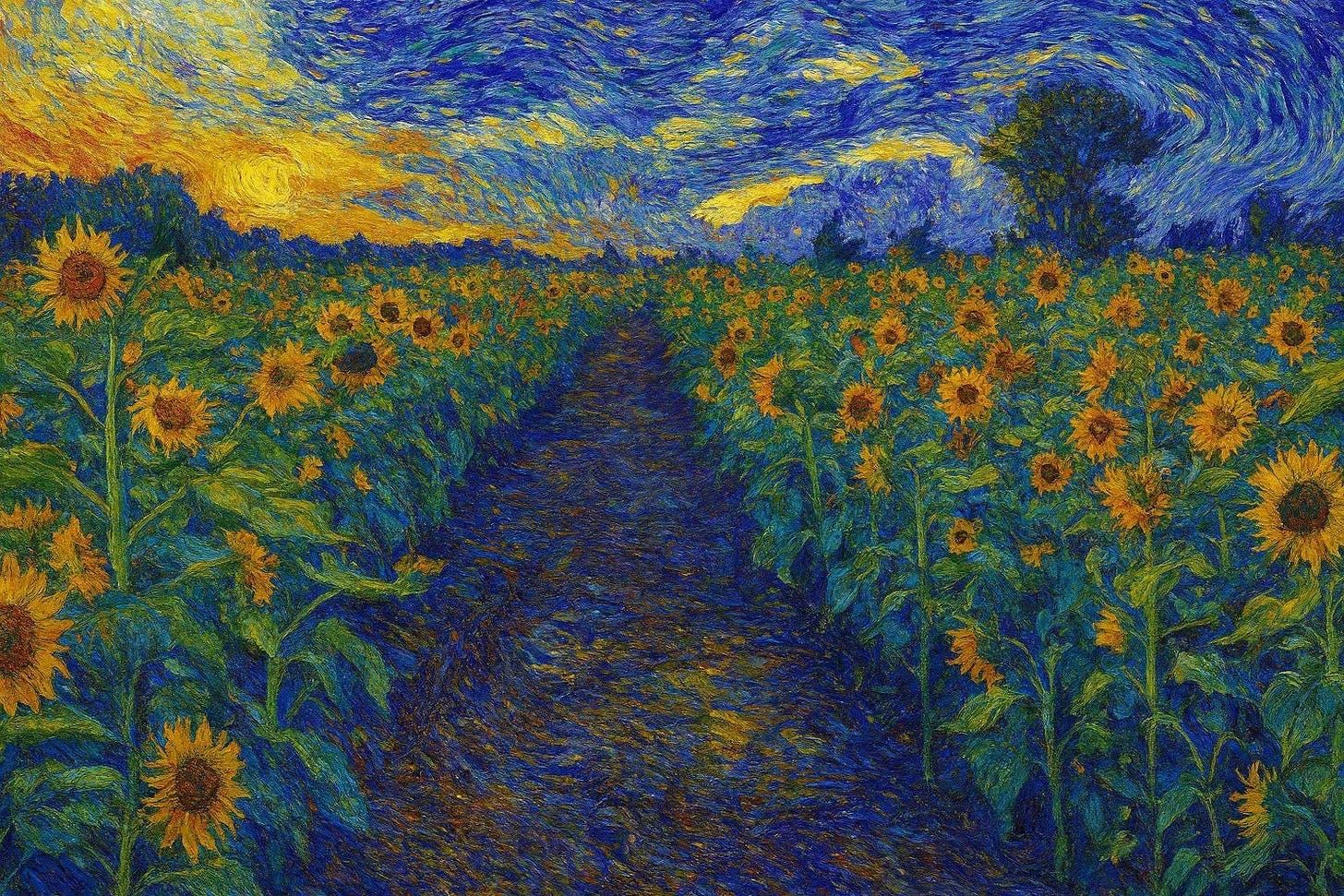
Communities & cultures have woven sunflower into their identity in diverse ways. To many, the sunflower simply symbolizes happiness, warmth, and hope. Children often learn to grow their first sunflower in school gardens, marveling as a tiny seed becomes a towering giant, a gentle lesson in nature’s generosity. Sunflower festivals draw crowds in late summer, where families walk through mazes of towering blooms and take sunny photographs. As a cultural symbol, the sunflower has become a beacon of hope and peace: it is the national flower of Ukraine, where it stands for resilience and optimism. (Notably, sunflowers were planted on former nuclear missile sites in Ukraine in 1996 as a symbol of disarmament and peace, and again in 2022 sunflowers became an emblem of solidarity and resistance during conflict.) In Native American communities, sunflower was historically esteemed as one of the “four sacred plants” by some Plains tribes, a plant of sun and harvest. The Hidatsa and Dakota saw sunflowers as indicators of bounty; one saying recalls, “When the sunflowers were tall and in full bloom, the buffalo were fat and the meat was good”, associating a good sunflower year with plenty of game. Indigenous farmers in North America commonly cultivated sunflowers around the edges of their corn fields, a smiling guardian of the crop and a source of tasty seeds after the corn harvest. Across Mexico and the U.S. Southwest, folk tradition held that sunflowers growing near the home brought good luck and protection. Even on the spiritual level, sunflowers are often associated with qualities of loyalty and longevity (turning to the sun symbolizes steadfastness). Van Gogh’s famous paintings of Sunflowers immortalized their aura of warmth and friendship. Yet, like any widespread plant, sunflower also has detractors: gardeners sometimes curse the “volunteer sunflowers” that sprout everywhere after a season, calling them pesky. And some allergy sufferers get the sniffles from sunflower pollen (it’s not a major allergen, but those sensitive to ragweed, a cousin, might react). Overall, however, the consensus in communities is that sunflower is a beloved presence, a teacher of joy. It has that rare ability to bridge people: farmers, artists, children, chefs, activists, all find something inspiring in the sunflower.
Knowing someone’s names and habits is the first act of respect. In learning Sunflower’s many names, its growth cycle, and the voices that speak of it fondly (or frustratedly), we lay the groundwork for a respectful relationship. We begin to see this plant not just as a crop or ornament, but as a living being with lineage and character, a being worth knowing deeply.
Stories & Lineage
History & Folklore: Few plants have a lineage as rich and globe-spanning as the sunflower. Its story begins in the heart of North America, where it was domesticated by Indigenous peoples over 3,000–5,000 years ago. Archaeological evidence suggests that wild sunflowers (Helianthus annuus var. wild) were cultivated for their seeds in what is now the central United States (eastern Plains and Mississippi Valley) and possibly independently in Mexico. By selecting the largest seeds generation after generation, Indigenous farmers achieved a remarkable transformation: wild sunflower seeds (which are quite small) became plumper and more oil-rich over centuries of cultivation. (It’s estimated the seed size increased by 1000% under Indigenous stewardship, an incredible feat of early agricultural breeding.) Sunflower became a staple in the diets of many tribes. For example, the Hidatsa and Mandan of the Missouri River region grew sunflowers in dedicated plots; one variety was so important it was simply called “Hidatsa sunflower.” They would parch and grind the seeds into meal or press them for oil. To the Onondaga (Iroquois), sunflower appears in the creation story, it’s said that sunflowers grew on the new earth to nourish the people, and thus were regarded as a life-sustaining gift. By the time of European contact, sunflowers were widespread in Native gardens from southern Canada to Mexico. Spanish chroniclers in the 1500s observed sunflowers being cultivated in Mexico and described the plant with fascination – the golden “flor del sol” (flower of the sun) was unlike any Old World crop.
Sunflower held ceremonial significance as well. The Aztecs of Mexico revered sunflowers in the context of sun worship. Although the text is confusing in sources (mentioning “In Peru, sunflower was revered by Aztecs”, likely referring to the Aztec Empire in general), it is recorded that Aztec priestesses of the sun temple wore sunflower crowns and carried sunflowers in ceremonies. Archaeologists have found ancient temples in central Mexico adorned with sunflower motifs wrought in pure gold, and sunflower seeds interred as sacred offerings in temples. The Aztec name Chimalxochitlmeans “shield-flower”, referencing how sunflowers were depicted on warrior shields – notably on the shields of Huitzilopochtli (god of war) and Tlaloc (god of rain/fertility). To the Aztecs, the sunflower’s cycle (following the sun, then bending with heavy seeds) symbolized the cycle of life and death. In the U.S. Southwest, the Hopi cultivated sunflowers not only for food and dye but also spiritually, Hopi legends speak of sunflowers bringing messages from the Creator, and Hopi dancers historically wore sunflowers in their hair during certain ceremonies. The dried sunflower disks were even used as ritual rattles by some Pueblo peoples. The Zuni tribe treated sunflower as a sacred plant in healing – Zuni medicine men chewed sunflower root and applied it directly to snakebites as part of a ceremonial cure. Across the Great Plains, sunflowers often marked the comings and goings of the buffalo (as the Teton Dakota proverb about tall sunflowers and fat buffalo illustrates), integrating into the seasonal and hunting lore of those nations.
After European contact, the sunflower’s journey took a new turn. Spanish explorers carried sunflower seeds back to Europe by the early 16th century. At first, Europeans grew sunflowers as a curious ornamental. It made a splash in places like Spain and Italy, where its large radiant blooms were a novelty in gardens. By the 18th century, however, people realized the seeds’ value. Sunflower seeds became a snack (roasted seeds were enjoyed much like today’s peanuts), and more importantly, sunflower began to be pressed for oil. The big breakthrough came in Russia. In the 1700s and 1800s, Russian farmers embraced sunflower in a massive way. Part of the reason was religious: the Russian Orthodox Church had strict rules about abstaining from most oils (like butter or lard) during Lent, but sunflower oil was not on the forbidden list (it was a New World food and not initially considered). So, Russians grew it enthusiastically as a cooking oil for fasting periods. Plant breeders in Russia developed the famous giant “Mammoth Russian” sunflower with huge heads and oil-rich seeds (over 50% oil by weight). By the late 19th century, Russia had over 2 million acres of sunflowers and was producing vast quantities of oil. These improved varieties made their way back to North America around 1893, completing a full circle. Thus, oddly, North America re-imported its own native plant in a new, super-productive form. Sunflower oil soon entered global commerce.
Folklore and folk medicine in Europe began to incorporate sunflower as well. A well-known Greek myth became associated with the sunflower: the tale of Clytie, a water nymph hopelessly in love with Helios the sun god. In the myth, Clytie gazes at Helios as he rides his sun-chariot across the sky, pining away for nine days without food or drink until she transforms into a flower that forever turns its face toward the sun. Some versions say this flower was a sunflower, symbolizing eternal devotion (though older sources call it a heliotrope or turnsole; popular imagination has cemented it as sunflower). The Clytie story added a romantic layer to sunflower’s folklore – it became a symbol of unrequited love and loyalty in Victorian floriography (the language of flowers). Another piece of folklore: European farmers observed that sunflowers in bloom seemed to predict the weather, if the flowers stayed facing one direction or drooped, a storm might be coming (likely just coincidence with humidity affecting turgor).
In rural Russia and Eastern Europe, sunflower folklore is abundant. Sunflowers are said to bring good fortune – Ukrainian tradition holds that planting sunflowers around a house offers protection and peace. A charming Ukrainian folktale tells of how the sunflower came to be: the Sun once fell in love with a village girl, and when she died, he transformed her into the first sunflower so that she could forever face him. To this day, Ukrainian families often pose for photos in blooming sunflower fields, a beloved cultural image of joy. During the summer solstice festivals (Ivan Kupala night), sunflower wreaths might be worn or given as gifts of friendship.
Sunflower’s more practical history includes some surprising twists. By the 20th century, sunflower oil was a global commodity, used not just for cooking, but also industrially. During World War II, sunflower oil was used in manufacturing munitions and as a high-grade lubricant for machinery. It’s a drying oil, meaning it can polymerize into a solid film – so it was (and still is) used in paints, varnishes, and linoleum. Sunflower stems also found uses: the lightweight dried pith of sunflower stems is one of the lightest natural substances (specific gravity ~0.028) – historically it was even used as a filler in life jackets. In China, sunflower stem fiber has been blended into textiles (reportedly into silk to make it stronger). In the Soviet Union, every part of the sunflower was utilized: hulls were burned for fuel or processed into ethanol and furfural; stalks were used for livestock silage and the ashes returned to fields as fertilizer. There is a quaint bit of British folklore that giant sunflower stems, once dried, made excellent kindling or even poor man’s firewood (a farmer’s almanac notes “two acres of sunflowers will dry down to fuel equivalent to one acre of wood”). Some communities also used dried sunflower stalks to build fences or frames for climbing beans; being woody and pithy, they last a season or two. And let’s not forget one delightful craft: dyes. As mentioned, the Hopi grew a special sunflower for deep purple dye, but even common sunflower’s ray flowers yield a bright yellow dye, and the seeds can produce shades of purple-gray or black. Pioneers and indigenous artisans alike used sunflower dyes to color textiles, basketry, and even body paint.
Traditional Medicine Systems: Sunflower bridges indigenous, Eastern, and Western healing systems, carrying a portfolio of traditional uses labeled here as [Traditional] knowledge. In Indigenous North American medicine (often called Traditional Ecological Knowledge, TEK), sunflower was a valued remedy. Nearly every part of the plant had some application across different tribes. A few examples: The Cherokee made a tea from sunflower leaves as a diuretic to “wash out” the kidneys and treat kidney ailments (this matches a recorded use: “Cherokee used infusion of leaves for kidneys”). The Dakota(Eastern Sioux) brewed sunflowers (leaves or flowers) to treat chest pain and pulmonary troubles like bronchitis. In fact, one Dakota remedy involved boiling the sunflower heads (with the bitter green bracts removed) and inhaling the steam or drinking the decoction to relieve coughing. The Zuni, as mentioned, chewed the root for snakebite and also applied a poultice of root to the wound (with much prayer). The Navajo had multiple uses: one Navajo band used ground sunflower plant as a disinfectant to prevent prenatal infections during solar eclipses (tying sunflower to sun-superstition), and another Navajo remedy was a salve of pulverized seeds and roots applied to heal wounds from being fallen on by a horse. Navajo also ate sunflower seeds to stimulate appetite in the weak or ill. The Gros Ventre, Mandan, and Hidatsa considered sunflower seeds an energy food, warriors would carry cakes of pounded sunflower seed on long expeditions to alleviate fatigue. Some Plains tribes burned dried sunflower heads as a smudge in ceremonies, believing the smoke kept evil spirits at bay (sunflower’s connection to the sun made it symbolically purifying). The Hopi used sunflower in a category of remedies called “spider medicine,” likely for treating spider bites or associated with Spider Woman in mythology. They also applied the crushed sunflower plant to skin for dermatological aid (perhaps to sores or bites). In the Pacific Northwest, the Thompson people used a poultice of sunflower leaves on sores and swellings. The Paiute drank a decoction of sunflower root for rheumatism aches. And the Pima of Arizona had children’s remedies: a warm sunflower-ash poultice on the belly for infant worms and a leaf decoction for high fevers and to wash sores on horses. This dazzling array shows how over millennia the first peoples learned sunflower’s medicinal qualities by careful observation and experimentation. Many of these uses were transmitted orally and some recorded by ethnographers in the 19th and 20th centuries. Today, these traditional uses are honored and, in some communities, still practiced, marking sunflower as a pantry medicine and sacred plant.
In Traditional Chinese Medicine (TCM), sunflower seeds (called Xiang Ri Kui in Pin Yin, meaning “toward-the-sun flower”) are recognized though the plant is not native to China. Sunflowers were introduced to China likely in the 17th century, and the Chinese primarily embraced them as a food crop. While not a major herb in classical TCM texts, TCM pharmacopoeia notes the seeds are sweet in flavor and neutral to warm in nature, affecting the Lung and Spleen meridians. Medicinal uses in TCM: sunflower seeds are used to moisten the intestines and relieve constipation (much like other oily seeds), to nourish the lungs and stop coughing, and to calm the Liver (some sources say they help “subdue Liver Yang,” which aligns with their observed cholesterol-lowering and blood pressure benefits). They are also considered to have a mild diuretic effect (helping reduce edema) and to clear phlegm. One TCM source notes sunflower seeds “gently lubricate dry, cracked skin” from within and are given for chronic dry skin conditions or dry cough. In Chinese folk medicine, a tea of sunflower flower heads (including the disk florets) has been used to clear heat and toxins, for example as a remedy for sore throat or to reduce fever (echoing Native American usage). It’s recorded that in parts of China people treated coughs and whooping cough by roasting sunflower seeds and making an infusion, a fascinating convergence with a remedy from the West (a 19th-century Eclectic medical text similarly recommends a sunflower-seed coffee for whooping cough). Overall, in TCM sunflower is seen as a mild, nourishing herb – a bridge between food and medicine, used when one needs to tonify gently.
In Ayurveda, classical texts from ancient India don’t mention sunflower (as it was unknown in South Asia until the colonial era). However, modern Ayurvedic practitioners have integrated sunflower oil in particular. Sunflower oil is considered cooling and calming in Ayurvedic terms, often classified as reducing Pitta dosha (the fire element) because of its anti-inflammatory nature. Ayurvedic healers use sunflower oil for oil pulling (gargling oil in the mouth) as a way to improve oral health and draw out “ama” (toxins), sesame oil is traditional, but sunflower is a frequent substitute for those who find sesame too heating. Sunflower seeds, rich in nutrients, are recommended as snacks to boost Ojas (vital essence) especially in states of debility or weight loss, due to their nourishing fats and proteins. Some Ayurvedic sources mention using poultices of sunflower seed paste on wounds or burns for their soothing effect (likely because of vitamin E and oil content). Given sunflower’s mild bitter undertone (in the membranes of the seed kernel), one could surmise an Ayurvedic use to stimulate appetite (bitters are often used thus), aligning with the Navajo’s appetite-stimulating use. While not deeply entrenched in Ayurveda, sunflower today is very much part of Indian agriculture (India is a top producer of sunflowers) and thus part of the materia dietetica if not materia medica. In Siddha medicine (South India), there is some exploration of sunflower petals and leaves for antimicrobial properties [Hypothesis-level], but this is a frontier of blending traditional systems with new plants.
In Western herbalism, sunflower’s uses were documented in the 17th–19th centuries as European and American herbalists observed indigenous uses and experimented themselves. The great herbalist Nicholas Culpeper (17th c.) wrote that sunflower seeds “provoketh urine” (diuretic) and are “good for coughs and phthisis (tubercular lung issues) when taken in syrup” [Traditional]. A syrup of sunflower seeds indeed became a home remedy for coughs and colds in parts of Europe by boiling the seeds with sugar or honey. In Eastern Europe, an old remedy for malaria was to use sunflower: in the Caucasus, sunflower seed infusion was given as a fever reducer and said to substitute for quinine. This likely stems from sunflower’s bitter constituents and possibly some antipyretic effect (fever relief), an interesting parallel to Native uses as febrifuge. In 18th-century England, sunflower leaves were used in herbal tobacco blends to help with bronchitis [Traditional] (sunflower leaves are astringent and expectorant, which could complement smoking blends). The Eclectic physicians of 19th-century America (who often borrowed from indigenous knowledge) used sunflower seeds as an expectorant and diuretic and recommended sunflower root tea for rheumatism, much as the Paiute did [Traditional]. One Eclectic text from 1858 notes sunflower oil applied externally helped speed the healing of wounds and “ill-conditioned ulcers” [Traditional], which prefigures modern understanding of essential fatty acids aiding skin repair. In Russia, folk medicine recommended a tea of sunflower ray florets for heartburn and stomach cramps (mild digestive aid) and chewing the seeds to alleviate nervousness (perhaps the act of slow chewing or nutrients in seeds can be calming) – these would be considered folk uses not clinically verified. Another Western use: sunflower pollen was sometimes mixed in honey as a remedy for pollen allergies, akin to a homeopathic concept (though caution is needed, this persisted as a local practice in parts of rural Europe) [Hypothesis-level].
One charming piece of Western lore: During the 19th century “Doctrine of Signatures” era (when healers believed a plant’s form indicated its use), some saw the big round sunflower head with yellow rays and thought it resembled the human head with shining thoughts, thus they recommended sunflower preparations for “melancholy” and depression, to bring cheer [Traditional]. While not exactly scientific, it isn’t far-fetched that eating nutrient-rich sunflower seeds and having the uplifting presence of sunflowers could improve one’s mood!
Modern Echoes – Science & Confirmation: The echoes of traditional wisdom about sunflower resonate in modern scientific findings, often confirming those age-old uses. For example, many cultures used sunflower for lung ailments, and today we know sunflower seeds and leaves contain compounds that can loosen bronchial secretions (seeds are an expectorant [Confirmed]) and reduce inflammation. Modern analysis shows sunflower seeds are rich in vitamin E, selenium, and polyphenols – a combination with potent antioxidant and anti-inflammatory effects. This validates the traditional use of seeds for lowering fevers and treating colds (antioxidants help modulate inflammation in fevers) and for promoting heart health (vitamin E and unsaturated fats in seeds are known to reduce risk of heart disease [Confirmed]). Traditional diuretic uses (for kidney and edema) are supported by the presence of chlorogenic acid in sunflower, a compound known to have mild diuretic and blood pressure-lowering effects [Confirmed]. Indeed, studies have found that regular consumption of sunflower seeds is associated with lower blood pressure and cholesterol levels – reflecting those “kidney flushing” and “blood cleansing” claims of folk medicine. The Cherokee kidney tea may have worked by increasing urinary flow and thus aiding kidney function; modern herbalists attribute this to sunflower’s phosphorus and potassium content and possibly diuretic phytochemicals.
Science has also confirmed that sunflower contains sesquiterpene lactones (especially in leaves and stems) and other bioactive compounds. These lactones are known to have anti-microbial and anti-inflammatory properties. They likely explain why a poultice of sunflower leaf or root helped prevent infection in wounds and bites [Confirmed] – lactones can inhibit certain bacteria and fungi. The Cochiti Pueblo’s remedy of sunflower stem juice on wounds “with never a case of infection” resonates strongly with the fact that sunflower exudates have mild antiseptic qualities. Additionally, sunflower pollen and florets contain flavonoids like quercetin and phenolic acids like caffeic and chlorogenic acid. These are antioxidant and could contribute to anti-fever effects (by reducing oxidative stress in the body during illness). It’s intriguing that Russian folk medicine used sunflower seed for malaria, chlorogenic acid has some antiplasmodial activity in lab studies [Hypothesis-level] and sunflower’s bitter components might have supported the body much like quinine (though certainly not as potent). In any case, some modern herbalists have experimented with sunflower seed tinctures for fevers and reported positive results (anecdotally).
Another echo: feeding sunflower seeds to chickens to increase egg laying was folk wisdom in farm communities. Modern science shows sunflower seeds are rich in protein, healthy fats, and vitamin E which improve poultry nutrition; indeed studies confirm that supplementing laying hens with sunflower seed can improve their egg production and the fatty acid profile of the eggs [Confirmed] (the old farmers were right about those “bruised sunflower seeds” making hens happy!).
Perhaps the most striking modern echo comes from ecology and environmental science: Traditional stories speak of sunflower as a plant of cleansing and protection – for example, Shasta people burning sunflower roots to purify a house after a death. Today, we know sunflower is a powerful phytoremediator – it can extract toxic substances from the soil and water. This came dramatically to light after the Chernobyl nuclear disaster (1986). Scientists discovered that sunflower could pull radioactive isotopes like Cesium-137 and Strontium-90 out of contaminated water and soil. In 1994, large-scale plantings of sunflowers near Chernobyl successfully removed significant amounts of radionuclides from ponds and wetlands. One experiment showed sunflowers grown hydroponically in uranium-tainted water removed 94% of the uranium in 24 hours. This seemingly miraculous ability has also been used to clean up lead, arsenic, and other heavy metals in polluted soils. After the Fukushima disaster in Japan (2011), volunteers planted sunflowers on contaminated land as a hopeful remediation strategy (though results were mixed). Nonetheless, sunflowers have proven effective in many scenarios, including absorbing lead from urban soils: a community project in Los Angeles saw soil lead levels drop to one-quarter of previous levels after a year of growing sunflowers, thanks to their uptake and sequestration of the metal. In this way, the sunflower’s age-old role as a purifier and renewer is affirmed by modern science – it literally cleans the earth. And in doing so, it also provides a kind of cultural healing: fields of sunflowers on scarred land send a powerful visual message of hope and resilience. It is no wonder that whenever humanity faces an environmental catastrophe, the sunflower often appears as a symbol of restoration (recall how sunflowers were planted at sites of industrial spills and even after wars, to help soil recover and communities heal).
Modern science has also opened new chapters: A recent discovery in 2018–2023 found that sunflower pollen has a medicinal effect for bees. Bumblebees feeding on sunflower pollen show 81–94% reduced infection by a gut parasite (Crithidia). Researchers determined it’s the spiny texture of sunflower pollen grains that helps scour the parasites from the bees’ gut, improving bee health and even increasing the number of new queens in bumblebee colonies. This finding (sunflower as “bee medicine”) is a beautiful modern confirmation of sunflower’s ecological role as a healer – not just for soil, but for pollinators too. It is likely no coincidence that areas rich in wild sunflowers have thriving native bee populations; traditional farmers may not have articulated it in those terms, but they observed that “bees love sunflowers” and perhaps intuited the benefit.
From confirming heart health benefits, to explaining anti-inflammatory uses, to utilizing sunflower in phytoremediation and pollinator support, science has largely validated the wisdom of tradition when it comes to Helianthus annuus. Where folk knowledge said “sunflower draws sickness from the earth,” phytochemistry now identifies the uptake of contaminants. Where healers said “it feeds and soothes the body,” biochemistry points to nutrients and antioxidants. Of course, not every traditional claim has a study behind it yet – some remain to be investigated (e.g., aphrodisiac powers ascribed by a 16th-century Spanish chronicler might have been imaginative; we don’t have evidence sunflower boosts libido!). But on the whole, the stories plants carry are as vital as their seeds, and in sunflower’s case those stories guide scientific inquiry in a fruitful loop of understanding.
The stories plants carry are as vital as their seeds. Each myth, each ritual, each handed-down recipe adds to the mosaic of sunflower’s identity. By listening to these stories – from the Aztec sun temples to the Chernobyl fields – we learn not just what sunflower is, but what it means to us. And meaning, like a seed, can be carried far on the winds of time, ready to sprout anew when the conditions are right.
Crossing the Threshold
This is where curiosity turns to kinship, where the story of sunflower becomes something you can touch, taste, and work with.
Beyond this gate lie its practical teachings: how to grow and companion it in field and garden, how to brew its golden medicine, how to understand the quiet work it does beneath the soil and within us. This is where learning shifts from the mind to the hands, from admiration to participation.
The Weeds of Wisdom project exists because readers like you choose to keep it alive. Paid subscribers receive the full field notes, cultivation methods, fermentation recipes, soil applications, and ecological insights, the living tools that turn wisdom into practice.
If what you’ve read so far has rooted something in you, consider stepping further in. Your support sustains this work and helps keep plant wisdom in motion, one sunflower, one story, one steward at a time.