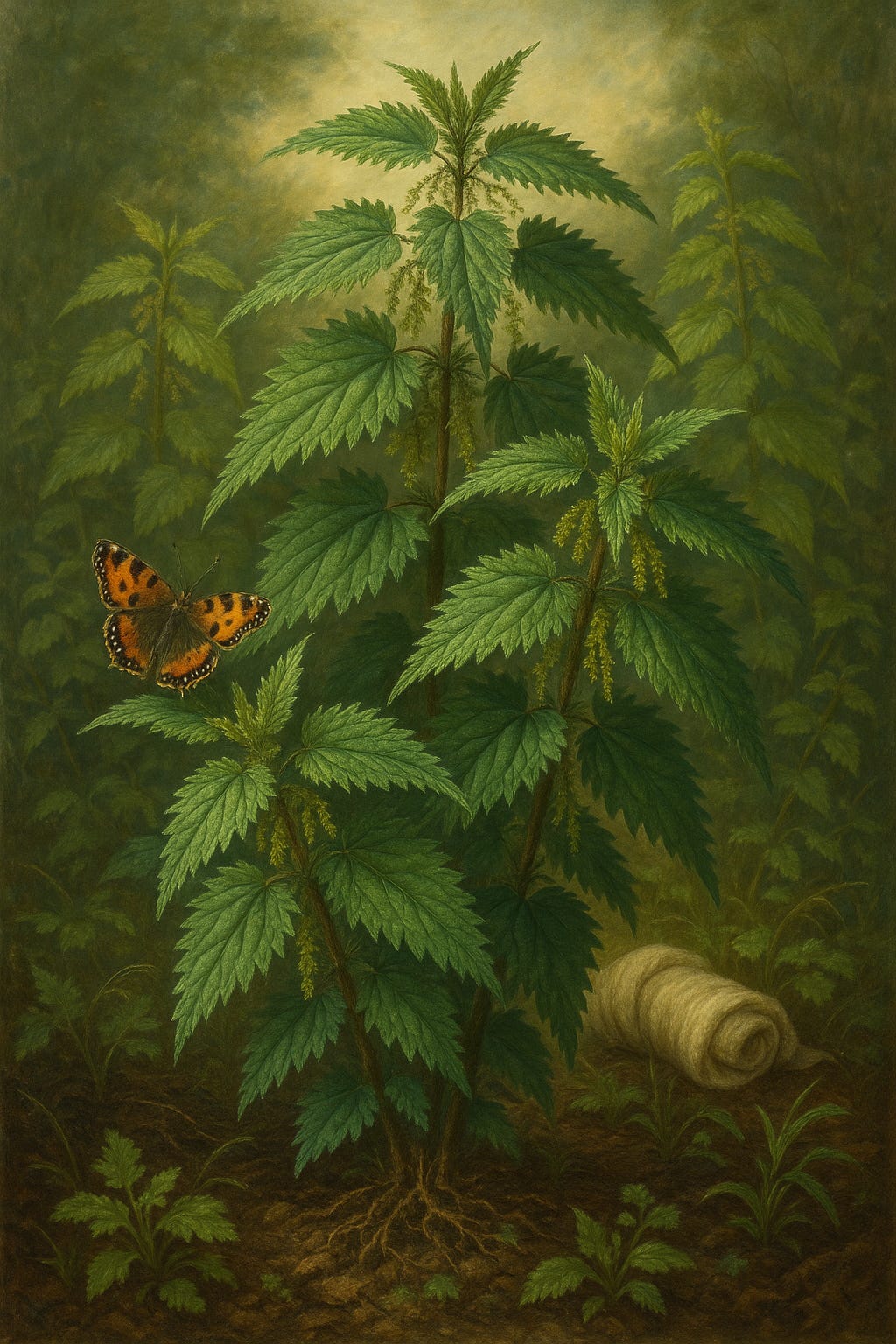
Stinging Nettle (Urtica dioica) – Living Plant Wisdom Profile
Brush lightly against a stand of stinging nettle and it will demand your full attention, yet lean in with respect and the plant opens a treasury of nourishment, medicine, and ecological alchemy. Few species embody the living dialogue between soil and body as completely as Urtica dioica. Its roots tunnel through humus, pumping minerals upward; its leaves bristle with a sting that both protects and invites; its presence signals soils brimming with life even as it shelters butterflies and fortifies compost. Across eras and cultures, nettle has been boiled into spring tonics, spun into cloth, wrapped around aching joints, and brewed into biodynamic elixirs for weary fields.
What follows is not a mere catalog of facts but a guided expedition— from Bronze-Age soup pots to cutting-edge clinical trials, from Celtic folklore to rhizosphere microbiology. Each section reveals another facet of nettle’s paradox: a prickly adversary that becomes a generous ally, a “weed” that mends landscapes and bloodstreams with equal grace. You will meet the plant as food dense enough to rebuild iron stores, as remedy that calms inflammation and clears allergies, as keystone habitat for butterflies, and as a dynamic accumulator whose biomass can transform depleted earth into dark, friable loam.
Prepare to discover how a single leaf can whisper ancient myth while carrying the signatures of chlorophyll, quercetin, and a lectin studied for antiviral promise; how fermented nettle tea can ignite a compost pile and strengthen crop immunity; how traditional ecological knowledge and quantum-biology speculation converge around its vibrant field. Whether you are a forager, healer, farmer, or simply curious, nettle stands ready to challenge your assumptions and expand your sense of reciprocity with the living world.
This is a deep dive—rich with story, science, and stings. If you listened to it on the Substack app, it’d still be reading to you four hours later (probably with a cup of nettle tea in hand). So take your time. Wander through it. Skip ahead. Circle back. Just don’t forget—if this much free wisdom grew from a weed, imagine what’s waiting on the subscriber side. 😉
Table of Contents
1. Overview & Botanical Profile
• Botanical description, native range, physical traits, and global distribution
2. Cultural Wisdom (Ethnobotany, Mythology, TEK)
• Indigenous and historical uses
• Seasonal significance and mythology
• Traditional ecological knowledge
• Cultural disruption and rematriation
3. Nutritional Profile & Health Benefits
• Macronutrients and micronutrients
• Bioactive compounds
• Medicinal uses and clinical research
• Safety, contraindications, and preparation
4. Soil & Ecosystem Roles (Ecological, Agricultural, Regenerative)
• Soil-building and nutrient cycling
• Biodiversity and insect support
• Succession and ecosystem stabilization
• Companion planting and pest management
5. Bioenergetic Field (Quantum Biology & Vibrational Roles)
• Energetic signature and vibrational insights
• Quantum biological mechanisms
• Microbial signaling and field hypotheses
—Paid Subscriber after this point ——
6. Animal Nutrition & Veterinary Applications
• Benefits for poultry, livestock, and pets
• Dosing and preparation methods
7. Practical Regenerative Applications (Hands-On Systems)
• Garden, orchard, and vineyard applications
• FPJ/FPE recipes, mulching, and soil amendment uses
8. Emerging & Underexplored Applications
• Novel medical and nutraceutical potentials
• Industrial, phytoremediation, and textile uses
• Climate resilience, fermentation, and living fences
9. Practical Applications & Revenue Streams (Farmstead Perspective)
• Raw, dried, and value-added nettle products
• Fertilizers, animal feed, crafts, and agritourism
• Seed-saving and plant propagation for commerce
10. Practical Set-Up Timeline
• Seasonal tasks: spring to winter
• Ferment prep, harvesting cycles, and animal integration
11. Compliance & Safety Notes
• Harvesting ethics and location safety
• Preparation methods for food and products
• Legal, food safety, and herbal regulations
12. Experimental Designs & Farmer-Science
• DIY experiments for nettle applications
• Designs for compost, livestock, and phytoremediation trials
13. Wisdom Carried Forward (Reciprocity, Ethics, Stewardship)
• Ethical harvesting and cultural practices
• Stewardship, restoration, and education
14. Reflection & Wisdom Insights
• The symbolic and ecological meaning of nettle
• Final reflections on interconnection and regenerative purpose
1. Overview & Botanical Profile
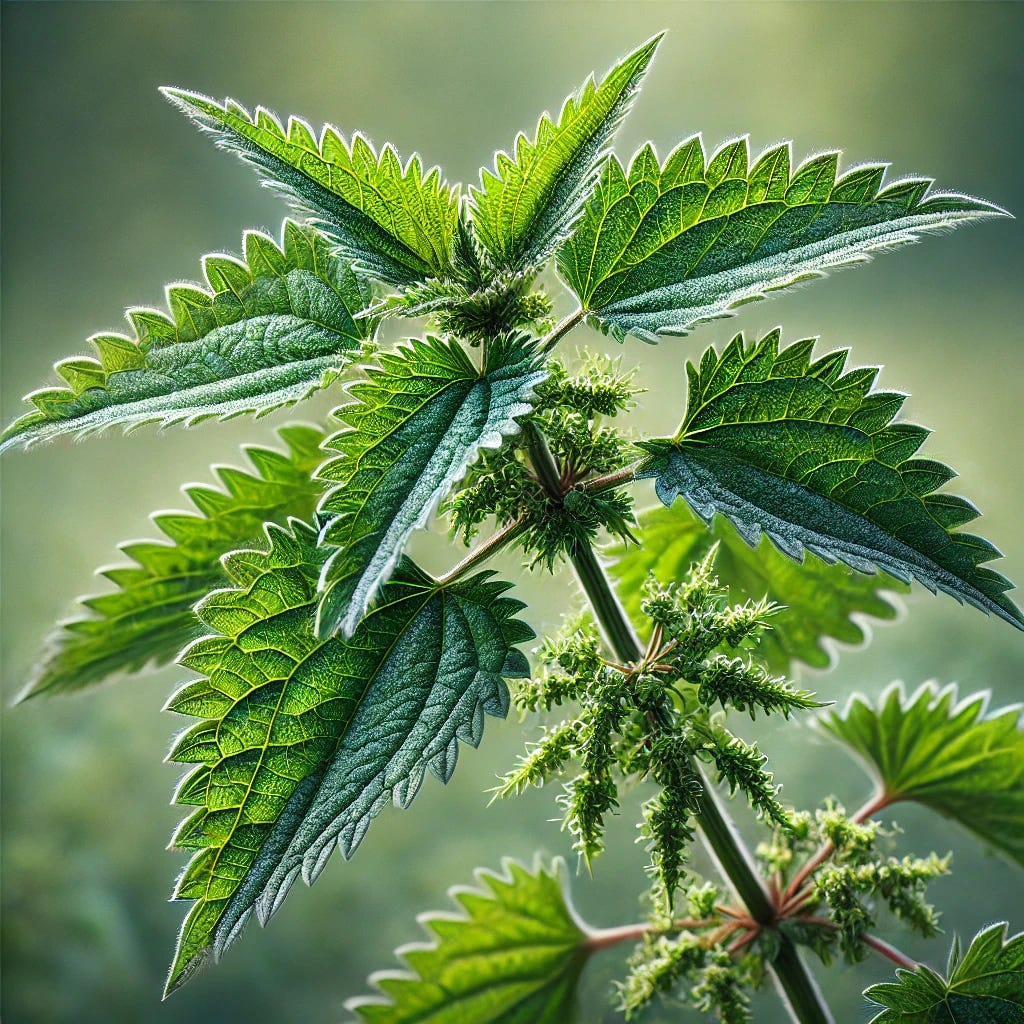
Figure: A young stinging nettle plant with serrated leaves and fine stinging hairs visible on the stems and foliage.
Botanical Name: Urtica dioica
Common Names: Stinging nettle, common nettle, burn nettle, nettle leaf (among others)
Family: Urticaceae (Nettle family)
Native Range: Originally native to Europe, temperate Asia, and North Africa.
Current Distribution: Now found across temperate regions worldwide (often as an introduced weed). It grows in North America, South America, and other continents wherever conditions are suitable, thriving in moist, nitrogen-rich soils near human habitation.
Botanical Description: Stinging nettle is a perennial herbaceous flowering plant that grows 0.9–2 meters (3–7 feet) tall in summer and dies back to the ground in winter. It spreads vigorously via yellow creeping rhizomes and stolons (underground stems). The stem is erect, wiry, and often square in cross-section. Leaves are arranged opposite (in pairs), and are ovate with coarse serrated margins and a heart-shaped (cordate) base. Each leaf is typically 3–15 cm long, dark green, with an acuminate (pointed) tip. Both stems and leaves are covered in fine hairs, among which many are stinging trichomes – hollow, bristle-like hairs that break upon contact and inject a cocktail of chemicals (including histamine, formic acid, acetylcholine, and serotonin) into the skin. This results in a stinging or burning sensation (a mild contact dermatitis known as “urticaria”). Despite this defense mechanism, U. dioica is only mildly poisonous – the sting causes temporary irritation but no lasting harm.
Stinging nettle plants are typically dioecious, meaning male and female flowers grow on separate plants (the species name dioica means “two houses”). The flowers are small, greenish or yellowish, and borne in dense clusters (inflorescences) hanging from the leaf axils. Being wind-pollinated, the blooms are not showy. After pollination, female plants produce tiny dry fruits (achenes) containing the seeds. A single plant can yield copious seeds, aiding its spread.
In appearance, nettle might seem like a humble weed, but it carries a strong presence. Its coarse, dark green foliage and formidable sting give it a reputation as something to avoid, yet this plant has a long history of human use. Across cultures, people have recognized Urtica dioica as a source of food, medicine, and fiber for millennia. Modern foragers and farmers are “rematriating” (reclaiming) this once-despised weed as an important ally, appreciating that within its prickly exterior lies a powerhouse of nutrients and beneficial properties.
2. Cultural Wisdom (Ethnobotany, Mythology, TEK)
Global Traditions & Ethnobotanical Uses
Stinging nettle has been used by cultures around the world as a nourishing food, a healing herb, and a practical resource. Traditional/Experiential Wisdom: Many indigenous and rural communities recognize nettle as a multipurpose plant. For example, in the Himalayas of Nepal, villagers prize nettle (called “sisnu” or “bichu ghaas”) as both food and medicine. Tender nettle shoots are prepared as a vegetable dish (such as sisnu ko saag), providing vital vitamins, minerals, and protein in mountain diets. The cultural importance is such that nettle soup is even consumed during festivals like Dashain, symbolizing strength and nourishment. In Ethiopia, the endemic nettle (Urtica simensis) is one of the top wild vegetables; communities cook it as a nutritious staple and use it as an herbal remedy. Studies document that Ethiopian elders have rich knowledge of how and when to gather nettle for food and the plant’s role in local diets, especially during times of food scarcity.
In Europe, stinging nettle’s use dates back to antiquity. Traditionally, European peoples welcomed young nettles each spring as a tonic “greens” after long winters. Nettle soup and potherb dishes were common in Ireland, Britain, and Scandinavia – a practice still alive as a seasonal cleanse and nutrient boost. An old English recipe for “nettle pudding” dates to at least the Bronze Age, and the idea of a spring nettle tonic to “clean the blood” persisted through medieval times. Nettle tea or infusions have been a folk remedy for ailments like arthritis, allergies, and anemia across Europe. In Germany and Eastern Europe, nettle was used both in herbal medicine and as an everyday food (such as stewed nettles or as a filling green in pies).
Beyond food, many societies utilized nettle’s strong fiber. Historically, fibers from nettle stems were extracted to make textiles in Europe and Asia. Before cotton was widely available, nettle was a crucial fiber plant – for instance, the fibers were spun into cloth for clothing or nets. In fact, nettle cloth (sometimes called “ramie” in older texts, though true ramie is a different plant) was valued in ancient textiles. The Czech and other Slavic peoples have used nettle fiber in fabric, and in World War I era Germany, nettle fabric was rediscovered as a substitute for cotton. In Nepal, the practice of making nettle fiber into thread and traditional shawls continues (often using the giant Himalayan nettle Girardinia species). The Nepalese preserve this artisanal craft, harvesting wild nettles and hand-processing the fiber – a technique now recognized as part of cultural heritage and a sustainable cottage industry. Ethnographic records also show Native peoples of North America (like the Pacific Northwest tribes) twisted nettle fibers into fishing nets and cordage, reflecting an independent invention of nettle fiber technology across the ocean.
Nettle’s ethnobotany also includes medicinal and ceremonial uses worldwide. In Ayurvedic and other South Asian traditions, nettle is used as a cooling, detoxifying herb; communities in the Himalayas drink nettle tea for joint pain and apply nettle preparations for hair health. In North Africa and the Middle East, nettle has been traditionally taken for diabetes and as a diuretic. Ancient Egyptians reportedly used nettle infusions to relieve arthritis and lumbago, and Roman soldiers carried dried nettles with them – not for food, but to flog their limbs in cold climates. (c) According to legend, Romans introduced nettle to the British Isles and would flail themselves with nettle stalks to stimulate circulation and warm the body in the damp chill. This practice, though painful, was a form of therapeutic self-massage (known as urtication) that is echoed in folk medicine elsewhere for arthritis relief: even today some traditional healers lightly slap painful joints with fresh nettles to bring blood flow and reduce inflammation.
Nearly everywhere nettle grows, people have found ways to integrate it into seasonal cycles. In many parts of Europe and North America, the first flush of nettle in spring is eagerly gathered as a nutritious wild vegetable (sometimes celebrated in local festivals). Some farmers historically timed the harvest of nettle hay or the cutting of nettle for compost tea with the moon or with planting schedules, integrating it into agricultural rhythms. Indigenous peoples also often timed nettle harvests: for instance, certain Indigenous tribes would only harvest nettle in early spring for food, and later in the season for fiber, to ensure the best quality and allow the plant to complete its life cycle. In the Pacific Northwest, men used nettle in a ritual context during hunting seasons – wetting or flagellating their arms and bodies with nettles before salmon fishing and whale hunting to impart strength and stamina. They synchronized this practice with the seasonal availability of nettles and the timing of hunting activities, illustrating how nettle was embedded in the seasonal and ceremonial calendar.
Mythology & Symbolism
Stinging nettle’s prickly nature and healing gifts have inspired rich folklore and symbolism. Across cultures, it is a plant of paradox – symbolizing pain and protection, humility and hidden power.
In European folklore, nettle was often regarded as a protective herb. One widespread belief was that nettles ward off evil and danger. People would carry nettle leaves or keep a nettle plant in the house to repel negative spirits and even lightning. In parts of England and Ireland, a bunch of nettles in a room was said to keep witches and evil at bay, and those inside would be protected from lightning strikes. On the last day of April (May Eve) in Ireland – sometimes called “Nettlemas” – young boys would playfully sting each other with nettle branches, perhaps echoing an older ritual of purification or protection. Nettle was one of the nine sacred herbs in Anglo-Saxon tradition (as recorded in the 10th-century "Nine Herbs Charm"), highlighting its importance in early medieval cosmology and healing magic.
In Norse mythology, nettle is associated with Thor, the thunder god. During thunderstorms, Scandinavian households would throw nettles into the fire, an offering to appease Thor and protect the home from lightning bolts. This practice underscores nettle’s role as a symbolic conductor of lightning – linking it to both danger and divine protection. The Norse trickster god Loki is also linked to nettles: one legend claims Loki fashioned the world’s first fishing net from nettle fibers. This myth reflects nettle’s utility (providing fiber for nets) and perhaps Loki’s cunning use of a stinging plant to craft a means of escape or sustenance.
Many European fairy tales and songs feature nettles as well. A famous example is Hans Christian Andersen’s story “The Wild Swans,” in which a princess must weave shirts out of nettles to break a spell on her brothers. In this tale, nettles represent the transformative power of sacrifice and love – the princess endures painful blisters harvesting and processing nettles in silence, knowing the same plant that stings her will ultimately save her family. The phrase “to grasp the nettle” has entered the English language, meaning to face a problem or challenge boldly – alluding to the fact that if you grab nettles firmly and confidently, you are less likely to be stung severely. Thus, nettle symbolizes courage and decisive action in folk wisdom.
In Indigenous mythology, nettle often appears in a lighter vein. Many tribes’ legends use nettle patches as a comic plot device – a lazy or arrogant figure (often a Coyote or trickster character) falls into nettles and is humbled by the painful stings. These stories convey moral lessons about humility and respecting nature’s power. However, Indigenous peoples were well aware of how to handle nettle safely and valued it. Among the Pacific Northwest tribes, nettle had deep ceremonial significance: before undertaking challenging tasks like hunting whales or seals, men rubbed fresh nettles on their limbs to invoke strength and numbness to cold. The nettle’s sting in this context became a rite of passage – enduring short-term pain for long-term success. In the Kawaiisu tribe of California, nettle was considered a source of “dream power”: a person seeking a vision would walk through a nettle patch, letting the stings prepare and purify them for the intense dreams or visions to come. This illustrates nettle’s role as a catalyst in spiritual practice, using its sharp touch to alter consciousness or open the mind.
Symbolically, nettle often represents boundaries. Its sting teaches one to approach with respect. Energetically, some herbalists say nettle embodies the fieriness of Mars (the planet/god of war) – it is protective, aggressive in growth, but ultimately transformative (more on this in the Bioenergetic section). People have also assigned nettle the meaning of transformation and perserverance. It turns “what hurts” into “what heals”: the very plant that can sting and irritate also provides profound nutrition and medicine. As one modern flower essence maker describes, nettle helps us deal with “prickly situations” and speak our truth without resentment. In essence, the mythology and symbolism of nettle teach adaptability – from pain to strength, from weed to valuable resource – reminding us that every aspect of nature can be a teacher.
Traditional Ecological Knowledge (TEK)
Indigenous and local knowledge systems have long understood stinging nettle’s roles in the ecosystem and how to steward it. Traditional Ecological Knowledge: In many regions, people observed that Urtica dioica tends to grow on rich, disturbed soils, often near past settlements, animal pens, or along streams. Thus, some First Nations and Old World farmers recognized nettle as an indicator of fertile, nitrogen-rich land (often where manure or organic matter is abundant). For example, if nettles thrived vigorously in a spot, traditional farmers in Europe inferred the soil was good for planting demanding crops like tomatoes or squash that also love high nitrogen. Similarly, Cree or other indigenous farmers in North America might notice that where nettle grows, the ground is moist and high in humus – knowledge that could guide planting choices or foraging routes.
Native peoples also practiced ethical harvesting of nettle that aligns with ecological principles. In many indigenous communities, it’s taught that when harvesting wild plants like nettle, one should never take more than 1/3 of a patch and should give thanks or an offering for what is taken. This ensures the nettle colony can continue to flourish and support other lives (such as caterpillars and pollinators). Some Pacific Northwest tribes would rotate their nettle harvesting areas year to year, allowing patches to recover and re-seed. Harvest was often done early in the season (for food or medicine) and then left later so the plants could complete their life cycle – a practice that both secured annual yields and maintained the plant’s presence. Such TEK reflects a reciprocal relationship: harvesters care for the nettle population, and in return the nettle provides sustenance and materials.
In terms of ecological roles, traditional knowledge noted that nettle stands support a variety of other species. For instance, elders in Europe and North America knew that butterflies love nettles – long before scientific studies, they observed that certain butterfly caterpillars (like the red admiral, peacock, and small tortoiseshell) were always found on nettle plants. So some farmers would actually leave a patch of nettles in an out-of-the-way corner specifically “for the butterflies,” intuitively practicing biodiversity conservation. This aligns with TEK principles of ensuring all “our relatives” (in the ecosystem) have what they need. In a similar vein, some Native American traditions might encourage leaving nettles uncut along streams to prevent erosion and to provide habitat for small animals, understanding nettle’s role in stabilizing soil and sheltering wildlife.
Ceremonial and spiritual ecology: In TEK, plants are often seen as having their own spirits and needing to be treated with respect. Before harvesting nettle, some indigenous harvesters would speak to the plant, or in Salish tradition, perhaps rub themselves with fern or another antidote plant as a respectful acknowledgment of nettle’s power. The idea was to ask nettle to “bite gently” or to forgive the injury caused by harvesting. By engaging with nettle in ceremony (such as the Kawaiisu vision quest preparation mentioned above), people cultivated a deeper understanding of the plant’s “personality” – seeing it as a teacher of endurance and clarity. This spiritual dimension of TEK emphasizes relationships: nettle was not just an object or a weed, but a being one interacts with. As such, certain ethical guidelines emerged: for example, one should not carelessly destroy a whole nettle patch because it hosts butterfly life and carries medicinal spirit; doing so could upset the balance and offend the plant’s spirit, resulting in consequences (like fewer butterflies or loss of a healing ally).
Cultural Disruption & Rematriation
Over the last few centuries, industrialization and colonialism disrupted many of the traditional relationships with nettle. Cultural Disruption: In colonized regions, indigenous practices of harvesting and using nettle were often suppressed or lost. For example, in North America, settlers often viewed nettle simply as a stinging weed, and extensive land “improvement” efforts meant clearing nettle stands (along with other native plants) to make way for pasture and crops. The knowledge held by tribes about nettle’s food and fiber uses was frequently marginalized, as store-bought foods and textiles replaced wild harvesting. Similarly, in Europe, the rise of commercial agriculture and the availability of imported foods and cotton cloth led to a decline in rural nettle usage. By the mid-20th century, many younger people regarded nettle solely as a nuisance – something to be cleared from gardens and hedgerows, and sprayed with herbicides. This represents a cultural forgetting: colonization of minds by convenience and new materials caused an estrangement from the once-familiar nettle.
However, there is a growing movement of rematriation and revival regarding nettle wisdom. Rematriation refers to restoring the sacred relationship between communities and the land (the term emphasizes nurturing and reclaiming traditional knowledge). Around the world, people are re-learning nettle’s value and reintegrating it into sustainable living practices. For instance, indigenous groups and ethnobotanists in the Pacific Northwest have begun workshops to revive making nettle cordage and textiles, reconnecting youth with ancestral skills. These efforts not only bring back lost techniques but also heal cultural identity by honoring the plants central to their heritage. In Europe and America, herbalists are teaching others how to safely forage and use nettle for food and medicine, effectively re-normalizing nettle as part of a healthy diet and farm system. Community gardens and permaculture farms now often include a patch of nettle, deliberately “welcoming home” a plant that was once unwelcome.
There have also been protective efforts: while Urtica dioica is not endangered (in fact, it’s quite abundant), cultural practitioners emphasize protecting wild nettle habitats from pesticides and development so that this freely available “green pharmacy” remains accessible to all. In some areas, regulations that once forbade sharing homemade nettle remedies (such as France’s infamous ban on promoting purin d’ortie, fermented nettle fertilizer, which was seen as undermining chemical fertilizer sales) have been challenged by farmers and gardeners. The result is legal and social recognition of nettle-based preparations as legitimate tools in agroecology, which is a form of rematriating knowledge that had been sidelined.
In summary, cultures worldwide are remembering the wisdom of nettle: an ancient companion of humanity that nourishes, heals, and supports ecosystems. The tone around nettle is shifting from fear or disdain to reverence and gratitude. Grandmothers share nettle soup recipes with grandchildren; indigenous weavers teach how to extract nettle fiber; farmers swap recipes for nettle compost tea. By reclaiming these practices, communities restore not just the uses of a plant, but a respectful way of relating to nature. This living cultural wisdom, once disrupted, is being actively carried forward into contemporary regenerative farming, herbal medicine, and cultural storytelling.
👉 Subscribe to Holistic Farming — and thank you for helping to understand these weeds.
3. Nutritional Profile & Health Benefits
Stinging nettle is often hailed as a nutrient-dense “superfood” – a characterization that (a) scientific analysis supports and that traditional herbalists have long believed. The plant’s leaves (and to a lesser extent its seeds and roots) are packed with macronutrients, vitamins, minerals, and unique bioactive compounds that confer numerous health benefits. Below we break down nettle’s nutritional composition and medicinal properties, distinguishing between empirical evidence and traditional uses, as well as mentioning emerging clinical insights.
Macronutrients (Protein, Fats, Carbohydrates)
(a) Scientific Evidence: Nettle leaves provide a remarkable array of macronutrients for a leafy green. When dried, nettle can be about 25–30% protein by weight, making it one of the highest-protein wild plants. Even fresh or blanched nettle contains notable protein – roughly 2.4 grams of protein per 1 cup of cooked nettles (about 100g). This protein includes all essential amino acids, which explains why farmers historically noted that livestock and poultry thrived on nettle fodder (more on that in section 6). Nettle’s carbohydrate content is mostly in the form of beneficial fiber. A cup of cooked nettles might have around 6–7 grams of carbohydrate, of which the majority is complex fiber (very little sugar). This fiber supports digestive health and feeds gut microbes. Fat content in nettle is extremely low (well under 1% fresh weight), just enough to include some essential fatty acids in trace amounts.
(b) Traditional Wisdom: Folk healers may not have measured proteins or carbs, but they intuitively valued nettle as a strengthening food. In old Europe, nettle soup was given to anemic or convalescing individuals, likely because its high nutrient content (protein and iron) was building up their strength. In some indigenous communities, nettle was known to “stick to the ribs” – a way of saying it’s hearty and sustaining, which correlates with its protein and fiber richness. Healers also observed that nettle “nourishes the blood and muscles,” a prescient insight given what we know about its macronutrients and mineral content.
Micronutrients (Vitamins & Minerals)
(a) Scientific Evidence: Nettle is a micronutrient powerhouse. It contains an abundance of vitamins, including vitamin A (as beta-carotene), several B vitamins (such as thiamin, riboflavin, niacin), vitamin C, vitamin K1, and even vitamin E and D in smaller quantities. For example, a 100g serving of cooked nettles can provide a large portion of the recommended Vitamin A (beta-carotene) and Vitamin K. One study noted that processed nettle can supply nearly 90–100% of daily Vitamin A (as provitamin carotenoids) in a serving. Vitamin C is also high in fresh nettle – one source suggests around 200 mg per 100g of fresh leaves (though some is lost in cooking) making it richer in C than spinach or lettuce.
Nettle’s mineral content is especially impressive. It is rich in iron, which supports its traditional use for anemia. It also provides calcium (for bone health), magnesium, potassium, and zinc in notable amounts. Nettle’s calcium content rivals that of dairy milk per gram, and its iron content (in dried form) can be very high (a few spoonfuls of dried nettle might contain several milligrams of iron). Additionally, nettle offers trace minerals like selenium, manganese, boron, and copper. These micronutrients contribute to the “tonic” effect nettle has – replenishing electrolytes and supporting metabolic processes. Nettle is so mineral-rich that in some studies, dried nettle leaf was ~15% ash by weight, indicating dense mineral accumulation.
(b) Traditional Wisdom: Across cultures, nettle has been known as a mineral-rich tonic. For instance, midwives and herbalists often give nettle tea to pregnant or postpartum women as a nutritive uterine tonic – partly because its high calcium and iron content can support pregnancy and recovery. Many a herbal lore says nettle “strengthens the blood” (pointing to its iron) and “strengthens the bones and hair” (pointing to calcium, silica, etc.). The deep green color of nettle (chlorophyll) was traditionally associated with liver cleansing and vitality; interestingly chlorophyll is chemically similar to hemoglobin, and while not used directly by our blood, it does indicate the presence of magnesium and other nutrients. Traditional diets, such as among the Sami or other northern peoples, used nettle as a scurvy preventative in spring – which aligns with its high Vitamin C content. Thus, empirical analysis confirms what our ancestors sensed: nettle is like a green multivitamin from nature.
Bioactive Compounds (Phytochemicals & Medicinal Constituents)
Beyond basic nutrients, nettle is rich in specialized compounds that contribute to its medicinal effects. (a) Modern research has identified numerous phytochemicals in nettle leaves, stems, roots, and seeds:
Polyphenols and Flavonoids: Nettle leaves contain a variety of antioxidant flavonoids such as quercetin, kaempferol, rutin, and caffeic acid derivatives. These compounds help neutralize free radicals and have anti-inflammatory effects. Studies have found that nettle extracts have high total phenolic content, correlating with strong antioxidant activity. Quercetin in nettle likely contributes to its traditional use in allergy relief (quercetin is known to stabilize mast cells and reduce histamine release).
Carotenoids: Nettle’s high vitamin A activity comes from carotenoids like β-carotene, lutein, and zeaxanthin in the leaves. These support eye health and have antioxidant roles.
Chlorophyll: The rich chlorophyll content is notable – nettle’s deep green indicates one of the higher chlorophyll levels among herbs. Chlorophyll is sometimes called a “blood builder” in herbal circles and may have mild detoxifying properties.
Organic Acids: Formic acid (the same acid in ant venom) and acetic acid are present in the sting, along with histamine and acetylcholine, which cause the immediate burn. These are more of a defensive cocktail than a nutritive one, but interestingly, when nettle is ingested (after cooking neutralizes these acids), small residual amounts or their effects might stimulate digestion or circulation in beneficial ways (similar to why people take vinegar or bitters).
Tannins: Nettle has some astringent tannins, especially in the leaves and root. This astringency can help tighten tissues and explain why nettle tea has been used for diarrhea or as a skin toner.
Lignans and Phytosterols: Particularly in nettle roots and seeds, compounds like secoisolariciresinol (a lignan) and beta-sitosterol (a phytosterol) are found. These have hormone-modulating effects. Beta-sitosterol from nettle root is thought to assist in managing benign prostatic hyperplasia (BPH) by inhibiting certain inflammatory or hormonal pathways in the prostate. Lignans might have adaptogenic qualities, and indeed, herbalists use nettle seed as an adrenal/kidney tonic (more on seeds shortly).
Lectins: A unique protein in nettle is the Urtica dioica agglutinin (UDA), a type of lectin especially concentrated in the roots. Lectins are proteins that can bind to specific carbohydrates. UDA has attracted research interest for its potential antiviral and immunomodulatory activity. In fact, UDA has demonstrated antiviral effects in lab studies (for example, against HIV and herpes viruses) by binding to viral glycoproteins, and is being explored as a biomedical tool. This lectin may also be part of nettle’s defense in soil (it’s been implicated in nettle’s resistance to certain fungi, as it can bind and interfere with fungal organisms).
Fatty acids: Though nettle leaves are low-fat, the seeds contain beneficial oils, including linoleic and linolenic acid (omega-6 and omega-3). Nettle seed also contains compounds that can support energy and kidney function – modern herbalists consider them an “adaptogen.”
(b) Traditional/Experiential Knowledge: People using nettle might not name “flavonoids” or “lectins,” but they noticed the effects. For example, the mild diuretic effect of nettle tea (helping the body shed excess water and toxins) was well known – likely due to the synergy of potassium (a natural diuretic) and flavonoids. The fact that nettle could reduce allergy symptoms (like hay fever) was observed by some herbal practitioners; now we know quercetin and other constituents can inhibit histamine response. Also, stinging oneself with nettle (urtication) for arthritis relief was a folk practice – initially paradoxical, but research suggests it triggers an anti-inflammatory reflex and local pain relief possibly by exhausting substance P (a pain neurotransmitter) or by downregulating autoimmune signals. So the plant’s bioactives have real effects that traditional users catalogued in their own terms: “nettle takes away the ache,” “it clears the skin,” “it cools the blood,” etc., each pointing to under-the-hood phytochemistry.
Medicinal Uses & Clinical Evidence
Stinging nettle has a long list of medicinal uses in folk medicine, many of which have gained (a) scientific validation or at least plausible explanations in clinical research. Below we consider both traditional preparations and modern pharmacological insights:
Traditional Medicinal Uses & Preparations: Urtica dioica is a staple in Western herbalism, often used as a nourishing tonic and a remedy for various conditions:
Diuretic and “spring blood cleanser”: Nettle tea has been used to gently flush the kidneys and bladder. In European traditions, a nettle infusion is a remedy for urinary tract infections and general “spring cleaning” of the system. It promotes urine flow, helping to eliminate waste and relieve water retention. Traditional preparation: a strong infusion of the dried leaves (steeped for several hours to extract maximum minerals) taken in cups throughout the day. This use overlaps with modern indications for mild diuretics.
Arthritis, Gout, and Joint Pain: Nettle has been applied both internally and externally for joint ailments. Drinking nettle tea or eating nettle was believed to reduce rheumatic pains. Externally, as noted, urtication (lightly slapping painful joints with fresh nettles) was practiced to stimulate blood circulation and relieve chronic musculoskeletal pain. Modern herbal creams and liniments for arthritis sometimes incorporate nettle extracts or nettle leaf cream (and indeed some clinical trials found nettle leaf extract can reduce pain when applied to painful joints, possibly by anti-inflammatory action on the skin receptors).
Allergies and Hay Fever: Paradoxically, the plant that causes a skin allergic reaction can help with allergies. Traditional herbalists in Europe and America have given freeze-dried nettle capsules or strong teas to people with hay fever, reporting reduced sneezing and itching. Today, a small body of research suggests nettle can reduce allergy symptoms – likely through its anti-histamine and anti-inflammatory constituents. It’s common for people with seasonal allergies to take nettle leaf capsules prophylactically during pollen season.
Anemia and Fatigue: Due to its iron and nutrient content, nettle has long been used for anemia or low energy, especially in women. A classic remedy for iron-deficiency anemia from European folk medicine is nettle syrup or nettle infusion combined with other iron-rich herbs (like yellow dock). This “building” effect is recognized in phytotherapy as well – nettle indeed can improve hemoglobin levels in mild cases thanks to its iron and vitamin C (which aids iron absorption).
Skin Conditions: Nettle tea or tincture has been used internally for eczema, acne, and other skin eruptions, under the theory that it “cleanses the blood” and cools inflammation. Topically, nettle infusions or ointments are applied to soothe eczema, rashes, and scalp conditions like dandruff. There is some evidence that nettle’s anti-inflammatory and astringent compounds help in dermatologic conditions (for example, a nettle cream can reduce redness and itching in eczema).
Prostate and Urinary Health: A very important traditional use, especially of nettle root, is for symptoms of benign prostatic hyperplasia (BPH) in men (enlarged prostate). In traditional European herbal medicine (e.g. German Commission E), nettle root extract is approved for improving urinary flow and reducing nocturia (nighttime urination) associated with BPH. (a) Modern clinical trials have indeed shown nettle root extract can significantly alleviate BPH symptoms, often used alongside saw palmetto. The mechanism is thought to involve the phytosterols and lignans interfering with binding of sex-hormone-binding globulin and local inflammation in the prostate. Many over-the-counter prostate formulas contain Urtica dioica root and have clinical backing for mild-to-moderate symptom relief. This is a case where traditional use led to a well-established modern therapy.
Metabolic and Endocrine effects: Folk usage of nettle includes lowering blood sugar (some Native American tribes used nettle for adult-onset diabetes, and Russian folk medicine also did). (a) Some small studies indicate nettle can modestly lower blood glucose in type 2 diabetes, possibly by affecting pancreatic secretion or cellular glucose uptake. Additionally, nettle seed has been used historically as a galactagogue (to promote milk production in nursing mothers) and as a stimulant for thyroid/kidney (in Middle Eastern folk medicine, nettle seed is given for hypothyroidism or adrenal fatigue). These uses are still being explored; for example, herbal practitioners today give nettle seed tincture for chronic kidney disease to improve kidney function, and anecdotal reports are promising, though scientific evidence is limited.
Modern Clinical Evidence: (a) The medicinal claims of nettle have been investigated in various studies:
Anti-inflammatory: Numerous studies confirm that nettle leaf extracts can inhibit key inflammatory pathways (like NF-κB and cytokines). One randomized trial found that nettle leaf extract, when combined with an anti-inflammatory drug, allowed patients with arthritis to reduce their drug dose while maintaining pain relief. Even simply eating nettle (cooked) might contribute to lower inflammation markers due to polyphenols.
Benign Prostate Hyperplasia: As mentioned, double-blind trials using nettle root (often in combination with other herbs) show improved urinary output and reduced residual urine in BPH. This is supported by decades of phytomedical use in Europe.
Allergies: A small double-blind study (published in 1990s) suggested that 58% of patients found freeze-dried nettle moderately to highly effective in reducing hay fever symptoms compared to placebo (though more research is needed).
Antihypertensive: Nettle’s combination of diuretic action and vasodilatory effect (from nitric-oxide releasing compounds) has been observed in animal studies. Some human evidence suggests nettle tea can gently lower blood pressure, especially in people retaining fluid. However, it’s not a primary hypertensive drug, just a supportive therapy.
Blood sugar: Animal studies show nettle extract can decrease blood glucose, and a few human studies reported improved glycemic control with nettle alongside standard care. The mechanism may involve compounds that mimic insulin or protect pancreatic beta cells.
Anti-ulcer and gut health: An interesting line of research in rats showed nettle extract helped heal gastric ulcers (possibly due to its antioxidant and mucus-protective effects). This ties to traditional use of nettle tea for gastritis and gut “toning.”
Antimicrobial: Nettle shows antibacterial activity against some pathogens in lab settings, thanks to its spectrum of phytochemicals. It’s not a strong antibiotic, but the presence of caffeic acid, chlorophyll (which can have deodorizing/antimicrobial effects), and others give it a modest effect. People have applied nettle poultices to wounds historically to prevent infection – a practice somewhat justified by these properties.
Safety & Contraindications: Stinging nettle is generally very safe when used appropriately, but there are some considerations:
Handling Precautions: Fresh nettle can sting the skin and cause redness, itching, or even hives in sensitive individuals. This contact reaction is short-lived (minutes to hours) and can be treated by rubbing the area with jewelweed or dock leaf (a traditional remedy captured in the rhyme “Nettle in, dock out” – referring to using dock plant sap to relieve nettle stings). Once cooked, dried, or crushed, nettle loses its sting and is harmless to touch.
Allergies: Ironically, while nettle can help allergies, some people might be allergic to nettle itself. There are rare reports of allergic reactions (like rash or edema) from ingesting nettle. Those with sensitivities to plants in the Urticaceae family or with severe pollen allergies might exercise caution. Additionally, nettle pollen (when the plant is flowering) is a known allergen that can cause hay fever in late spring.
Drug Interactions: (a) Scientific/clinical perspective: Nettle’s diuretic effect means it could potentially enhance the effect of diuretic medications, so monitoring is advised if taken together (to avoid dehydration or electrolyte imbalance). Nettle may lower blood pressure and blood sugar, so if a person is on antihypertensive or antidiabetic drugs, concurrent use might necessitate dosage adjustments to avoid hypotension or hypoglycemia. It’s always wise for individuals on medication to consult a healthcare provider before regularly using strong nettle preparations. Nettle also contains vitamin K, which could in theory affect blood-thinning medications like warfarin (though probably not drastically unless taking large amounts of nettle regularly).
Pregnancy and Lactation: Traditional herbal texts often praise nettle as a pregnancy tonic (for its iron and calcium). However, some sources caution that nettle may stimulate the uterus. The consensus among modern herbalists is that nettles are generally safe in pregnancy as a nutritive tea, especially in second and third trimester, but extremely concentrated extracts or tinctures should be used judiciously. Pregnant women should consult a knowledgeable practitioner. Nettle does promote milk production postpartum (and is found in many lactation tea blends), so it’s usually welcome during breastfeeding.
Kidney concerns: Because nettle is a diuretic and high in certain minerals, there was an old caution not to consume mature nettle (especially once it has gone to seed) regularly, as the leaves develop gritty particles (calcium oxalate and cystoliths) that could irritate kidneys. The general advice is to harvest nettle for eating before flowering, as after that the accumulating cystoliths might contribute to kidney stone formation or irritation. If someone has kidney disease, they should use nettle under guidance – interestingly though, nettle seed is used by herbalists to help kidney disease, but nettle leaf’s mineral load might be too much for some kidney conditions.
Hypotension or Electrolyte issues: Nettle’s combination of diuretic and vasodilatory effects means it can occasionally cause blood pressure to drop or lead to mild dizziness if one stands up quickly after taking a strong nettle tea (especially in hot weather). Staying hydrated and not overdoing it is key. Also, because it can cause your body to excrete sodium and water, make sure to replenish electrolytes (the good thing is nettle itself supplies potassium and magnesium, balancing its diuretic action).
Stinging External Use: If practicing urtication (which is an extreme folk practice), one should be cautious – repeated stinging can cause welts and stress on the system. It’s certainly not for everyone, and should never be done over large areas or near sensitive parts of the body. Topical use of nettle in creams or washes is generally very safe.
In summary,
(a) Scientifically nettle is validated as a nutrient-rich plant with anti-inflammatory, diuretic, and various therapeutic effects.
(b) Traditionally it’s been a valued panacea for weakness, pain, and “impurities.”
(c) Emerging evidence continues to explore nettle’s potential in modern medicine – for example, current studies are examining nettle extracts for conditions like osteoarthritis, hypertension, and even as adjunct therapy in cancer (due to nettle’s cytotoxic effects on some tumor cells in lab tests, although that’s very preliminary). Stinging nettle truly stands at the intersection of food and medicine – a prime example of “let thy food be thy medicine.”
Safety & Contraindications
Proper Identification & Harvest: First, ensure you have correctly identified Urtica dioica or a similar edible nettle species when foraging – some plants like deadnettles (Lamium) resemble it but are harmless (and also edible). True nettle will sting. Harvest from clean areas (nettles can uptake nitrates and pollutants; avoid roadsides or sprayed areas). Use gloves and scissors to avoid stings during harvest. Traditionally, the tops (the first 4–6 inches) of young nettles are harvested in spring for best edibility; older leaves can be tougher or collect mineral crystals.
Preparation to Disable Stings: Never eat fresh raw nettles that haven’t been processed – the trichomes can sting the mouth and throat. To safely consume nettle, cook, steam, blanch, or dry the herb. As noted in one source, boiling nettles for just a few minutes completely disarms the stinging hairs. Blanching in hot water or crushing the leaves (for instance with a rolling pin) is also effective at removing the sting. Drying nettle for tea or powdered supplements renders it safe as well. If making a fresh nettle smoothie (which some adventurous people do to maximize nutrients), ensure to pulse it thoroughly to mechanically destroy the hairs, and consider adding an acid like citrus which may help neutralize the formic acid.
Dosage and Moderation: Nettle is food-like, so dietary amounts (like a cup of cooked greens or a few cups of mild tea a day) are generally very well tolerated. However, extremely high doses of concentrates or long-term use should be discussed with a healthcare provider. Because nettle is so nutritive, an excessive amount might imbalance certain levels (for instance, too much vitamin K could affect blood thinners as mentioned). Use moderate amounts if taking daily over long periods, or take breaks. Traditional usage often followed seasonal patterns – heavy use in spring, tapering off later – which inherently built in moderation.
Known Contraindications: People with edema related to heart or kidney failure should not use nettle to self-treat edema without medical supervision (since the fluid retention in those cases shouldn’t be aggressively diuresed without addressing the root cause). Likewise, if someone has kidney stones or a history of them, they should consult a practitioner before using large quantities of nettle, due to the mineral content and possible oxalates (though nettle is not as oxalate-rich as spinach, for example).
Children: Nettle is generally safe for children when used as a mild food or tea (with proper preparation). In fact, nutrient-rich nettle tea can be given to boost a child’s nutrition. But obviously keep kids away from patches of fresh stinging nettle to prevent accidental stings, and explain the plant’s nature to them.
In conclusion, stinging nettle is considered very safe and is approved in many countries as an over-the-counter herb for various uses. Respect the plant’s sting when handling, integrate it wisely if you are on medications, and enjoy its benefits as both food and medicine. The long history of usage attests to its safety profile, and modern science confirms there are no highly toxic constituents in nettle – just an abundance of healthy compounds, with the “nastiest” thing being that temporary formic acid sting.
That’s worth a few seeds tossed in the soil.
👉 Subscribe here — let’s keep cultivating wisdom together.
4. Soil & Ecosystem Roles (Ecological, Agricultural, Regenerative)
Stinging nettle is not only valuable to humans but also plays important roles in soil health, farm ecology, and natural ecosystems. What appears to be a mere weed can actually enrich the soil, support diverse wildlife, and even assist other plants. This section explores how nettle contributes to nutrient cycling (a scientific perspective on soil-building), how it fits into ecological communities (biodiversity from a mix of traditional and scientific views), and some practical uses of nettle in agroecology (including companion planting and natural pest management). We also note some unusual aspects of nettle’s interactions with soil microbes, touching on emerging insights (and mysteries) in plant-microbe signaling.
Soil Building & Nutrient Management
(a) Scientific/Ecological View: Stinging nettle has a reputation as a “dynamic accumulator” – a plant that gathers nutrients from the soil and concentrates them in its tissues. Indeed, nettle’s high nutrient content (particularly nitrogen, potassium, calcium, magnesium, and iron) means that when its foliage dies back or is composted, it returns those nutrients to the soil in a readily available form. In life, nettle’s presence can indicate a soil already rich in nitrogen and organic matter, but nettle also amplifies that richness. Its fast growth produces abundant biomass, which, if left to decay, builds humus. Gardeners have noticed that soils under long-standing nettle patches become dark, loamy, and fertile, due to years of nettle leaf litter and root turnover.
Nettle’s impact on soil fertility is such that using it as green manure or compost material can significantly enrich compost piles. A common practice is adding cut nettle to compost – the plant acts as a “compost activator,” speeding up decomposition. This is because nettle provides a good carbon:nitrogen balance (it’s high in nitrogen and moisture), fostering microbial growth that breaks down other organic matter. The result is a more finished, nutrient-rich compost in less time. As one source puts it, “nettles improve any compost” – they help stabilize nitrogen in the pile and prevent nutrient losses. Biodynamic farming considers nettle so vital to compost that one of its six core compost preparations (Prep 504) is made from fermented nettle, specifically to stabilize nitrogen and enhance decomposition. Nettle compost preparation is believed to “bring sensitivity and intelligence” to the soil, reflecting how well it balances nutrient processes.
Regarding soil structure, nettle’s contributions are subtle but positive. It has a fibrous root network of rhizomes that can help bind soil and prevent erosion on streambanks or slopes where it grows. Each winter the above-ground parts die, adding organic matter on the surface, while the roots below create channels as older roots die off – improving aeration and crumb structure in the upper soil layers. Biodynamic literature even states that nettle has a “structure-improving effect on the soil” when used in compost, meaning soil tilth and crumb stability are enhanced.
One can think of nettle as a natural nutrient pump. It especially loves and accumulates nitrogen, often found in nitrate form. By sucking up excess nitrates from manure-rich soils or animal pens, nettle prevents those nutrients from leaching into waterways (so it can actually act as a buffer against water pollution in barnyards). Then it stores them in its leaves; when the plant dies or is cut, those nutrients can be released in a more slow-release fashion. Nettle also accumulates phosphorus (not as dramatically as N, but notably) – interestingly, an ecological note: some sources say nettle stands indicate high phosphate soils. A farmer-scientist observation from Edgwick Farm: “The growth of stinging nettle is an indicator that an area has high fertility (especially phosphorus) and has been disturbed”. So nettle is often nature’s way of healing a patch of ground that had an influx of nutrients: it rapidly covers it, uses those nutrients to grow and prevent erosion, and then recycles them.
(b) Traditional/Experiential Knowledge: Old farmers would say “if you have nettles, you have good soil.” This aligns with the indicator concept. They would deliberately leave nettles near the manure heap; after manure aged, they’d spread a nettle-rich compost tea on fields, effectively transferring nutrients. In peasant farming, nettles were sometimes grown in fallow corners to later cut and bury in crop beds as fertilizer. Such practices, guided by experience, anticipated what modern analysis confirms – nettle is like a natural fertilizer factory.
One traditional soil use was making nettle liquid manure (fermented extract) as described in many 19th-century farming manuals: fill a barrel with nettles and water, let it ferment into a rich “tea”, then dilute and pour on the crops for vigorous growth. Gardeners still use this; laboratory analysis shows fermented nettle extract is “particularly rich in nitrogen, phosphorus, calcium, magnesium and iron” and indeed promotes plant growth. Thus, the empirically developed nettle fertilizer is scientifically validated as a multi-nutrient tonic for soil.
One caution in soil terms: nettle’s love of high fertility means it can dominate disturbed, nutrient-loaded soils to the exclusion of other plants. In ecological succession, nettle often forms monoculture thickets in places like old cattle corrals or abandoned farmyards where soil is very rich. Over time, if fertility declines or shrubs overtop, the nettles wane and other plants succeed them, but in the interim, a nettle “weed-bed” might suppress other pioneer species. So while nettle builds soil, an overabundance can also signify imbalance (like excess manure or nitrogen). A regenerative approach uses nettle to correct that, by harvesting its biomass and thereby exporting some of the excess nutrients or moving them into compost.
Microbial Life (Fungal/Bacterial relationships): Here is a fascinating twist: many plants engage in symbiotic relationships with mycorrhizal fungi to enhance nutrient uptake. Urtica dioica, however, appears to largely go it alone. Research has shown that stinging nettle is often non-mycorrhizal – it tends not to form arbuscular mycorrhizae with soil fungi (AMF), even though many related plants do. A particular study suggested that nettle’s roots, rich in the lectin UDA, might actually inhibit the colonization of typical mycorrhizal fungi like Glomus mosseae. The presence of UDA at the root surface correlates with an antifungal activity in soil. This means nettle is somewhat unique: it thrives in high-nutrient soils and seems to eschew fungal partners, possibly as an adaptation to abundant conditions where fungi aren’t needed for nutrient uptake. It may even fend off fungi to avoid parasitic interactions or to keep more nitrogen for itself.
That said, nettle isn’t a sterile island. Its rhizosphere (root zone) still hosts a variety of bacteria and non-mycorrhizal fungi that break down organic matter. Some studies found that even though nettle doesn’t form mycorrhiza, there is an overlap of fungal communities between nettle patches and neighboring trees, suggesting some connections via common fungal networks might exist. Perhaps nettle indirectly benefits from fungal networks that connect to other plants without directly getting colonized. Also, decaying nettle tissues feed saprophytic fungi – one might often see mushrooms or molds in rich nettle beds, contributing to decomposition.
(c) Emerging/Quantum Perspective: It’s intriguing to speculate why nettle avoids fungal symbiosis. One hypothesis is that nettle’s biochemical field (e.g., lectins, formic acid exudates) sets a kind of energetic boundary in the soil. It might maintain a microbial community that is more bacterially dominated (as typically occurs in nitrogen-rich, disturbed soils) and less fungal-dominated. Some biodynamic farmers interpret nettle’s effect as bringing “order” to chaotic nutrient situations – possibly its lectin is part of that ordering, selectively pruning which microbes can come close. This hints at a subtle communication: nettle may be signaling “I have enough nutrients; no fungal help needed,” essentially controlling its micro-ecosystem.
Overall, nettle improves nutrient cycling and soil organic content. Through its fast growth, high nutrient uptake, and generous nutrient return, it acts as a pioneer healer of soils – turning waste into fertility. Farmers and ecologists can harness this by composting nettle, using it in teas, or simply allowing it to grow in fallow areas to bank nutrients. With proper management, nettle’s soil-building prowess can be directed to rejuvenate gardens and farmlands naturally, exemplifying how a wild weed can become a regenerative ally.
Biodiversity & Wildlife Support
Stinging nettle is a keystone species for many insects and provides food and habitat for wildlife, despite (or because of) its stinging defense. (a) Ecological significance: Nettles form dense stands that serve as shelter for small animals and create micro-habitats of higher humidity and shade at ground level. Importantly, they are the primary host plant for the caterpillars of dozens of butterfly and moth species – making nettle patches critical for certain life cycles.
Insects (especially Butterflies): A classic observation in Europe is that patches of nettle will often be covered in black, spiky caterpillars – these are the larvae of the peacock butterfly or small tortoiseshell, two beloved native butterflies that only lay their eggs on nettles. In fact, Urtica dioica is a chief larval food plant for at least 50 species of butterflies and moths in Europe. Notable examples include:
The Peacock (Aglais io) and Small Tortoiseshell (Aglais urticae) butterflies – their populations depend on nettle abundance. They lay clusters of eggs on nettle, and the caterpillars feed gregariously on the leaves, often skeletonizing them by late summer.
The Red Admiral (Vanessa atalanta) – known in North America and Europe, this butterfly’s larvae also eat nettle leaves (rolled into a little nest). Red Admirals are frequently seen fluttering around nettle stands in summer, laying eggs and later feeding on fermenting fruit.
The Comma (Polygonia c-album) and Question Mark butterflies (Polygonia interrogationis) – these have jagged wing edges and their spiny larvae feed on nettles (among a few other hosts). In North America, the Eastern Comma and Question Mark use nettle as one host.
The Painted Lady (Vanessa cardui) – another famous migratory butterfly that in some regions will lay eggs on nettle (Painted ladies are generalists but nettle is a noted host plant).
Various moths like the Nettle-tap moth (Anthophila fabriciana), a small moth whose larvae feed on nettle, and others in the Geometridae family.
Given this, ecologists often consider nettle a butterfly habitat plant. One UK gardening source put it plainly: if you want peacock and tortoiseshell butterflies, you must tolerate some nettles on your property. In some conservation projects, nettle stands are maintained or even planted to boost butterfly numbers.
(b) Traditional knowledge: Even without scientific surveys, country folk knew “nettles bring butterflies.” There’s folklore that a good patch of nettles ensures you’ll have more colorful butterflies around. This knowledge is being re-incorporated into wildlife gardening guides today (for instance, recommending a hidden corner of nettles for caterpillars). A lovely paradox emerges: people historically would curse nettles for stinging, but also recognize that in late summer those same nettles give forth a cloud of beautiful butterflies – a gift to the environment.
Other Beneficial Insects: Nettle patches also attract predatory and pollinating insects:
Ladybugs (Ladybirds): Nettle often hosts aphids (the nettle aphid, Microlophium carnosum, for example). While aphids might seem like a pest, having a controlled aphid population on nettles early in the season can attract ladybugs and lacewings to lay eggs there. Soon, larvae of these beneficial predators hatch and feast on the nettle aphids. Later, those ladybugs disperse to the rest of the garden and help control aphids on crops. Some organic gardeners deliberately use nettle as a “sacrificial” or nursery plant to breed beneficial insects – basically a banker plant for aphids to support predator populations. As one source notes, nettle “attracts beneficial insects” including ladybird beetles and certain predatory wasps.
Hoverflies: These pollinator insects (whose larvae often eat aphids) are drawn to nettle patches, likely for the aphid honeydew or maybe they find sheltered resting spots under the leaves. Hoverfly larvae on nettles again help with aphid control.
Bees: While nettle’s tiny green flowers are wind-pollinated and not rich in nectar, bees occasionally collect pollen from them if other sources are scarce. More importantly, by improving habitat (nettles often grow near water or hedges which bees use), nettle indirectly supports pollinators’ forage landscape. Also, deadnettle plants (Lamium) often co-occur with stinging nettles, and those have bee-friendly flowers, so a nettle patch might be intermingled with other wildflowers bees use.
Butterfly Nectar: Adult butterflies that grew up on nettles will feed on nearby flowers. Nettle itself doesn’t have showy nectar flowers for adult butterflies, but the presence of nettle ensures those butterflies exist to pollinate other plants. So nettle is like a cornerstone for a butterfly-rich ecosystem, which aids pollination generally.
Animals and Birds: Larger animals generally avoid fresh nettle due to the sting, which can actually create a safe haven for certain creatures. For example, toads, frogs, and lizards may hide under nettle thickets where grazing animals won’t disturb them. Small mammals like shrews or hedgehogs rummage through nettle patches hunting the insects found there, safe from predators that might be deterred by the stings. Some birds, such as warblers, have been observed nesting in dense nettles – the stinging barrier provides some protection from ground predators. There is also a note that **nettles are a clan symbol in some South American indigenous cultures (e.g., the Witoto have a Nettle Clan), hinting at how humans and animals alike recognized something unique in its protective qualities.
Birds may use nettle material for nest-building (dried nettle stems or fibers) and possibly feed on nettle seeds. Nettle produces small seeds in abundance; while not a primary birdseed, finches and sparrows have been noted eating them in late summer when they dry out. Chickens in free-range settings will sometimes pick at nettle seeds or dried leaves (one reason farmers feed dried nettle to poultry is not just for nutrition but chickens seem to like pecking the dried seed-laden materials).
Keystone or Indicator Species: Ecologically, one could argue nettle is a minor keystone plant for certain insects – without it, those butterfly species would decline regionally. In temperate Europe, it’s been shown that declines in nettle patches (due to habitat loss or over-management of “weeds”) lead to corresponding declines in the small tortoiseshell and peacock butterfly populations. As an indicator species, nettle’s presence signals a nutrient-rich environment (as mentioned earlier). A healthy nettle patch might also indicate absence of pesticide use (since any attempt to maintain a pristine lawn tends to eliminate nettles). Thus, seeing robust nettles could be a quick indicator that an area is somewhat wild or organically managed.
(c) Vibrational/Energetic Perspective: Some farmers and gardeners feel that nettle not only physically supports biodiversity but also emanates an energetic field of vitality. Biodynamic practitioners believe nettle “radiates life forces” that invigorate the farm (Steiner called nettle the plant that “can sense the workings of the cosmos” and bring that to soil). Whether or not one subscribes to that, it is true that areas with nettle often are buzzing – figuratively and literally – with life. The hum of insects, the lush growth, the bright butterflies – it’s as if nettle patches are alive in a way a mown grass lawn is not.
For a regenerative farmer, allowing some wild nettle growth is a small price for the ecosystem services it provides: hosting pollinators and predators, enriching soil, and adding resilience. It teaches us that even a weed can be a linchpin in the local web of life. A holistic view reminiscent of TEK would say nettle teaches interconnectedness – the plant protects itself with a sting, yet in doing so it provides safe haven for vulnerable creatures; it takes richly from the soil, but gives back richly too. In supporting nettle, we indirectly support a cascade of biodiversity.
Succession & Ecosystem Stabilization
Stinging nettle often appears in the early to mid-stages of ecological succession, especially in nutrient-disturbed areas, and it contributes to stabilizing those ecosystems. Let’s break down how nettle functions in succession and environmental stabilization:
Role in Succession: (a) Scientifically, nettle is classified as a colonizer species. It tends to be one of the first perennial plants to dominate disturbed, high-nutrient sites – for example, a patch of soil where livestock were penned (full of manure), or a forest clearing where ashes or decomposed matter enriched the ground. Nettle’s strategy is rapid growth and clonal expansion via rhizomes, which allows it to outcompete annual weeds once it’s established. In a newly disturbed fertile site, annuals like chickweed or lamb’s quarters might sprout first, but nettle seedlings (or rhizome pieces if present) quickly create a tall canopy that can shade out smaller competitors. Thus, nettle can form almost monospecific stands in the years following a disturbance.
Over time, as succession continues, woody shrubs and trees may encroach. Nettle can persist at partial shade, but it prefers sun or light shade. As a forest canopy closes, nettle will diminish. In open meadow successions, nettle might be eventually outcompeted by taller shrubs or grasses if soil fertility normalizes. However, in many semi-stable ecosystems like riparian corridors or hedgerows, nettle remains a long-term component, coming up each year among brambles and under deciduous trees before leaf-out. Its tall summer presence then dies back, allowing other perennials to cycle in. In essence, nettle often signals a transitional community that might shift to something else but for many years can remain dominant if conditions (especially nutrient input or disturbance) remain.
(b) Traditional view: Observers used to say that if you clear a patch of rich soil, “first come the nettles, then come the brambles, then the thorns and then the woods.” This folk sequence accurately reflects nettle paving the way in a succession sequence. People knew that nettle showing up means the land is in healing mode: it’s covering bare, disturbed ground swiftly, protecting it from erosion and sun. In slashing-and-burning agricultural systems, if a field was left fallow, nettles might be among the fallow growth, indicating that field had good fertility to eventually return to forest.
Impact on Water Cycles & Erosion: Nettle’s fibrous root mat and thick ground coverage help stabilize soil, particularly in moist environments:
In riparian zones (stream or river banks), nettle often forms part of the native vegetation that prevents bank erosion. Its roots bind the topsoil, and its stems break the force of rainfall on soil. Even though nettle dies back in winter, by the time heavy spring rains come, new nettles sprout and help hold the earth.
Because nettles like moist, nitrogen-rich ground, they often colonize places like drainage ditches, floodplains, or edges of marshes. Here they contribute to bank stabilization and also act as a nutrient filter. During flooding, nettle stands can slow water flow slightly and trap sediments among their stems, helping to build soil rather than lose it.
Nettle’s transpiration (water uptake and release) is moderate; in a dense patch they will pump water out of soil during the growing season, which can help dry out overly waterlogged ground a bit. Conversely, their shading of soil reduces evaporation directly from soil. This dual effect suggests they help maintain a moist microclimate under their canopy – not too wet, not too dry, which is beneficial for many soil organisms.
(c) Emergent idea: One might say nettle stands act like a living “bandage” on the land – covering a wound (disturbance) and holding things in place. In a subtle energetic sense, perhaps nettle’s aggressive claim over a disturbed site is nature’s way of quickly re-establishing order and boundary (the sting deters animals from trampling the recovering land). The fact that grazing animals avoid nettles means that once nettle covers an area, it essentially fences it off from further disturbance by large herbivores, giving the ecosystem a chance to progress to the next stage. This is a fascinating service: nettle creates its own no-entry zone, which allows succession to proceed behind its prickly shield.
Water cycle contribution: By accumulating biomass, nettles contribute to forming mulch and humus, which increases the soil’s water-holding capacity. Over years, nettle-enriched soil tends to be darker and retains moisture better (farmers often note how rich and damp the soil feels under a nettle patch). This in turn can help local water cycles by keeping moisture in the ecosystem and slowly releasing it, rather than allowing runoff. In climate resiliency terms, an area with diverse vegetation including nettles will weather droughts a bit better (due to built organic matter) and handle heavy rains better (due to improved structure and plant cover).
Succession example: Imagine an abandoned farmyard where nettles invade. For a number of years, it’s a sea of 6-foot tall nettles each summer. During that time, birds perch on the tall stems and deposit seeds of shrubs; the soil improves under the nettles. Eventually, some elderberry or blackberry bushes establish in the midst. Nettle still grows around and through them for a time. As shrubs expand, they shade some nettles out but also continue to benefit from nutrients the nettles mobilize. Finally, trees like willow or poplar might seed in; as they grow, shade deepens and nettles recede mostly to the sunnier edges. The nettle’s job as primary nourisher is done – it “hands over” the site to the developing thicket, but its earlier presence ensured the site wasn’t eroded and was enriched to support those later species.
In summary, stinging nettle is a pioneer and protector in ecosystems. It colonizes quickly, holds the fort (literally with its sting as fortification) against grazers, pumps nutrients and organic matter into the soil, and facilitates a transition to more permanent plant communities. Farmers and ecologists can appreciate this role: letting nettle grow in fallow or disturbed zones helps nature rebuild capital (soil and biodiversity) for the long run. In regenerative agriculture, instead of fighting nettle in such zones, one might cooperate by chopping and dropping it to hasten soil building, or simply allow its presence until a deliberate successional planting (like trees) is ready to take over. Nettle teaches patience in land healing – an understanding that sometimes the “weeds” are doing necessary work as the first responders in ecosystem recovery.
Companion Planting & Pest Management
Though one might not plant nettle in the middle of a vegetable bed due to its invasive nature and sting, it can still play a role in companion planting and integrated pest management along the margins or in preparations. Traditional and experiential knowledge has many anecdotes about nettle’s positive influence on neighboring plants:
Gardeners claim that having nettles nearby makes other plants grow better and taste better. For example, a classic companion planting lore is that herbs grown near nettle have higher essential oil content, making them more aromatic and flavorful. This has been noted with mint, sage, thyme, etc. Basil, anecdotally, also benefits – and in one experiment basil planted adjacent to nettles showed increased growth vigor and scent.
Nettle is said to help vegetables grow more vigorously and resist pests when in proximity. There isn’t a lot of formal research on this, but there are plausible reasons: nettle can improve soil by adding nutrients; it can host predator insects that then patrol the veggies; and possibly it emits certain volatiles that act as growth stimulants or pest deterrents.
From an (a) analytical view, some of nettle’s effects on companions might be indirect but tangible. By attracting predatory insects and providing a home for them, nettle reduces pest pressure on nearby crops. For example, if aphids start on nettles and bring ladybugs, those ladybugs will multiply and eventually spread out to hunt aphids on other plants. In this sense, nettle acts as a banker plant for beneficials. Additionally, nettle’s deep roots can bring up minerals that then become available to shallower-rooted neighbors when nettle sheds leaves or when one uses nettle mulch around those plants.
Natural Pest Deterrent Uses: Nettle has some direct applications in pest control:
Nettle Spray: A short-term cold nettle infusion (steeping nettles in water for 24–48 hours, not fully fermenting) creates a mild extract that can be used as a foliar spray against pests like aphids and mites. Gardeners use it by spraying the undiluted “nettle tea” on infested plants. The mechanism is twofold: the odor and compounds in the extract seem to repel insects, and also the spray strengthens plant tissues (some suggest it deposits silica or other elements on leaves, making them less palatable). Plantura’s gardening guide states that nettle extract “can be used directly against all sorts of fungal diseases and pests, first of all aphids”. It describes leaving nettles to steep for a couple of days and then spraying; bugs are deterred and plants strengthened. This aligns with organic farming practices in Europe, where purin d’ortie (fermented nettle) has been traditionally used as both fertilizer and mild insecticide/fungicide. Some specialized products or recipes indicate nettle extract is effective against aphids, spider mites, whiteflies, and even some caterpillars and fungal issues like powdery mildew. While it’s not a knock-down pesticide, it fits into an integrated plan by boosting plant resilience and making conditions less attractive for pests.
Disease prevention: There is anecdotal evidence that spraying fruit trees or vines with diluted nettle tea can reduce fungal diseases such as mildew or blight. Possibly the free silica and other micronutrients from nettle sprays toughen the plant cuticles or act as a mild antiseptic on leaf surfaces. As referenced, some believe nettle spray helps against various cryptogamic diseases (fungal). In practice, a vineyard might include nettle tea in their rotation of natural sprays to bolster grapevines’ resistance to downy mildew, for instance. Further scientific confirmation is limited, but the practice persists in biodynamic viticulture.
Companion Planting Guidelines: Practically, one wouldn’t interplant nettle within a crop row because it would overrun the crops and sting the gardener. Instead, think of companion planting with nettle in terms of zones or edges:
Maintain a nettle patch at the edge of the garden or orchard, rather than weeding it out completely, to take advantage of its positive influences. Ensure it’s not too close to regularly tended paths to avoid stings (some put a physical barrier or a few feet gap as a buffer).
If using nettle in a polyculture system, it might pair with robust plants that can compete or benefit. For example, some forest garden designs include nettle under fruit trees that are not frequently accessed (like in a woodland fringe) – the nettle provides nutrient pumping for the tree and habitat for beneficials, while the tree shades nettle just enough to keep it in check somewhat. However, one must manage it to prevent it spreading where not wanted.
In a vegetable garden, one might plant nettles in a controlled corner (even a large pot or raised bed by itself) so that it’s present on-site for beneficial insects, and one can still harvest it for fertilizer or food, without letting it loose among veggies.
Repelling Pests by Proximity: Some gardeners assert that certain pests avoid areas with nettle. For example, pests like carrot fly or cabbage moth might be less drawn if a strong-smelling nettle tea has been applied or if nettle odor is in the vicinity. It’s not well documented, but could be due to volatile compounds confusing pests. The presence of nettle could also decoy some pests – though ironically nettle itself can get pests (like aphids, as mentioned). But using it as a trap crop is indeed a strategy: let nettle sacrifice some of its leaves to aphids, then those aphids lure in ladybugs which then protect the whole area.
Nettle in Polycultures: Permaculturists sometimes include nettle in their guilds (plant groupings) for its multiple functions. For instance, a fruit tree guild might have nitrogen fixers, dynamic accumulators (nettle, comfrey), insect-attractors, etc. Nettle fits as a dynamic accumulator and insectary. It’s a bit unruly, so its placement is key. Some cut nettle regularly (chop-and-drop) around heavy feeders like fruit trees or pumpkins to mulch them. In doing so, they get the benefit of nettle as a companion “in spirit” – its nutrients and stimulatory compounds feeding the target plant – without having it physically entwined with the plant all season.
(b) Traditional notes: Old-time farmers noticed that plots near nettle clumps often had healthier crops. Some deliberately watered their plants occasionally with nettle steepage (we see this in diaries from the 1800s). An English country saying goes, “Where nettles grow, crops will flourish,” referencing that ground which can support nettle will support strong crops (likely because of soil quality). Also, European vineyards historically would maintain some nettles between rows for soil health – a practice being revived.
Summary of Pest Management Role: Nettle is like a guardian on the sidelines: it boosts plant health (thereby reducing susceptibility to pests/disease), it distracts or sacrifices to pests (keeping them off main crops initially), and it invites the “cavalry” of beneficial predators. Moreover, homemade nettle brews give organic growers a free, accessible means to fortify and protect their plants.
(c) Hypothetical Field Effects: Could nettle have a vibrational influence on plant neighbors? Biodynamic theory suggests yes – that nettle radiates a kind of “intelligence” to neighboring plants, helping them regulate nutrients. Some gardeners speak of a certain vitality when nettles are present in the ecosystem. While hard to measure, it’s an intriguing concept that perhaps chemical signaling (root exudates or volatile organic compounds) from nettle could positively influence neighbor plants’ metabolism – akin to how some plants release allelochemicals that stunt neighbors, maybe nettle releases compounds that stimulate neighbors. This hasn’t been scientifically confirmed, but research does show some plants exchange signals that boost each other’s defenses or growth. Nettle could be doing such subtle signaling.
In practice, to integrate nettle into a pest-managed garden, one might:
Allow a patch to grow out of direct line of foot traffic.
Periodically harvest from it to use as fertilizer or spray (this keeps it from seeding too much as well).
Keep an eye on aphids – if a nettle patch is black with aphids, you know ladybugs will soon come. One could even move a few ladybug larvae from the nettles to a nearby infested crop if needed.
At season’s end, cut the nettles and compost them – removing any eggs of pests like whitefly that might overwinter (though primarily, pest eggs on nettle aren’t a big garden problem; the benefits outweigh them).
In conclusion, nettle shows that even a seemingly troublesome weed can be an ally in an ecological garden. Its presence, managed wisely, can create a health halo around the garden: boosting growth, inviting beneficial insects, and providing raw material for natural fertilizers and sprays. It’s a cornerstone of natural pest management, not by killing pests outright, but by fostering a balanced mini-ecosystem where pests are checked by predators and plants are robust enough to withstand attacks. Embracing nettle is part of shifting from a war-on-weeds mentality to a partnership paradigm in regenerative agriculture.
a few dollars a month goes a long way.
👉 Support Holistic Farming — thank you for being part of this.
5. Bioenergetic Field (Quantum Biology & Vibrational Roles)
Beyond its tangible roles in nutrition and ecology, stinging nettle is often ascribed more subtle influences – an energetic signature or vibrational effect that is harder to quantify but deeply felt by many who work with the plant. In holistic and traditional paradigms, plants are seen as having unique energies or “spirits.” Here we explore some of these perspectives, including flower essence therapy (which deals with a plant’s vibrational imprint), biodynamic concepts tying plants to cosmic forces, and speculative ideas from quantum biology and plant communication science that might one day explain these phenomena.
Energetic Signature (Flower Essences & Biodynamic Uses)
Traditional/Spiritual Wisdom: Many cultures personify or spiritualize plants. In the case of nettle, its energetic persona is often described as fiery, protective, and transformative. The sting of nettle gives it a reputation of a plant that teaches respect and boundaries. Healers and intuitives find that nettle’s “medicine” on a soul level is to help people stand up for themselves and transform anger or irritation into clarity and strength. This has been codified in modern flower essence therapy: for example, the Nettle flower essence (as described by several practitioners) is said to assist with processing “prickly” emotions and asserting healthy boundaries without resentment. Avena Botanicals describes Nettle essence as representing TRANSFORMATION, helping one clear foggy thinking and respond to heated situations aligned with one’s truth, rather than with retained irritation. It’s interesting how that mirrors nettle’s botanical behavior: nettle literally transforms waste into nourishment and demands clear respect (you can’t thoughtlessly grab it – you must be deliberate).
Energetically, nettle is often associated with the planet Mars (in astrological herbalism) – Mars representing assertive force, heat, and action. Indeed, one flower essence site notes nettle is “ruled by Mars” and balances our internal fire. In folklore, throwing nettle in a fire to appease Thor (a thunder deity) also ties it to fire and lightning energy. So nettle carries a charge – literally (with formic acid and histamine sparks on the skin) and figuratively.
Some herbal mystics say nettle’s upward pointing hairs and electrical sting indicate it has an electromagnetic field influence – like it can conduct or focus energy. People sensitive to plant auras sometimes report a tingling around nettle even without touching (perhaps anticipating the sting!). It might be psychological, or perhaps nettle does emit more infrared or some field due to its chemical activity – this is speculative but intriguing.
In biodynamic agriculture, nettle is considered a plant of immense “vital force.” Rudolf Steiner (the founder of biodynamics) famously said that of all compost herbs, nettle is indispensable and has no substitute, calling it a “jack-of-all-trades” that potently enlivens soil. Biodynamic Preparation 504 is made by burying nettle leaves packed in soil (sometimes within a clay pot or sheath) for a year, typically from spring to spring. During this time, the nettle ferments and is believed to concentrate cosmic forces. When added in tiny amounts to compost piles, this prepared nettle humus is said to sensitize the soil to iron and cosmic influences, bring intelligence to plant growth, and act almost like a conductor connecting the earth to planetary energies (Steiner associated nettle with the influence of Mars and iron). Practically, as we saw, it stabilizes nutrients – but biodynamics frames it as an energetic remedy: nettle harmonizes the “chaos” in compost and soil, mediating between sulfur, potassium, and other processes. In biodynamic lore, each prep plant has a celestial connection; nettle’s Martian quality is said to help “iron out” imbalances (no pun intended regarding the iron content!). Farmers anecdotally observe that using nettle prep yields stronger, more disease-resistant crops – beyond what NPK alone could explain, hence attributing an almost homeopathic energetic effect.
(c) Hypothetical/Quantum Connection: If we look for a bridge between energy medicine and science, quantum biology is a field that examines possible quantum-level processes in organisms (like photons in photosynthesis or magnetic sensing in birds). Could plants like nettle have measurable electromagnetic fields or photon emissions that affect other organisms? All living things emit weak bio-photons (ultraweak light). Perhaps nettle, with its intense metabolic compounds, has a particular bio-photon pattern. Some alternative researchers might claim nettle has a high aura or vibrational frequency that can be felt by people (this is subjective and not scientifically verified, but it intersects with Kirlian photography claims and such).
From a more grounded perspective, nettle’s energetic signature could be partly chemical (e.g., volatile oils affecting mood or neighbor plant gene expression) and partly related to its physical attributes (e.g., shape and orientation – some biodynamic farmers note that nettle’s square stem and opposite leaves create a strong form that might channel etheric forces in a certain way). These ideas remain speculative.
What’s notable is how consistent various traditions are in characterizing nettle’s spirit: protective, fiery, invigorating, aligning. Whether it’s Norse myth throwing nettle in fire to ward lightning, or a modern person taking nettle essence to ward negativity, the theme is similar. This consistency could hint that our collective human experience with nettle taps into something real, albeit not yet measurable. Perhaps nettle’s sting, which increases blood flow and wakes up the nerves, is a microcosm of what it does on a larger scale – waking up the ecosystem’s energy wherever it grows.
In summary, the energetic signature of nettle is recognized as one that fosters transformation and vitality. Gardeners often remark that nettle-rich compost seems to have an extra life to it, and herbalists say drinking nettle infusion daily “fills you with green energy.” Flower essence practitioners see it on the emotional level, giving courage to face conflicts rather than avoid them (just as you must bravely face nettle to harvest its gifts).

Quantum Biological Hypotheses (Light Interaction, Electromagnetic Fields)
In the realm of (c) emerging hypotheses, one could ask: are there any quantum or electromagnetic phenomena unique to nettle or noteworthy? While no direct studies on Urtica dioica and quantum effects exist (to my knowledge), we can extrapolate a bit:
Photosynthesis Efficiency: Nettle is a fast-growing, sun-loving plant. Like all green plants, its chloroplasts utilize quantum coherence to some extent to optimize light capture (this is a known quantum biology fact: photosynthetic systems have quantum coherence in energy transfer). Nettle’s high chlorophyll content might make it a robust subject in any biophotonic studies. Perhaps it converts sunlight to chemical energy in an especially high-yield way (contributing to its rapid biomass gain). If someone were to measure, maybe nettle leaves emit a certain fluorescence under UV that indicates efficient energy usage.
Bioelectric Properties: Plants have bioelectric signaling (very low voltage signals across membranes and maybe in vascular tissues). A stinging nettle’s hairs, when triggered, create a local electric sensation in animals. Could the plant itself register that event electrically? Possibly – there is research on plants generating electrical signals when touched or wounded. Nettle might be a good candidate to examine such signals because touching it clearly initiates a reaction (in the human, at least). Some experiments show plants have action potentials similar to nerves, e.g., the Venus flytrap. Nettle’s sensory trigger is mechanical (hair breaking), but maybe that could send a signal through the plant. If so, nettle might have a form of rapid signaling to, say, prime other parts of the plant for defense. This ties into “plant neurobiology” – speculative but being explored.
Magnetic Field Sensitivity: Unproven, but if one follows biodynamic assertions, nettle is sensitive to cosmic rhythms (e.g., Steiner said nettle has affinity for iron – iron is influenced by magnetic fields and Mars is symbolically iron). One could hypothesize that nettle seeds germinate or nettle growth might subtly respond to geomagnetic or Schumann resonance changes. Some plants do align with Earth’s field in seed orientation or growth; no data on nettle specifically, but it would be an interesting study.
Mycorrhizal anomaly – quantum angle: One reason nettle might repel mycorrhizal fungi could be chemical (lectin) or perhaps something about its root electrical field (just speculating). If mycorrhizal networks involve electrical signaling and nettle doesn’t partake, maybe it maintains a certain root electrical potential that discourages hyphal entry. This is less quantum and more bioelectric, but it shows how a plant’s energy profile can shape its symbioses.
While these ideas verge on the hypothetical, they illustrate the interest in understanding plants not just as chemical machines but as organisms possibly tuned to subtle physical forces. Nettle, with its dramatic effect on those who touch it and its historical mystical associations, invites such curiosity.
Electromagnetic fields: If one were to measure, perhaps nettle could slightly alter the local electromagnetic environment due to the ions it releases when stinging (histamine, etc., are charged molecules, but in tiny amounts). More realistically, the plant’s high mineral content (especially calcium, potassium) means its tissues can conduct signals, and when masses of nettles sway in the wind, they may generate micro-charges (like how rubbing certain leaves can produce static). These micro-currents could, in theory, influence nearby sensitive organisms or seeds.
Though actual quantum biological studies on nettle are lacking, thinking in this way opens avenues: for example, could nettle’s lectin (UDA) have quantum interactions with certain sugars that allow it to be so specific in binding (maybe it uses van der Waals forces optimally)? This is deep biochemistry, borderline quantum chemistry.
Traditional knowledge framed in modern terms: Indigenous insights often talk about the “spirit” of the plant guiding its medicine. One could parallel that with the idea of an “informational field” that nettle carries. Perhaps in the future, scientists will talk about plant morphogenetic fields (Sheldrake’s theory) or quantum entanglement in plant communication (if one plant gets eaten, others somehow know – currently explained by volatiles or root signals, but some propose maybe quantum coherence in a field).
At this point, any quantum/vibrational claims about nettle are hypothesis. But for the sake of completeness:
Hypothetical Field Effects: People meditating near nettle might report feeling a buzz or heightened alertness. That could be psychological or maybe slight CO2 from nettle fermentation – who knows. But if we imagine the possibility that plants have an aura, nettle’s would be “spiky” yet bright – aligning with those experiential reports.
There have been experiments like “connecting electrodes to plants to make music” (Plant MIDI devices). It would be interesting to hook one to a nettle and see if when touched (stung) it produces a dramatic change in the plant’s electrical output (likely yes). That musical translation might give an audible idea of nettle’s energetic reaction: perhaps a sudden spike of notes when it’s disturbed, followed by a steady pattern as it recovers.
In practical quantum biology terms, nettle itself might not be special at subatomic processes beyond what any plant does. However, the synergy of its chemical and physical traits yields a unique energetic footprint in holistic contexts. Nettle stands alter microclimate, emit scents, and have strong flavors – all those factor into their vibrational presence.
Microbial, Mycorrhizae & Energetic Signaling
As mentioned earlier, nettle has an unusual relationship with mycorrhizal fungi: it is often classified as a non-mycorrhizal plant (or only weakly so). This means it largely forgoes the common underground fungal network that connects many plants.
(a) Scientific insight: The 1996 study “Resistance of Urtica dioica to mycorrhizal colonization: a possible involvement of UDA” hypothesized that the high level of Urtica dioica agglutinin (lectin) in nettle roots impedes the usual symbiosis. UDA can bind to fungal hyphae and perhaps act as a defense, preventing the fungus from penetrating the root cells. This suggests nettle actively maintains autonomy from the typical arbuscular mycorrhizal (AM) networks. Some data even call Urtica dioica a “non-host” plant for AM fungi.
The implications for energetic signaling are intriguing. Mycorrhizal networks are often likened to plant “internet” connecting plant roots, allowing exchange of nutrients and also signaling (like warning of pest attacks). If nettle is largely offline from this network, it might instead rely on chemical exudates and rhizosphere bacteria for communication. Or, it might employ other means like root border cells that carry info outwards, or subtle electrical fields to sense neighbors.
(c) Hypothesis: Perhaps nettle has a sort of independent streak even in communication. One could imagine that nettle might release its own cocktail of root exudates to inform neighboring plants of certain conditions or to fend off competition. For instance, maybe nettle exudates deter growth of other species (some suspect allelopathy, though not well-documented). Or conversely, nettle might produce compounds that encourage beneficial bacteria that provide services similar to what mycorrhiza would – like certain nitrogen-fixing or phosphate-solubilizing bacteria.
In terms of microbial signaling, nettle’s root lectin (UDA) could itself be a signal molecule. Lectins can agglutinate bacteria and possibly moderate microbial populations near roots. By keeping aggressive fungi at bay, nettle might favor a bacterial-dominated microbiome. Bacteria communicate via quorum sensing molecules (like vibrations in a chemical sense). If nettle fosters particular bacteria, those microbes might, in turn, produce compounds that nettle can detect, establishing a feedback loop. This is a more chemical/electrical approach to root communication than the typical fungal highway.
Energetic Signaling in Mycorrhizal Networks players: A 2020 article asked, “Non-host plants: Are they mycorrhizal networks players?” which presumably discusses how even plants that don’t host mycorrhiza (like nettle) might still interface with the fungal network indirectly. Nettle might not allow fungi inside its roots, but fungal hyphae can still be present in soil around nettle and perhaps connect physically (if not biochemically) to nettle root surfaces. It was observed that nettle associated with some ectomycorrhizal fungi OTUs in one study, hinting at possible indirect connections. So maybe nettle is an eavesdropper: not directly chatting on the fungal network, but close enough to listen in on signals or to benefit from nutrients that fungi mobilize nearby.
(b) Traditional ecological knowledge: People may not talk about microbes historically, but they noticed patterns – nettle often grows in human-disturbed, enriched soils which are typically bacterially dominated (like near animal urine patches). TEK might say: nettle likes “sweet” (fresh) soil, not “sour” (fungal forest) soil. This aligns with the science. In older agricultural manuals, nettle was not known for any fungus association, which is fitting since it doesn’t need fungal inoculation like some plants do.
Hypothetical field effects (subtle energy): If we consider the idea of a “Wood Wide Web” as an energetic information field across forests facilitated by mycorrhiza, nettle might stand out as a bit of an outsider. Does that mean nettle is deaf to neighbor warnings? Not necessarily – it might respond to above-ground cues (like volatiles from attacked plants). Or it might rely on insect intermediaries for information (e.g., if pests are abundant, insects feeding on nettle cause it to produce more defense, etc.). Another possibility: nettle could communicate through microrhizal signaling – not a typo: meaning tiny root root interactions or microbe-mediated signals.
At a quantum level, some theorize that plants could transmit signals via phonons or electromagnetic oscillations through soil. If a plant isn’t using fungal wires, maybe it uses conductive ions in soil water to propagate signals (like how telegraph wires can be replaced by radio waves – perhaps fungal mycelium are wires, whereas a plant could use another modality akin to radio for plant-to-plant communication). Far-fetched, but scientists have found plants do have some electrical response to neighbor plant stress even without direct contact, possibly through air or slight EM fields.
Summary on microbes & energetic signaling: Stinging nettle appears to carve out its own niche in the below-ground network, choosing select partnerships and largely eschewing one that most plants take. This independence might mean nettle maintains a distinct vibrational field – not merging with the common fungal frequency perhaps. If one were poetic: nettle sings a solo in the soil choir rather than joining the fungal chorus. Yet, it still contributes to the overall symphony by other means, perhaps ensuring that its solo voice (its unique exudates and energy) enhances the soil community in a different way. For a regenerative farmer, this underscores that having a diversity of plant types (including some non-mycorrhizal ones like nettle or brassicas) can create a mosaic of microbial and energetic environments in soil – which might prevent any single pathogen from dominating and fosters resilience.
Hypothetical Field Effects (Subtle Energy Fields & Regeneration)
In holistic agriculture and herbalism, people sometimes speak of plants influencing the “energy” of a space beyond just chemical or physical means. With nettle, some hypothetical field effects have been hinted at:
Biodynamic farmers consider that nettle in the compost “guides and regulates” decomposition beyond the mere presence of nutrients. This suggests an almost informational or patterning effect – as if nettle imparts an organizing field that influences how microbes behave and how substances combine. If we translate that to subtle energy, nettle could be emanating a field that fosters integration and balance in chaotic substrates.
Regeneration of land: Some farmers notice that bringing nettle back to degraded land kickstarts regeneration. They might say the land feels “more alive” after nettle has grown. Perhaps nettle’s robust aura or simply its habitat improvements (more insects, richer soil) raise the vibrational quality of that land. It’s an interesting exercise to measure soil health indicators (like microbial diversity, earthworm activity) before and after nettle colonization – likely they improve. One could metaphorically call that an improvement in the land’s energy field.
Subtle healing for people and animals: Just being around thriving green nettles can have a psychological uplift – a sign of fertile ground and vitality. Some might argue this is an energy exchange – the high life-force of nettle “entrains” the observer to a higher vitality. This is akin to the concept of prana or chi in plants that can affect nearby beings. While not measurable by conventional means, many gardeners will attest that a patch of nettle (especially knowing its uses) gives a feeling of security and potential – “if times are tough, that patch will feed and heal us.” In an energetic sense, nettle provides a safety net (pun noted). Perhaps on a subtle level, it emanates a field of resilience that living beings can subconsciously sense.
Space clearing and anger: Folklore about nettle includes its use to “drive out evil or negativity” (e.g., burning nettle for purification). This is essentially using nettle’s energetic signature to clear a space. In magical herbalism, nettle is used to remove curses or anger. One practitioner says that scattering nettle around a space dispels lingering bitterness or fear, thanks to its fiery transformative energy. If we treat that earnestly, one might postulate nettle has a high-frequency field that lower vibrational energies (like stagnant grief or malice) cannot coexist with – they get shaken loose and transmuted.
For regenerative farming, one emerging hypothesis is that cultivating plants with strong energetics (like nettle, yarrow, chamomile – the biodynamic compost herbs) not only adds physical nutrients but “heals” the farm’s subtle body. Some farmers claim that after using these herbal preps, their farm felt healthier in ways beyond yield – animal health improved, or the farm was more “in tune” with weather rhythms. Perhaps nettle’s field effect is part of that harmonizing.
(c) Vibrational theories beyond current science: There are theories of morphic resonance (Rupert Sheldrake) that suggest plants might resonate with a collective memory field of their species. A strong stand of nettle might amplify the morphic field of “nettle-ness” in the area, which could have cascading effects: e.g., making it easier for more nettle to grow (which indeed often happens – nettle spreads quickly as if space itself invites more). If one extends that, maybe nettle’s morphic field, being one of opportunistic healing, influences other plant morphic fields to shift slightly towards healing patterns. This is highly speculative and not mainstream science, but it shows how one could conceptualize vibrational synergy in ecosystems.
In conclusion, while the quantum and vibrational aspects of stinging nettle remain largely theoretical, the consistent theme from various viewpoints is that nettle carries a potent, organizing, and invigorating energy. Whether described as a Mars vibration, a healing aura, or a repository of life-force, it seems nettle’s influence goes beyond what our eyes can see or labs can measure, touching upon the intuitive and energetic dimensions of agriculture and healing. Respecting nettle means acknowledging not only its physical sting but also its “spirit” – a spirit of resilience, sharp awareness, and generous vitality. In a regenerative system, we honor that by working with nettle in both practical and subtle ways: making use of its evident benefits, and remaining open to the possibility that it contributes intangible benefits as well, knitting together the fabric of life in ways science is just beginning to understand.
You're officially not in Kansas anymore.
But why stop now? The real magic is just beginning—
From chickens to cherries, from compost piles to cabernet,
we're diving into how this wisdom actually applies
to animals, gardens, orchards, and vineyards alike.
If your brain's buzzing and your hands are itching to do something with it—
👉 Subscribe now and keep going.
The soil’s listening.
The following sections are for paid subscribers
6. Animal Health and Feed Applications
→ What if the key to resilient livestock was growing wild in your hedgerow? Discover how nettle can transform animal health and fertility—naturally.
7. Garden, Orchard, and Vineyard Applications
→ Beyond compost—this plant is a multitool. Learn how nettle boosts biodiversity, repels pests, and awakens your soil microbiome.
8. Soil Enrichment and Microbial Relationships
→ Think of nettle as a soil symphony conductor. Unlock how its roots and leaves feed the underground orchestra keeping your plants alive.
9. Liquid Amendments and Ferments (FPJ/FPE)
→ What happens when you bottle nettle’s energy? Dive into fermented brews that deliver living nutrients straight to your garden.
10. Companion Plants and Synergies
→ Nettle doesn’t like to grow alone—and neither should you. Discover the plant friends that multiply nettle’s gifts in your system.
11. Bioenergetics and Vibrational Influence
→ Can a plant shift the frequency of your soil? Explore the subtle science of nettle’s field effects, lunar alignments, and quantum clues.
12. Folklore, Myths, and Indigenous Wisdom
→ From Norse legends to First Nations practices, nettle has always been a protector, healer, and signal. Learn the stories that still hold power.
13. Testing, Observation, and Farm-Scale Protocols
→ Curious if it’s really working? This section helps you test, tweak, and trust nettle’s impact at scale—with protocols that adapt to your land.
14. Experimental Pathways and Open Questions
→ This is where science meets spirit. What if nettle’s true gifts haven’t yet been measured? Join the frontier of plant intelligence exploration.