

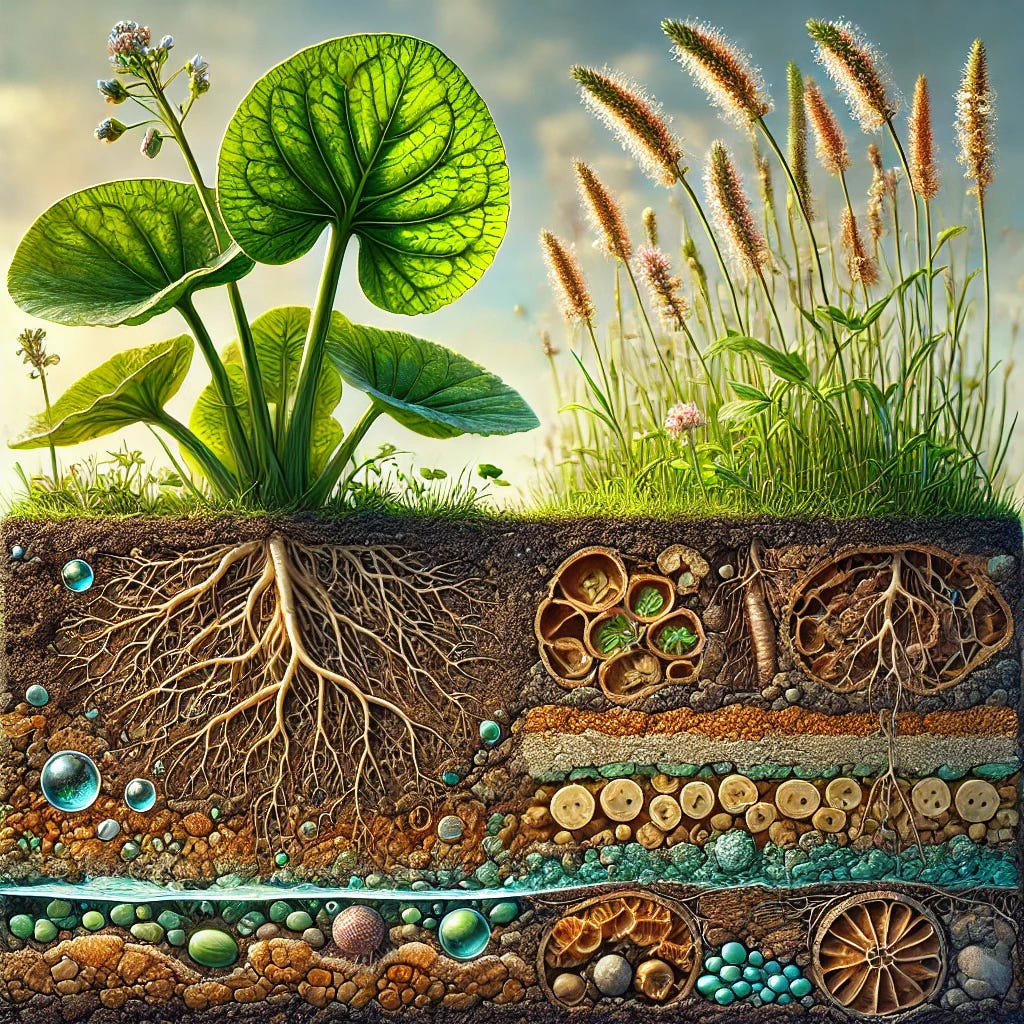
Introduction: Why Plantain Matters to Your Farm
If you've ever walked your fields and noticed that tough little plant with the broad leaves growing where other plants struggle – that's plantain, and it's one of your most valuable allies in farming. Often dismissed as a common weed, plantain is actually nature's soil repair kit, capable of improving your soil, supporting your crops, and enhancing your farm's overall health.
Understanding Plantain's Gifts
When you see plantain growing in your fields, it's telling you something important about your soil. This plant is like a natural soil doctor, diagnosing and treating problems below ground. Here's what makes plantain special:
In Compacted Soil
Plantain thrives where other plants struggle because it's actively fixing the problem. Its roots break up compacted soil, while its natural compounds help rebuild soil structure. When you see plantain in compacted areas, it's already working to repair your soil.
In Poor or Damaged Soil
The plant produces different healing compounds based on what your soil needs. If your soil is lacking minerals, plantain will develop stronger mineral-pulling abilities. In polluted soils, it increases its cleaning compounds. It's like having a soil technician who knows exactly what treatment to apply.
Working With Plantain's Schedule
Just like there are best times to plant and harvest crops, there are optimal times to work with plantain:
Best Collection Times
Early morning (4:30-6:00 AM) is when plantain is strongest. This isn't just old farmers' wisdom – it's when the plant's helpful compounds are most concentrated. If you can't make the early morning timing, aim to harvest before the day heats up.
Seasonal Timing
Spring: Best for soil activation and growth stimulation Summer: Ideal for soil building and strengthening Fall: Perfect for soil stabilization before winter Winter: Plant goes dormant but roots continue soil work
Practical Uses on Your Farm
For Soil Improvement
Let plantain grow in troubled areas of your fields. It's actually fixing problems, not causing them.
When breaking new ground or recovering old fields, encourage plantain growth for the first season.
Use plantain as part of your crop rotation to rebuild soil between demanding crops.
With Other Crops
Plantain works well with many common crops:
Plant it along field edges to prevent soil compaction
Use it in walkways between rows to maintain soil structure
Let it grow under fruit trees to improve soil health
Making Plantain Soil Treatment
To make a soil-enriching treatment from plantain:
Collect plants in early morning when dew is still present
Chop entire plants (roots and all) into small pieces
Mix with water (about 1 part plant to 10 parts water)
Let sit for 2-3 weeks, stirring occasionally
Use the liquid to water problem soil areas
Signs It's Working
When plantain is improving your soil, you'll notice:
Soil becomes darker and crumblier
Earthworms become more numerous
Water absorption improves
Neighboring plants show stronger growth
Regional Considerations
In Dry Areas
Plantain will grow smaller but develops stronger soil-healing properties
Focus on morning collection when plants are moisture-rich
Use more water when making soil treatments
In Wet Areas
Plants grow larger with softer leaves
Reduce water in treatments to account for natural moisture
Watch for stronger growth in spring and fall
Problem-Solving Guide
Common Challenges
If plantain isn't growing well:
Soil might be too toxic - start with small patches and expand gradually
pH might be extremely off - add organic matter to help balance
Ground might be too compacted - break surface slightly to help establishment
Improving Results
Encourage diverse plantain patches rather than single plants
Allow some plants to go to seed for natural spreading
Don't remove all plants when harvesting - leave some to maintain the soil benefits
Working with Nature's Calendar
Plantain gives clear signals about weather and soil conditions:
Weather Signs
Leaves folding up: Rain within 2-3 days
Stronger morning scent: Pressure changes coming
Rapid new growth: Extended wet period ahead
Soil Signs
Very small leaves: Soil needs minerals
Extra broad leaves: Good organic matter present
Deep green color: Nitrogen levels good
Long-term Benefits
When you work with plantain as a soil improver, expect:
Better water retention in your soil
Improved nutrient availability for crops
More resilient soil structure
Stronger natural pest resistance
Enhanced soil microbial life
Simple Tips for Success
Start small and observe what works best in your conditions
Keep some plantain growing year-round if possible
Watch how it interacts with your other crops
Pay attention to where it grows naturally - it's showing you problem areas
Share successful methods with other farmers
Final Thoughts
Remember, plantain isn't just a weed - it's a natural tool for better farming. By understanding and working with this plant, you're tapping into an ancient system of soil improvement that's been proven over generations. Give it time, observe its effects, and let this natural soil doctor help heal and strengthen your land.
The best part? It's free, it's already growing on your farm, and it works while you sleep. That's the kind of farm helper we all need.
With all respect I must refute your claims. The presence of Plantain is an indication of an acidic, compacted, low fertility soil. Not the plant needed to change that into healthy, high tilth fertile soil. Dandelion, alfalfa, daikon radish, far better alternatives. When the soil has been relieved of these attributes, it will migrate away from it on its own.
The presence of perennial weeds in soil definitely tells us about that soil. "Read the weeds" as Charles Walters send many times.
Heavily condensed, you want cockleburs. LOL not actually in the field, but soil that allows them to thrive. They demand high fertility, high tilth, deep loam type ground.
That said, I completely agree with your statements about its consumption by humans.
Thank you.