

Wild Lettuce - Opium Lettuce
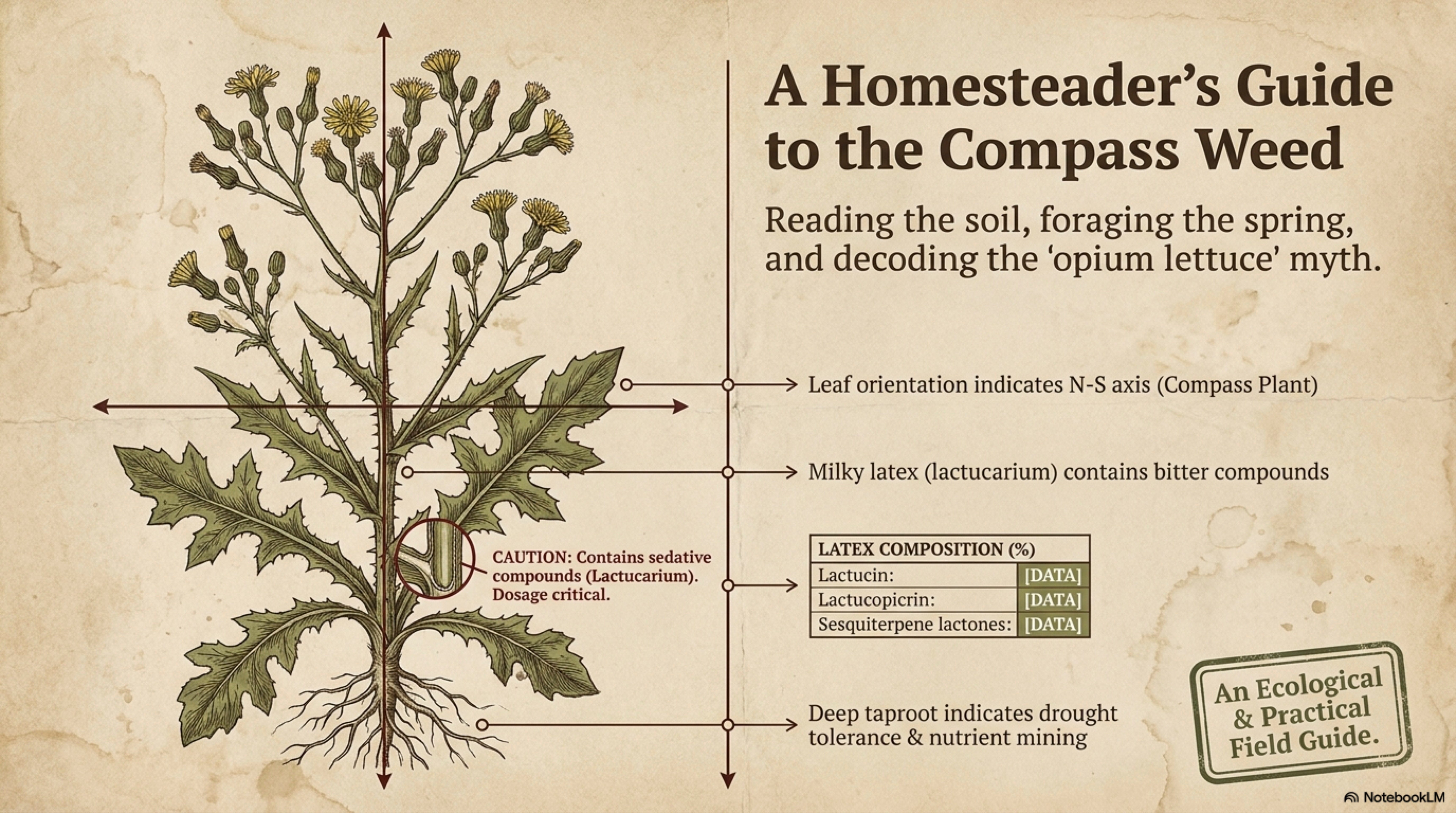
The roadside weed that reads the bare ground, arms itself at the moment it’s most exposed, and once sat in the pharmacy beside the poppy
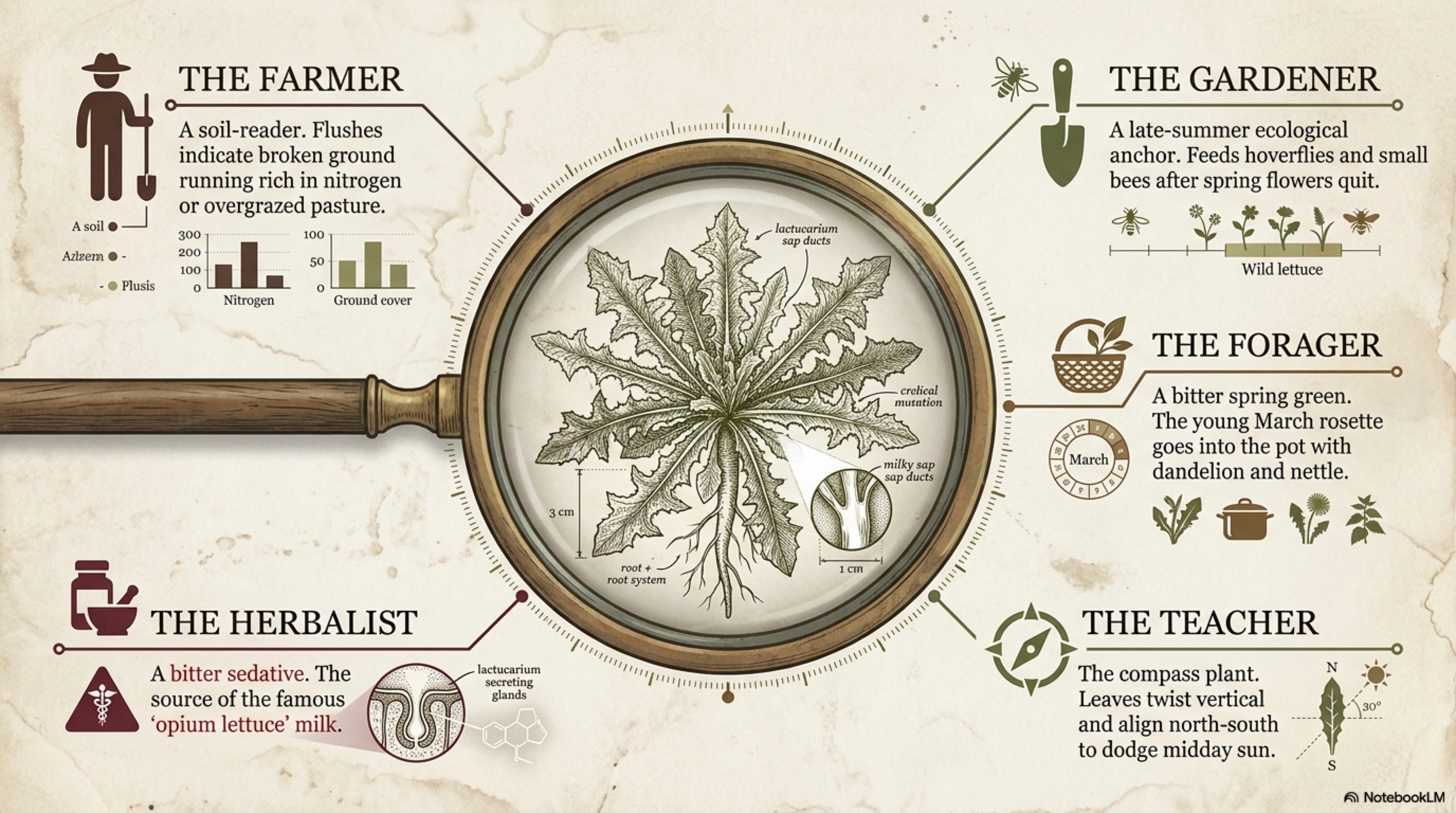
There’s a stiff, pale weed bolting waist-high out of the cracked margins of your land right now, the roadside, the railway ballast, the scraped corner where the digger turned the soil last spring, and depending on who you are, you’re looking at a different thing.
If you farm, you’re looking at a soil-reader: where this lettuce flushes thick, the ground was broken recently and is running rich in nitrogen, and where it takes over a pasture, the stock have been eating everything but it.
If you garden, you’re looking at a late-summer pollen source for the small bees and hoverflies that show up after the spring flowers have quit, worth leaving on the margin, as long as you don’t let it seed into the salad bed.
If you forage, you’re looking at a bitter spring green: the young rosette leaves, taken in March before the plant bolts, go into the pot with the dandelion and the nettle tops.
If you teach, you’re looking at the compass plant, its leaves twist vertical and line up north-south to dodge the midday sun, and it’s the weed Beatrix Potter sent her bunnies to sleep on.
And if you’re just curious, you’re looking at a plant the names can’t agree on: prickly lettuce to the botanist, poison lettuce and opium lettuce to the folk who handled its milk.
All five are right. Start with knowing what you’re looking at, though here the danger is low, which is itself worth saying plainly.
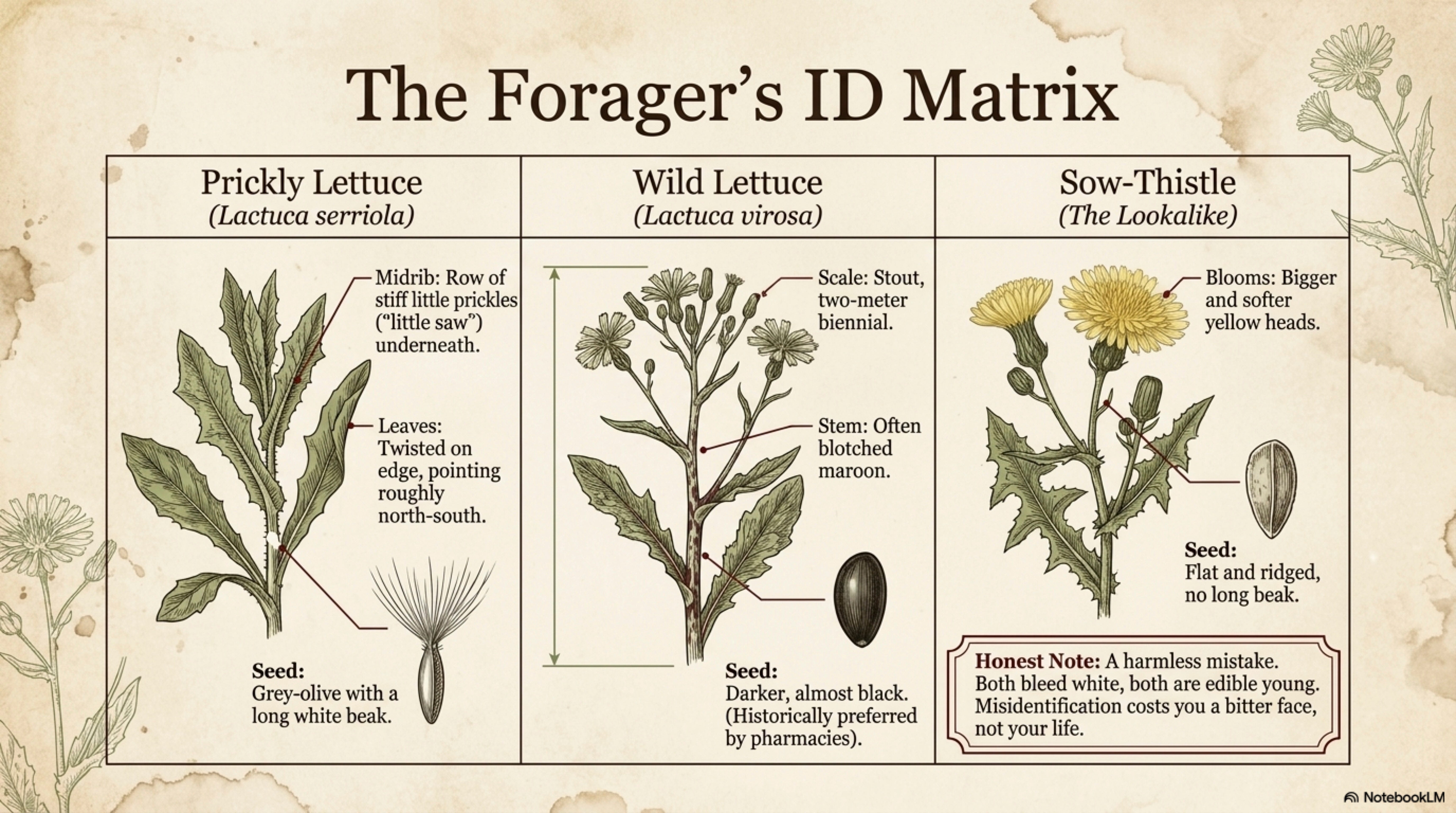
The one you’ll most likely meet is Lactuca serriola, prickly lettuce, and it has a tell you can read in a single motion. Run a fingertip up the underside of the midrib and a row of stiff little prickles catches your skin, serriola, “little saw.” Then look at how the leaves are held: not flat, but twisted onto their edges and aligned roughly north-south, the trick that earned it “compass plant.” Snap a stem and it bleeds white. At seed, the achene is grey-olive with a long white beak and a parachute of fluff. Its bigger cousin L. virosa, the one the old pharmacy preferred, is a stout two-metre biennial with a stem often blotched maroon and a darker, almost black seed; the names slide between the two, but the milk is the same.
The lookalike worth naming is the sow-thistle, same family, same white bleed, same yellow heads, same broken ground. Tell them apart by the seed head: sow-thistle blooms are bigger and softer, their seeds flat and ridged with no long beak. But here’s the honest part, get this one wrong and not much happens. Both are bitter, both are edible young. This isn’t yarrow standing next to hemlock; mistaking a prickly lettuce costs you a face you’ll make, not your life.
Now read the ground it’s standing on, because that’s the deeper skill. Wild lettuce is a sentence written by disturbance. Its seed won’t germinate in the dark, it needs light, which only reaches it when something turns the soil, so a flush of prickly lettuce is the ground telling you it was lately opened. Add fertilizer and watch it answer: it reads high nitrogen and crowds in to spend it. Let it take over a rangeland and it’s confessing that the stock have grazed off every more-palatable thing and left the bitter one standing. It drives a taproot past two metres, holds the surface against the summer rain, and within a season or two, once the perennials catch up, it’s gone, leaving a soft channel where its root was. It comes when the ground is broken and leaves when the ground stops asking.
And here is the thing the plant is actually doing while it stands there: arming itself. The bitter white latex is thin in the young rosette and thickens hard at bolting, exactly when the plant throws everything into its flowering tower and becomes most exposed. The chemistry climbs again after every bite an insect or animal takes. The plant lays down its defense at the moment of its greatest vulnerability.
So the safe, useful things to do with it ask you to trust no health claim at all. Read the soil, a stand of prickly lettuce is a free diagnosis of recent disturbance, high nitrogen, or overgrazing, and the steward who reads it right doesn’t reach for the hoe but asks what made the ground bare. Eat it young, the March rosette leaf, blanched to take the edge off the bitterness and dressed Mediterranean-style with oil, lemon, salt, and a little anchovy, sits among the wild bitter greens of Italian and Spanish spring tables. Or just leave it on the margin, where it feeds the late hoverflies, holds the slope, and drops seed for the goldfinches without ever threatening your beds.
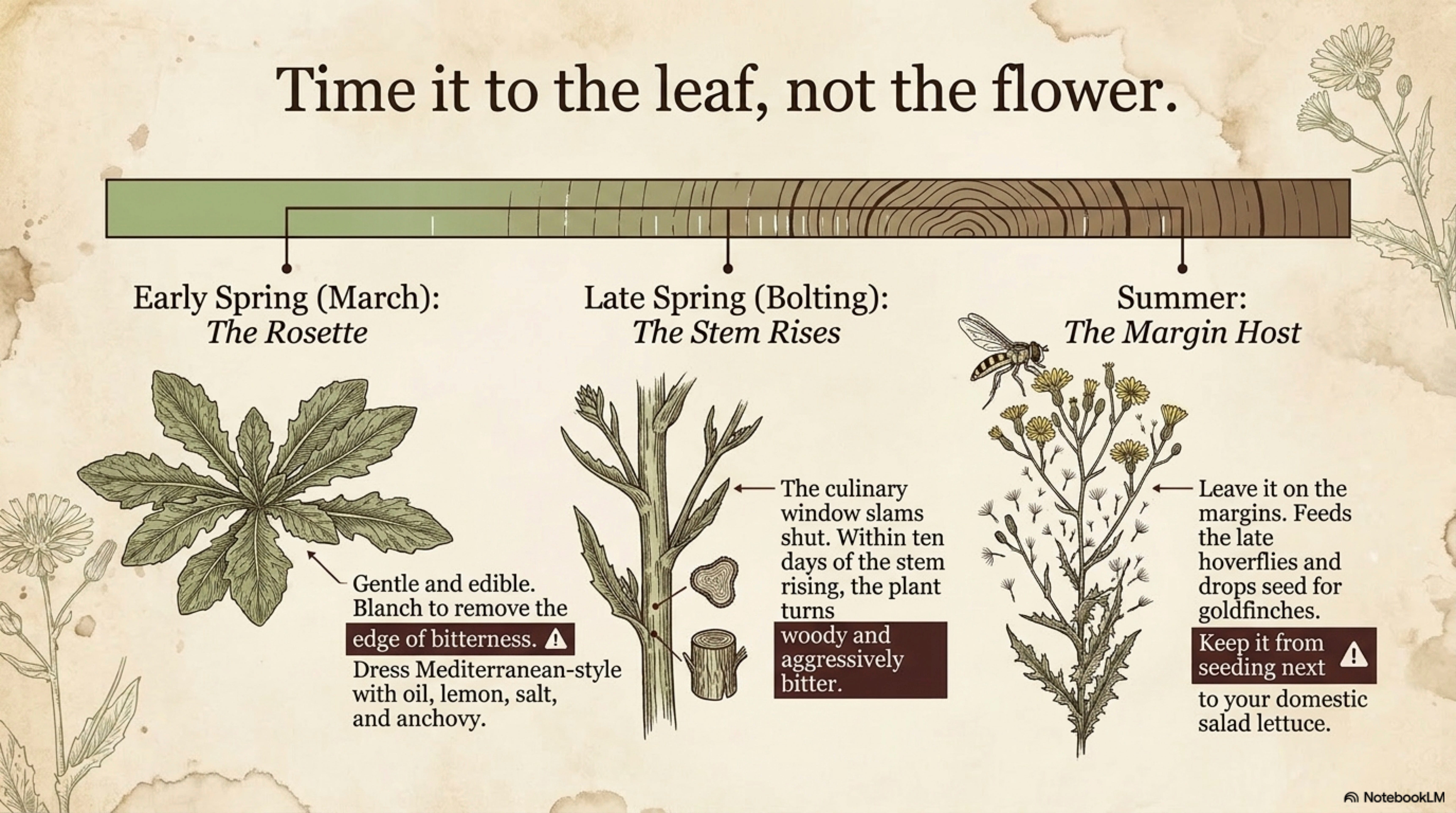
If you do one timed thing, time it to the leaf, not the flower. The rosette is at its gentlest in early spring, before the stem rises; within ten days of bolting it turns woody and aggressively bitter. For the table, that’s the whole window. The rest of the year, the call is mostly to let it be, let it read the soil, feed the wasps, and tell you what the ground has been through. The one discipline is to keep it from seeding next to your salad lettuce, which is the same plant’s domesticated grandchild and will not thank you for the company.
Here’s what I can’t walk past, though. Watch a herd in a field of it. In April the cattle nip the young rosettes; by July they refuse the same plant entirely, the “ice-cream weed” pattern, sweet early and untouchable once it bolts. They’re reading the bitterness rising. And the window in which the herd turns away is exactly the window in which a nineteenth-century pharmacist would have walked into that field to harvest, because the bitter milk that drives the cow off is the milk the apothecary wanted. The animal’s refusal and the herbalist’s harvest are the same reading of the same rising tide.
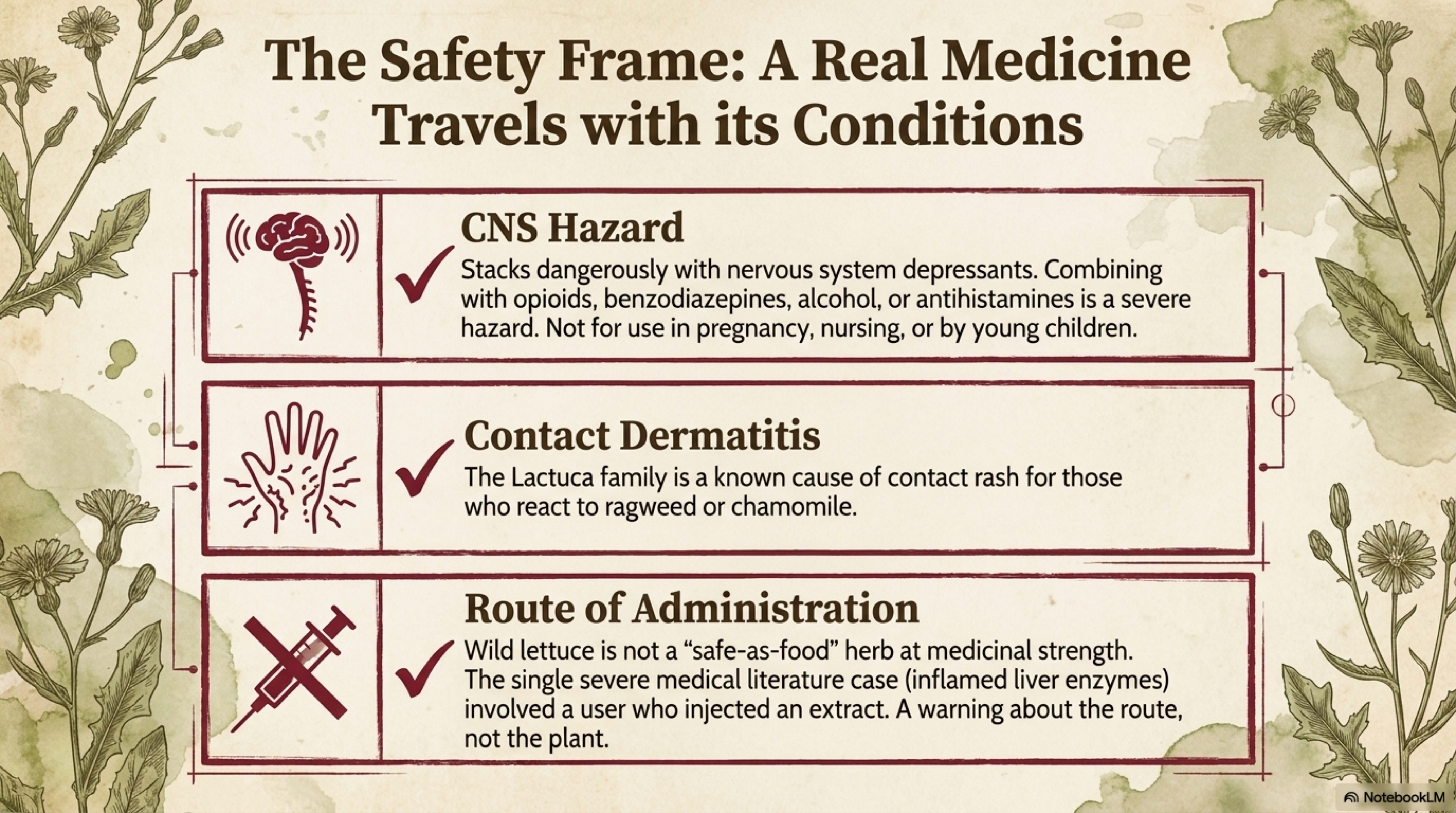
Which leaves the question the names keep whispering. Opium lettuce. Did the old pharmacy really stand this roadside weed next to the poppy, and if so, was it onto something the chemistry confirms, or is “opium lettuce” the longest-running case of mistaken identity in the medicine cabinet?