

When kids can recognize brands before plants, I knew this was worth building.
A few years back I hosted a class of elementary kids here on the farm for Chef’s in the Classroom. We picked and talked about lamb’s quarters, dandelion, and stinging nettle, the three plants most people spend a whole weekend trying to kill, and cooked them into the egg sandwiches we made for them. Weeds, in their sandwiches. They didn’t care. Which, if you’ve ever tried to feed a green thing to a seven-year-old, is a win according to many parents.
I haven’t stopped thinking about that day since.
Those kids could name and describe a dozen logos on sight. But hand them a dandelion, the most recognizable plant on the continent, and those that recognized it called it “just a weed.” The plant is seen as something wrong. Something to pull.
That’s not the kids’ fault. It’s ours. Somewhere along the way, we stopped introducing them. We stopped trying to understand them.
So the question I keep circling back to is this: how do we hand these skills to kids while they’re young enough for the seed of knowledge to grow with them?
You already know part of the answer, because you've been reading it. For over a year now I've been building the most thorough plant dossiers I know how to make, deep files on the plants we call weeds, where the lab work and the old field knowledge sit at the same table and neither one gets to talk over the other. Where the two agree, I say so. Where they don't, I say that too, and where we just don't know yet, I say that clearly as well. I love showing a different side of who these plants actually are.
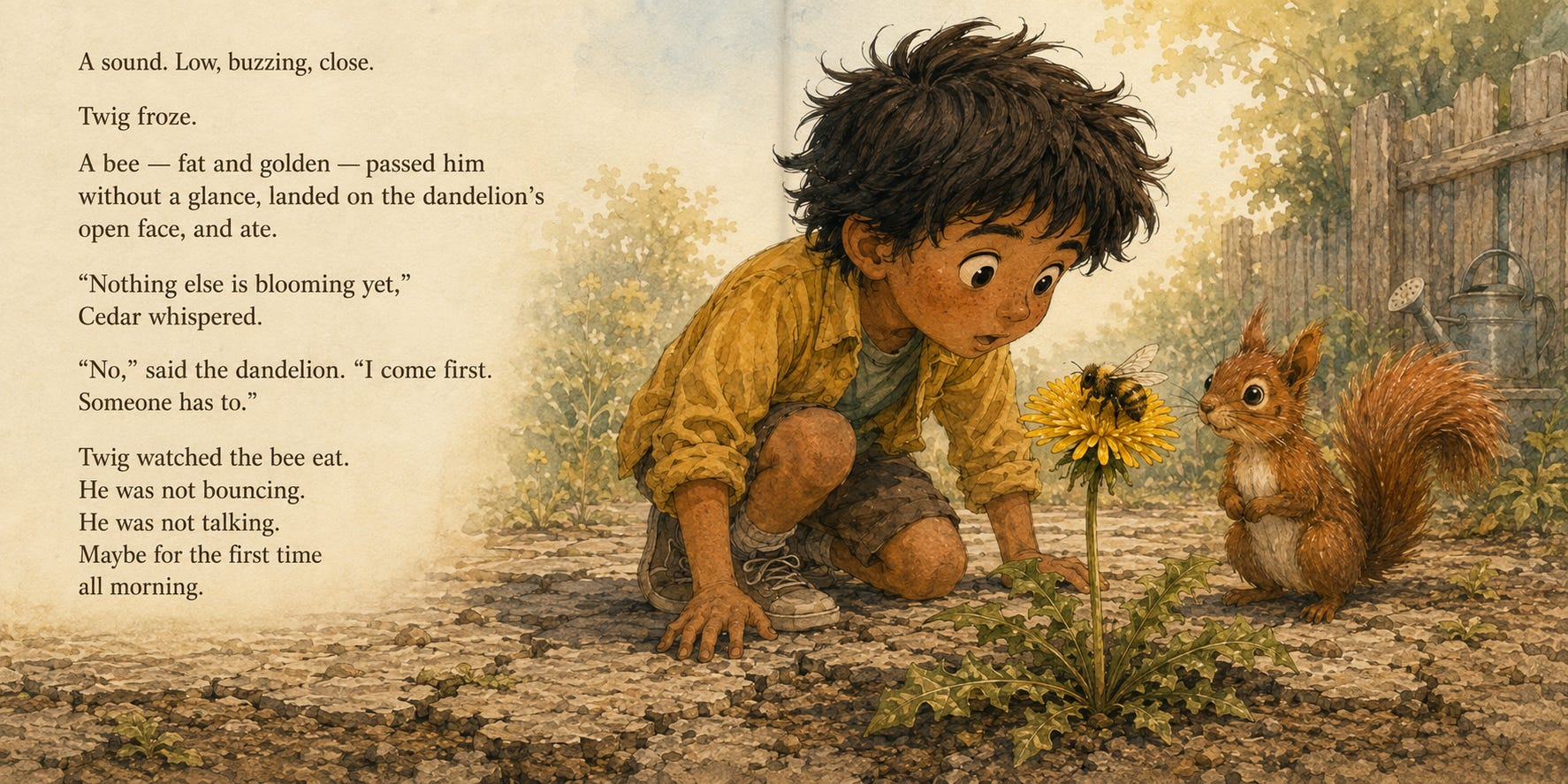
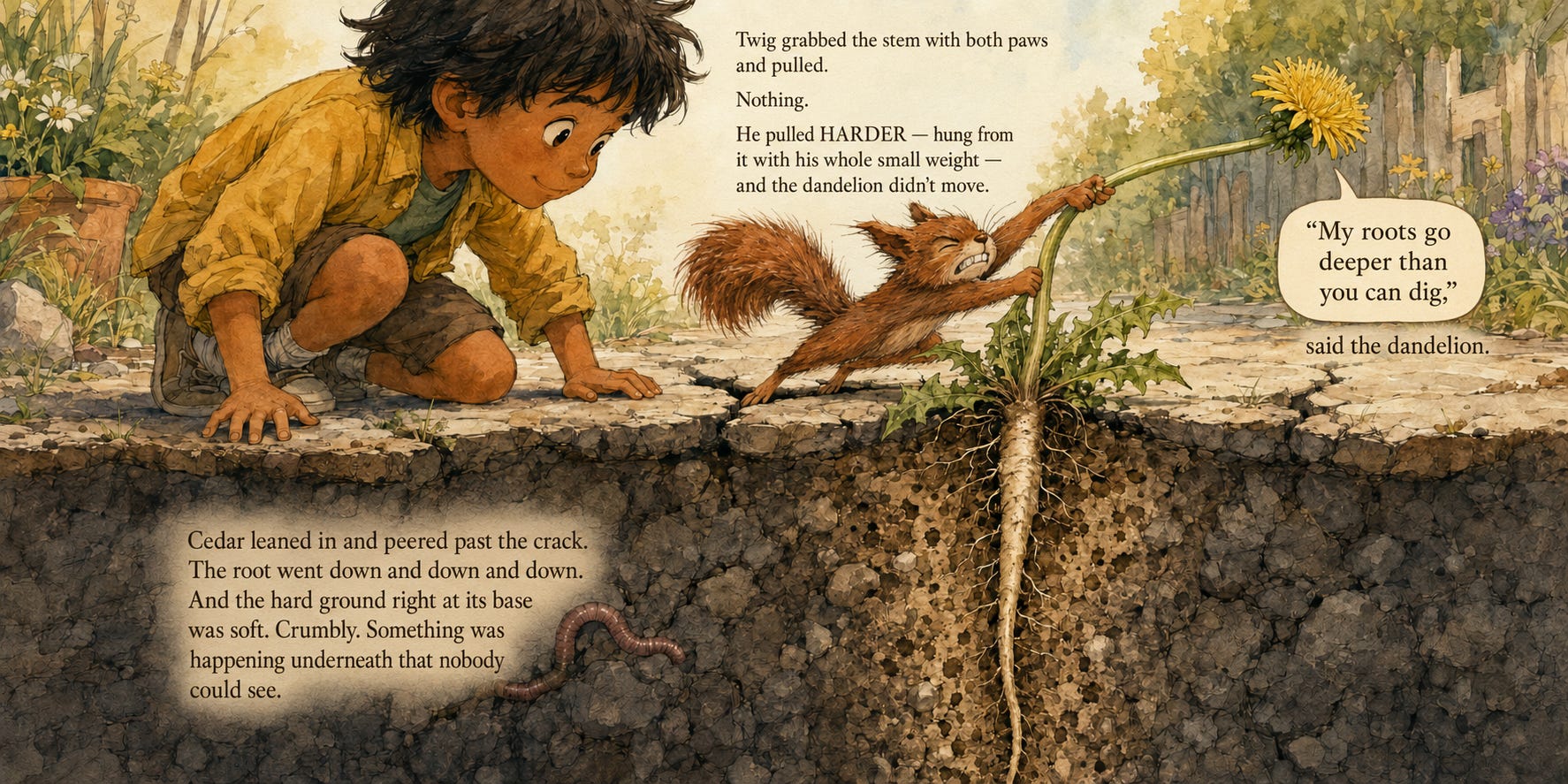
Because it was never really about eradicating them. A dandelion isn’t a mistake in your lawn. It’s one of the first flowers to open in spring, feeding the bees when almost nothing else will. It’s a taproot that drives deeper than the plant will ever stand tall. It’s a seed built to fly. That’s not a weed. That’s a strategy. The whole project, the monographs, the farm, all of it, has been about learning to work with these plants, and with nature, to find a balance that fits the land you care for.
And then one day it hit me.
If I can see the superpowers in a dandelion, why can’t a five-year-old?
What if I took everything I’ve been digging up in those monographs, the real biology, the actual quiet genius of these plants, and put it in a children’s picture book? Not a lecture. A story. What if a dandelion could spark the same curiosity in a child that it still sparks in me, fifty-odd years in?
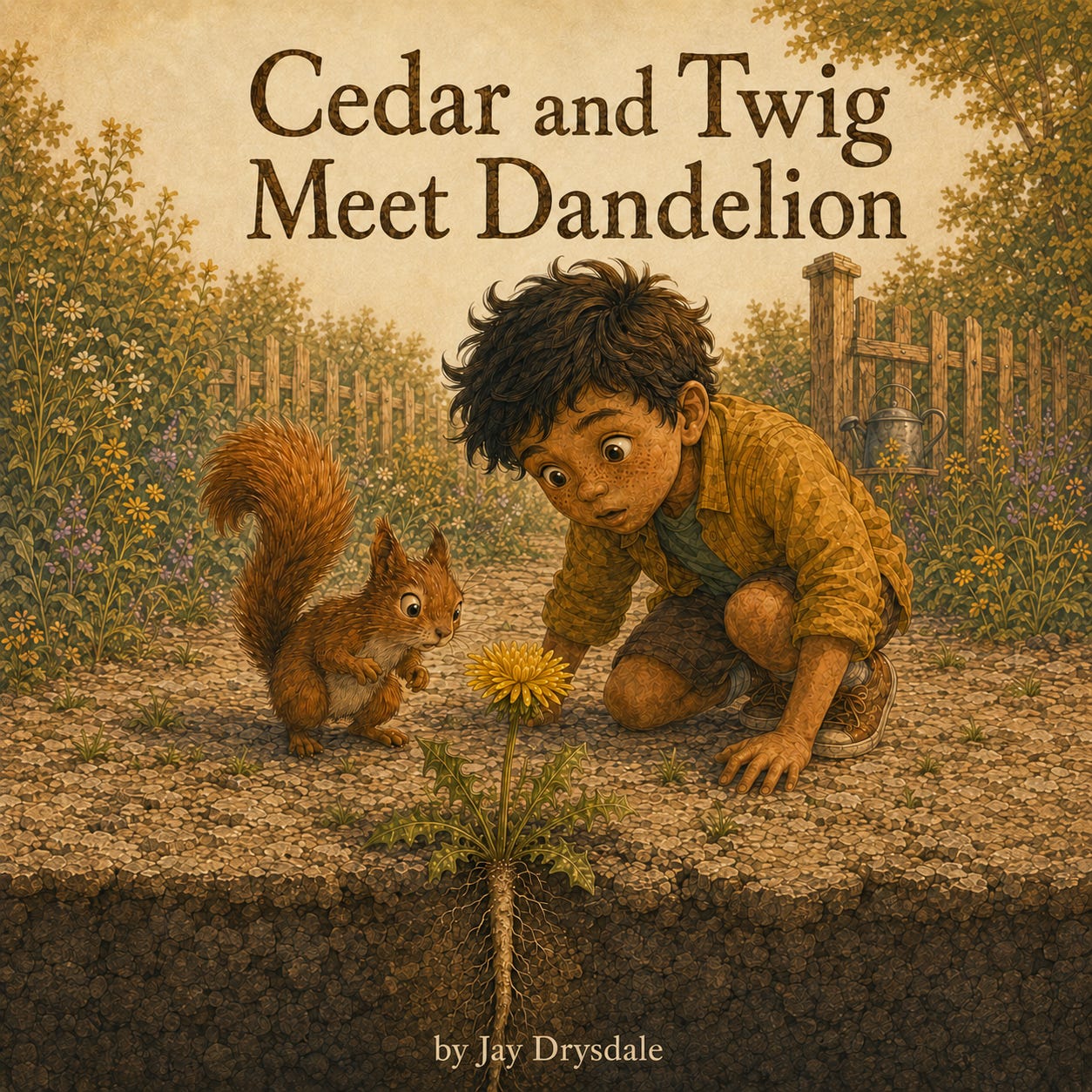
That’s Cedar and Twig.
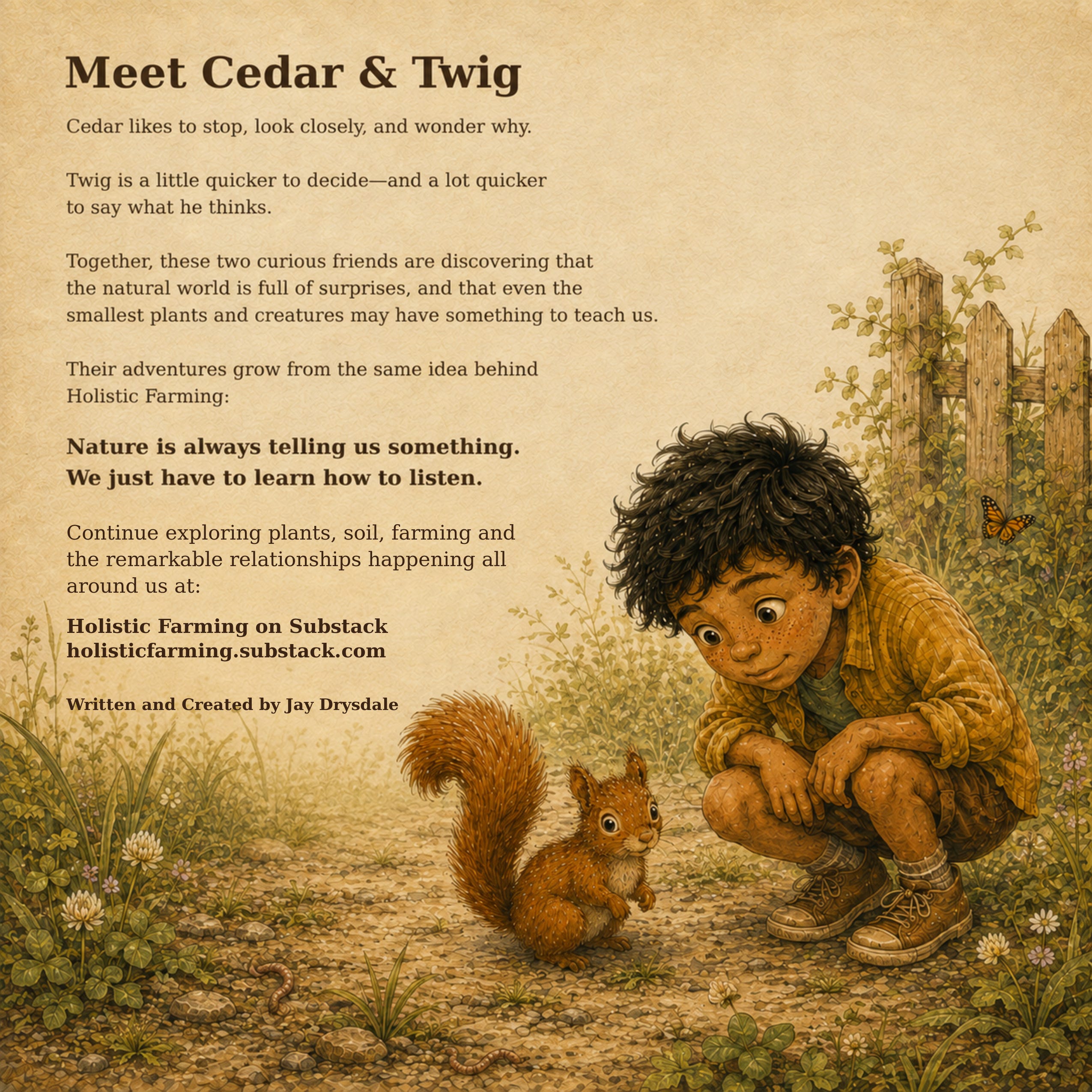
Cedar is a quiet boy who can hear the plants and animals speak. Twig is the squirrel who follows him around, saying most of what needs saying without a single word. Together they go looking, in the yard, in the cracks, in the ordinary ground under everyone’s feet, and they find that the plants everyone calls weeds have been quietly running the place all along.
The first book is Dandelion.
I am also working on books for clover, plantain, and sunflower for the first series.
The characters are fictional. The plants are everywhere. I made up a boy and a squirrel. I did not make up the dandelion outside your door, or the nettle by the fence, or the fact that our kids are walking past small miracles every single day and calling them nothing.
If you know one person, a parent, a grandparent, a teacher, who’d want this in a small pair of hands, forward them this post. Just the one. That’s how a thing like this grows: not in a blast, but the way the plants themselves spread. Quietly. Person to person. Root by root, the one kind of invasive I am actually rooting for.
More soon.
— Jay
A few sample pages to explore.
I would love to get a copy of this book how do I go about that
It's a wonderful idea! We all have a little bit of nature instilled in us (at least in my age bracket) from our parents. My mom put in a very small garden patch when I wasn't looking and it grew into a plethera of carrots and other things she would grab for dinner spices and vegy's every once in a while. How I wish that I had payed more attention to her small bit of old school knowledge, rather than playing street hockey or hid'n'seek. The corporate monster has condemed those plots of land with their ease of use prepackaged dinner boxes and cans to chose from to continue making dinners in varying (but the same!) ways. They have slowly wiped out the back yard garden and now are doing their best to poison us with all the additive chemicals to our foods in every farm in our lands! We now eat poison chemicals that are sprayed on our foods before and as they grow! Herbicides, nutrients(?) pesticides! They control the markets and so the true ingredients in our ground grown food and animals are life killers and chemicals designed to kill the true nature of our food. They control the marketing with their big money so we eat poison to keep us sick and buying their doctors 'prescriptions' to aleiviate a symptom here and there from those chemicals that striped the real food of nutrients! They didn't just strip the nutrients from our foods with their big money, but they put in all those chemicals that we can not expell on our own. They trained doctors to prescribe chemicals to keep us below good health so we would not rise up and fight back. They took over the food market and crushed every holistic natural cure so we grew up losing the true knowledge of keeping ourselves healthy! We have been duped into using their 'convenient' system for quick meals that look healthy, yet are so far below nutritious and contain all the ingredients necessary to keep a human at a "just functioning" level. Progress for them on their never ending path to control us completely!