

Living Plant Wisdom Profile: Plantain (Plantago major & Plantago lanceolata)
Welcome
Beneath our feet grows one of the most overlooked healers of the living world: plantain. Broadleaf or narrowleaf, this humble green rosette has walked beside humanity for millennia. Where the ground is compacted, plantain’s roots open channels for air and water. Where children scrape their knees or farmers blister their hands, a crushed leaf becomes an instant poultice. Where pollinators hunger in early spring, its blooms offer quiet nourishment. Ancient Anglo-Saxon texts called it one of the Nine Sacred Herbs; Indigenous healers welcomed it as “white man’s footprint,” turning disturbance into medicine. Today, science catches up, confirming plantain’s anti-inflammatory glycosides, immune-modulating polysaccharides, and ecological gifts for soil and water.
My ethos has always been shaped by two simple beliefs: the Earth and nature have the ability to heal themselves, and everything adapts to its surroundings. When we apply this to farming or gardening, we see that our role is not to control but to steward. Every action on the land has an effect. It’s not about good or bad—it’s about adaptation. That is why I study individual plants so closely. Each plant has its own superpowers, and the more I understand them, the better I can align my stewardship with the rhythms of nature. Plantain, more than almost any other weed, has taught me that lesson.
Sections 1–9 (available to all subscribers)
These chapters trace plantain’s story: its global history and folklore, its recognition in Traditional Ecological Knowledge, its role across medicine systems from Europe to China to Persia, its biochemical architecture, and its surprising ecological intelligence. You’ll see how plantain stabilizes soil, supports pollinators, holds water, and quietly begins the healing of damaged ground.
Sections 10–17 (for supporting subscribers)
Here the research becomes a toolkit for regenerative practice. We explore plantain as a living mulch, a biofertilizer, a companion for livestock health, and an agent of climate resilience. You’ll find processing guides for syrups, teas, and salves; cutting-edge research on nitrate leaching and wound healing; and reflections on cultural stewardship, sensory ecology, and future visioning. These final chapters synthesize plantain’s wisdom into practical pathways for healing both land and life.
Supporting this work does more than keep the lights on—it ensures that plants like plantain are recognized as teachers, not weeds. Each subscription fuels independent, integrative research that bridges ancestral knowledge with modern science, grounding regenerative agriculture in real, field-tested wisdom. By contributing, you are helping to grow a living library of plant allies that can guide us toward farming systems, gardens, and communities more deeply attuned to nature’s own resilience.
Plantain whispers that healing begins exactly where the wound is deepest. That’s as true for soils as it is for societies. By walking with these quiet allies, we can learn to tread lighter, adapt with grace, and turn every footprint into fertile ground.
1. Opening Field Vignette
Pause for a heartbeat and look down at the well-worn paths underfoot – chances are a humble rosette of ribbed green leaves greets you there. Common plantain stands as the “guardian of the footpath”, quietly thriving where soils are most hardened and disturbed. Settlers once nicknamed it “white-man’s footprint” for its tendency to spring up along colonial wagon trails, yet Indigenous healers had long recognized its power to mend wounds of skin, spirit, and land. Where earth is compacted by heavy steps, plantain’s roots pry open new channels for water and air . Where pollinators hunger in early spring, its subtle blooms offer timely pollen and nectar. Where children’s knees are skinned or farmers’ hands blistered, a fresh-crushed leaf becomes instant poultice, its juices rich in silica and soothing compounds. Modern laboratories now affirm what tradition has always known: plantain leaves contain anti-inflammatory glycosides and immune-modulating polysaccharides, science catching up to the folk wisdom of “waybread” that once guided soldiers on ancient roads. In plantain, story and science converge, the parallel veins on each leaf a living symbol that what is common can also be extraordinary. Meet adversity with grounded softness, the plantain seems to whisper; turn every footprint into fertile ground – a quiet invitation to resilience growing right beneath our feet.
2. Plant Identity & Names
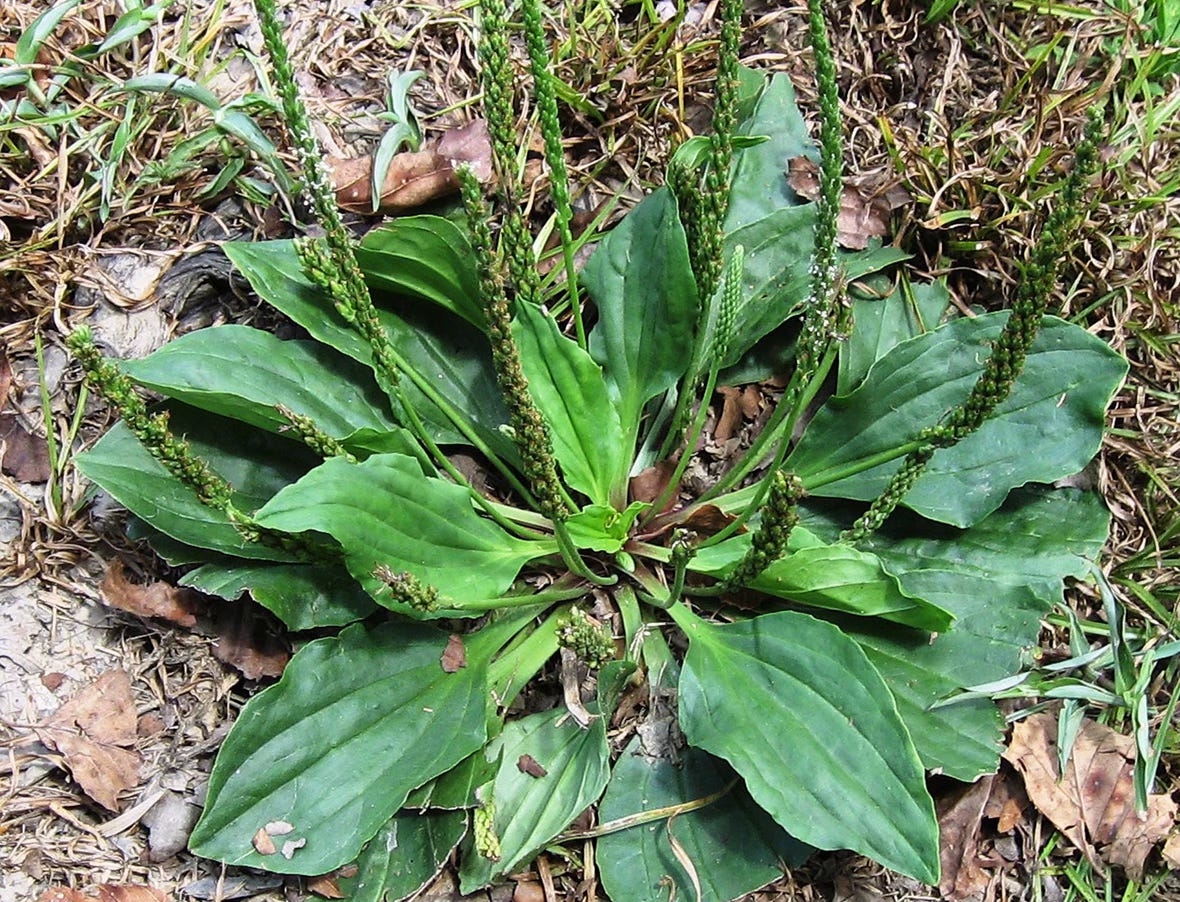
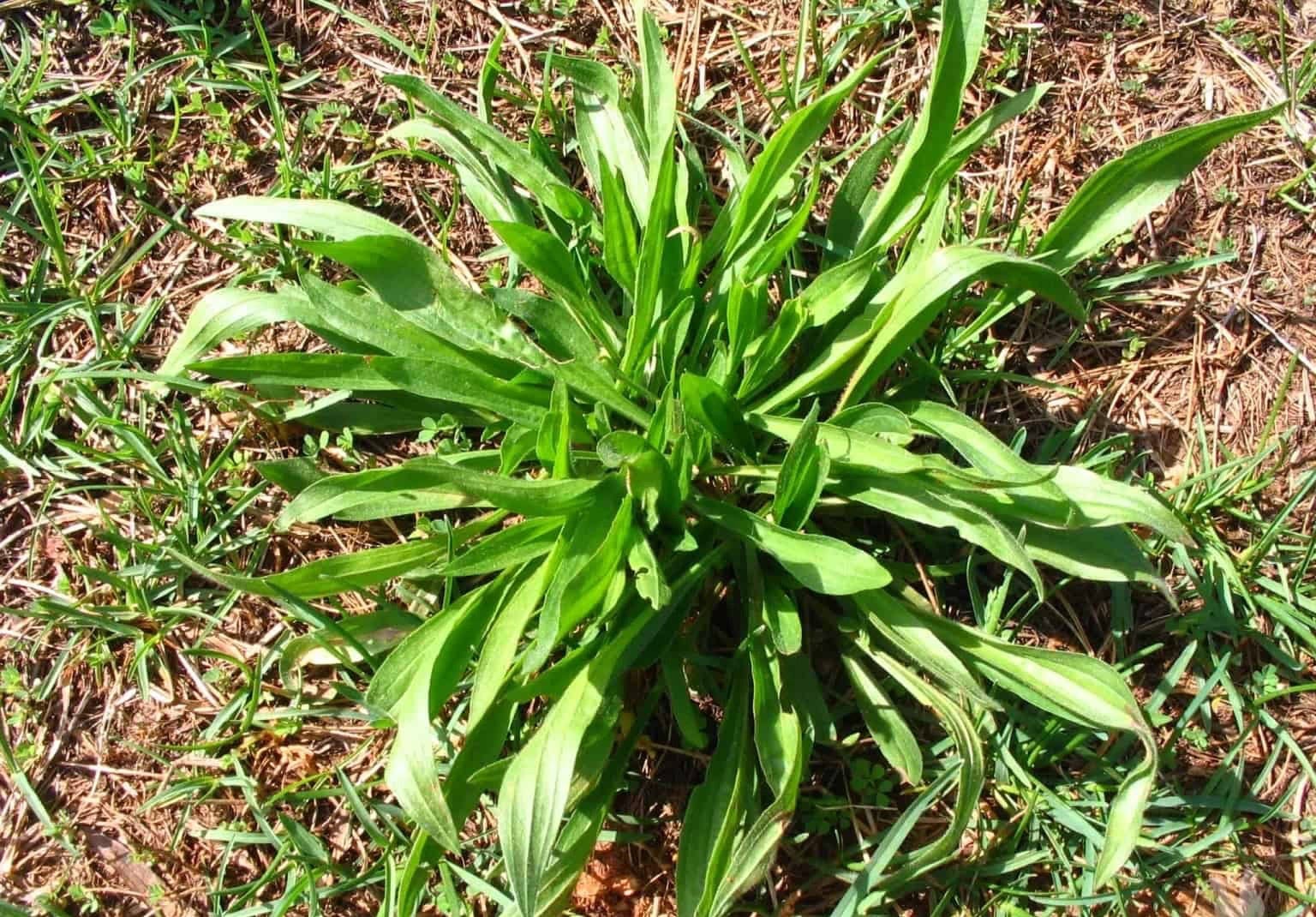
Scientific Identity: Plantains are low-growing perennial herbs of the Plantaginaceae family. Two sister species stand out: Plantago major L., the broadleaf or greater plantain, and Plantago lanceolata L., the narrowleaf or ribwort plantain. Both species form basal rosettes of leaves and slender, leafless flower spikes. P. major has broad oval leaves (5–20 cm long) with 5–9 conspicuous parallel veins, and smoother margins, while P. lanceolata bears slender lance-shaped leaves (6–20 cm) with 3–7 veins and a more erect habit . Tiny greenish flowers cluster densely on spikes and give way to numerous small seedpods. A single plant can produce up to 20,000 seeds in a season – each a dark oval seed that becomes sticky with mucilage when wet, an adaptation aiding their dispersal via animals and water .
Common Names: Through history and across cultures, plantain has gathered many names. P. major is often called common plantain, greater plantain, or “white man’s footprint” (from its post-colonial spread in the Americas) . European folk names include waybread (Old English Weybrade, signifying “road-side bread”) and “healing blade” (groblad in Norse, meaning “healing leaves”) . P. lanceolata goes by narrowleaf plantain, ribwort, or English plantain, among other names. Both species were termed “Englishman’s foot” by some Algonquian-speaking peoples, reflecting how intimately their arrival was tied to European settlers . Despite being native to Eurasia, these plantains are now cosmopolitan weeds naturalized on every continent except Antarctica . They thrive especially in temperate regions and disturbed habitats – compacted lawns, field edges, paths, and anywhere soil has been scuffed by human or animal traffic. Family: Plantaginaceae (the plantain family) unites over 200 species including these two; historically it was placed in its own order (Plantaginales) but modern botany situates it in Lamiales.
Native & Introduced Range: P. major and P. lanceolata both originated in Europe and parts of Asia . Pollen records show P. major accompanied early agriculture into Northern Europe ~4000 years ago . In the colonial era, both species were introduced inadvertently to North America (first recorded early 17th–19th century) and elsewhere, likely via soil in ship ballasts or contaminated crop seed. Today they are so widespread as to be considered part of the flora in most temperate biomes. Interestingly, P. rugelii(American plantain) is a North American native relative, but the Eurasian species quickly outpaced it in disturbed areas. Neither P. major nor P. lanceolata are typically classified as invasive in a regulatory sense – they tend to occupy disturbed soil niches and rarely penetrate intact wild ecosystems. However, their persistent seeds and hardy nature mean they can naturalize aggressively in gardens and lawns. Both tolerate a wide pH range, though broadleaf plantain is noted as an indicator of alkaline, compact, moist soils (finding it abundantly can hint at high soil pH and compaction) . These plantains also endure repeated mowing and trampling due to their low profile and fibrous roots . By name and nature, plantain is the quiet groundcover companion of human footsteps – unassuming, resilient, and ever-present where the soil bears our weight.
3. History & Folklore
Ancient Lineage: The relationship between plantain and people is truly ancient. Archaeobotanical evidence in Europe shows plantain proliferated alongside Neolithic farms; its pollen appears with early grain cultivation, marking it as a Stone Age camp follower . In Scandinavia, P. major seeds are found in Iron Age contexts, confirming its use for millennia . Classical texts from the Greco-Roman era first extolled plantain’s virtues: the Greek physician Dioscorides in De Materia Medica (1st c. AD) noted plantain (likely P. major) as a remedy for dog bites and wounds . The genus name Plantago itself stems from Latin planta (“sole of the foot”) – a nod to the plant’s broad, foot-shaped leaves and perhaps to the “footprint” lore .
European Folklore: In Europe, plantain was enshrined as one of the “Nine Sacred Herbs” of the early medieval Anglo-Saxon Lacnunga manuscript . Referred to as Waybread in the old charm, it was invoked for protection against poisons and venom, included in ritual salves sung over by healers . This reverence hints at plantain’s status as a panacea in folk medicine. By the 17th century, herbalist Nicholas Culpeper classified plantain under the dominion of Venus, prescribing it for virtually any “hot” or inflammatory condition – from wounds and ulcers to fevers and snakebite. In Old Norse legend, the “Völuspá” saga describes Vikings using plantain leaves to stanch wounds on the battlefield . Throughout Europe, it earned nicknames like Slan-lus (Gaelic for “plant of healing”) and was used as a magical ward: for instance, carrying plantain was thought to guard travelers against harm. Some folk tales claimed that placing plantain under one’s feet could ease fatigue on long journeys, literally and symbolically binding up the weary foot.
Indigenous American Adoption: When plantain arrived in the Americas with European settlers, First Nations peoples quickly recognized its medicine. Many tribes dubbed it “white man’s footprint,” observing that it sprang up in the disturbed ground around European settlements . Rather than shun it as an intruder, Indigenous healers incorporated plantain into their pharmacopeias. For example, the Iroquois, Menominee, Ojibwe, and others used related plantains (including native P. rugelii and the introduced P. major) for wound healing, snakebite, and bites or stings . A South Carolina colonial account even tells of an Indigenous man rewarded in the 18th century for revealing plantain as a cure for rattlesnake bites – hence American plantain earned the folk name “Snakeweed” . Poultices of mashed leaves became a widespread remedy across tribes to draw out toxins, reduce inflammation, and soothe sores. Plantain came to be regarded as a “cure-all” in many Native communities: taken as a tea for coughs and colds, chewed for toothaches, applied to skin for burns and rashes, and more. This remarkable embrace speaks to Indigenous science – an experiential approach that recognized plantain’s healing gifts even though it was non-native.
Mythology & Symbolism: Culturally, plantain often symbolizes resilience and groundedness. Its habit of growing along thresholds (paths, doorways) gave rise to lore of plantain as a “threshold guardian”, protecting those in transit . In European magic, it was used in binding spells – e.g. a red thread around plantain roots to ward off headaches or fevers, reflecting its perceived power to bind or hold back harm . The sticky seed mucilage that lets it hitchhike on animals may have inspired beliefs that plantain could bring people or luck together. Some old stories even speak of plantain’s role in reconciliation – as a plant that mends not just wounds but relationships (perhaps metaphorically binding “what is torn”). While such tales are less documented, they resonate with the plant’s physical properties: adherent seeds, cohesive sap, and unyielding presence.
From saga and song to common superstition, plantain has journeyed through human history as a symbol of the ordinary made sacred. Its very commonness – popping up “wherever Europeans tread” – became part of its folklore identity as a faithful companion to humanity . In the quiet language of weeds, plantain tells a story of enduring alliance. Through centuries of myth and medicine, plantain teaches that profound healing often lies at our feet – steadfast, unassuming, and ready to help when we remember its name.
4. Traditional Ecological Knowledge (TEK) & Land Stewardship
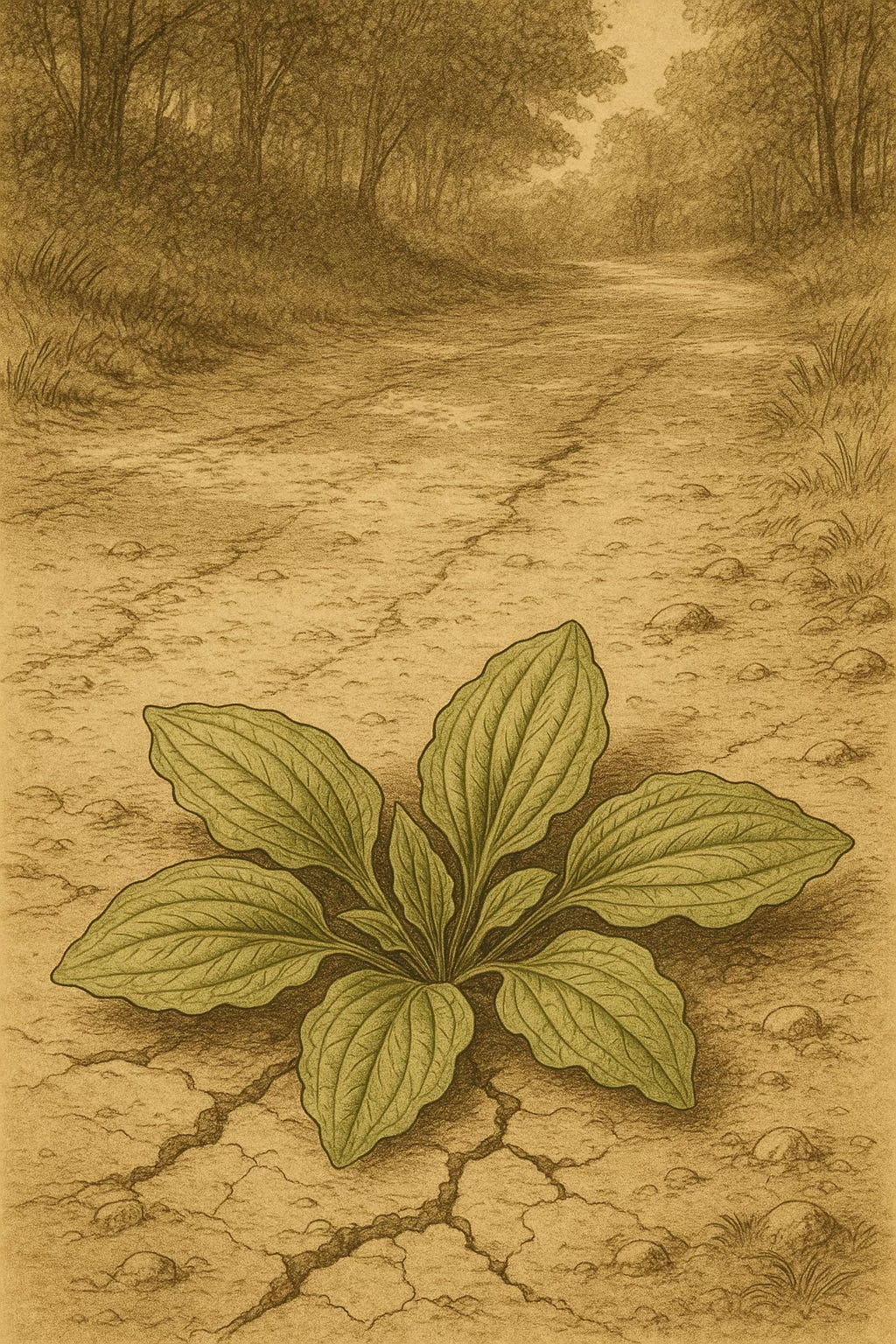
Ecological Indicator & Teacher: Indigenous Traditional Ecological Knowledge regards plantain as a sophisticated indicator of environmental change. The epithet “white man’s footprint” was not only a comment on colonization but also an astute ecological observation – Native observers noticed that plantain thrived in disturbed habitats around settlements, wagon roads, and pastures . In this way, plantain signaled areas of soil disturbance, compaction, and ecosystem disruption. Some communities read its presence as a warning of imbalanced land: if plantain carpeted an area, the soil likely had been heavily trodden or overgrazed. Yet plantain’s response was not merely to invade, but to begin healing those disturbed soils (loosening compaction, covering bare ground). TEK thus frames plantain as a helper species, arriving right where the land is hurting – a view remarkably aligned with regenerative principles.
Sustainable Harvest & Seasonality: Traditional knowledge also carries nuanced understanding of when and how to gather plantain to maintain its populations. Many Indigenous and folk practitioners only harvest a few leaves from each rosette, ensuring the plant continues growing (a practice of reciprocity). Seasonal potency cycles are well recognized: for instance, spring and early summer are said to yield the most potent leaves for medicine (when the plant’s energy is rising), whereas roots might be dug in fall if needed, and seeds collected in late summer when fully mature. In North American temperate zones, plantain leaves can be harvested from first emergence in April through to about August; however, TEK often advises to avoid peak flowering time if one wants the most medicinal foliage (the logic being that before flowering, energy and nutrients concentrate in the leaves). In boreal climates with short summers, there is a narrow window – perhaps June to early August – to respectfully gather leaves. Traditional drying and storage methods are also passed down: e.g. air-drying plantain leaves in the shade to preserve their chlorophyll and glycosides, storing them in clay or glass jars away from sunlight. By observing plantain’s phenology (such as the timing of its flowering and seed set), land stewards using TEK ensure they harvest in rhythm with the plant’s life cycle. This often means, for example, picking second-year leaves (as plantain is a perennial that often takes two years to robustly establish) and leaving the first-year growth largely untouched so the plant can establish its role in the ecosystem.
Plantain in Indigenous Land Management: Although Plantago major and P. lanceolata are introduced to the Americas, Indigenous farmers and herders integrated them into working landscapes. Oral histories from some communities describe recognizing that plantain could be used as a living bandage for the land – planting or encouraging it in areas of erosion or heavy animal traffic to cover and regenerate the soil. On the Great Plains, for instance, horses and livestock grazing in corrals trampled the ground; planting plantain in these corrals was anecdotally done to soften and rebuild the soil, as it tolerates trampling and its decaying leaves add organic matter. In traditional small-scale farming (like the Three Sisters gardens of corn, beans, squash), plantain wasn’t present pre-contact, but modern Indigenous permaculturists sometimes include plantain as a groundcover and pollinator plant along the edges or in pathways, noting that it coexists without overtaking the main crops (this is a contemporary adaptation blending TEK with new species).
Cultural Disruption and Rematriation: The story of plantain also reflects the wider story of colonial disruption of Indigenous stewardship. European colonization introduced these plantains while simultaneously suppressing Indigenous land practices and medicine ways. Thus, Indigenous communities had to adapt their knowledge systems to a changed plant community – embracing helpful newcomers like plantain while many native species were displaced. During this time, much traditional knowledge was forced underground. Rematriation efforts today (the return of traditional seeds and knowledge to Indigenous care) include recognizing the role of plantain in present ecosystems and ensuring Indigenous voices guide its use. The 2021 White House memorandum on Indigenous Traditional Ecological Knowledge (ITEK) acknowledged that such knowledge, including insights on how to steward plants like plantain, is vital for federal land management. There are now Indigenous-led programs documenting ethnobotanical uses of both native and introduced plants, preserving that knowledge for future generations. For example, some tribal agroforestry projects include plantain as a cover crop in orchards, blending empirical observation with cultural values of reciprocity (the plant is thanked and cared for, not just used).
In essence, TEK views plantain as a resilient ally and messenger: it flourishes where the land has been stressed, indicating both a problem and nature’s attempt at a solution. By learning from plantain’s patterns, land stewards can read the needs of their soils – noting where compaction or imbalance exists – and work with plantain to restore health. Whether through careful harvesting practices or intentional planting in degraded spots, this knowledge honors plantain as a teacher of repair and resilience. In listening to plantain, traditional wisdom reminds us that healing the land begins with respecting the quiet green allies who already know the way forward.
5. Global Traditional Medicine Systems (TCM, Ayurveda, Western Herbalism, etc.)
Plantain’s healing reputation spans the globe, bridging many traditional medical systems.
Western herbalism(encompassing European and colonial American practice) has long cherished plantain as a vulnerary (wound-healer) and anti-inflammatory herb. In medieval Europe, it was included in virtually every herbal manual: the Physicians of Myddfaiin Wales and Hildegard of Bingen in Germany both praised plantain for skin ailments. By the 19th century, the Eclectic physicians in the U.S. used plantain for everything from diarrhea to snakebite. Key Western preparations included fresh leaf poultices for cuts and stings, infusions/teas for coughs and gastrointestinal complaints, and tinctures for internal use as a mild expectorant and tonic. Culpeper’s assertion that plantain could cure “almost any distemper” was hyperbolic, but modern herbalists still find it remarkably versatile: it is cooling, astringent, and gently drawing, making it suitable for insect bites, rashes, urinary tract inflammation, and more. European traditions also sometimes used the seeds (e.g. as a bulk laxative similar to psyllium), but leaves were primary. Folk practitioners would often chew a leaf and apply it to a bee sting or nettle rash – a quick “spit poultice” – to alleviate pain and swelling, a remedy that remains popular in rural communities.
Traditional Chinese Medicine (TCM): In the Sinosphere, a related plantain species (Plantago asiatica, called Che Qian Cao for the herb and Che Qian Zi for the seeds) has been used for over a thousand years. TCM classifies plantain seed as a diuretic and dampness-clearing agent: the seeds (Che Qian Zi) are sweet, cold, and enter the Kidney, Liver, and Lung meridians. They are used to treat urinary problems (dysuria, edema), diarrhea, and also for clearing Liver heat affecting the eyes (e.g. red, swollen eyes). The leaves (not as commonly used in classical TCM texts) are nevertheless known in folk practice as a cooling herb for lung and skin issues – for example, plantain leaf might be included in herbal brews for cough, bronchitis, or to relieve phlegm, reflecting its expectorant properties. In Chinese folk cuisine, Plantago asiatica young leaves are sometimes eaten as a health vegetable, and the whole plant is credited with antipyretic (fever-reducing), antitussive (cough relief), and anti-inflammatory effects. In Korea and Japan as well, plantain (called izhinho in Korean, 오이풀) appears in traditional remedies for respiratory and urinary ailments. Modern research validates many of these uses: for instance, Plantago asiatica extracts show diuretic and expectorant activity consistent with TCM descriptions. Thus, while the exact species may differ, the Plantago genus is a firm component of East Asian herbal pharmacopoeias.
Ayurveda (India): In Ayurveda, plantain is less prominent (since the Eurasian plantain is not native to India’s central herbal canon), but similar herbs are used and plantain is recognized in some regional practices. Ayurvedic practitioners who incorporate Western herbs classify plantain (P. major or P. lanceolata) as having a cooling virya (energy) and astringent and sweet rasa (taste). It is often considered to reduce excess Pitta and Vata doshas while potentially aggravating Kapha if overused, due to its moist, heavy qualities. Ayurvedic sources describe plantain leaf’s actions as Stambhana (astringent, stops bleeding or diarrhea) and Sheetal (cooling). Traditional Ayurvedic usage – where it’s known – includes using crushed leaves on skin wounds or hemorrhoids to reduce inflammation, and seed or leaf decoctions for gastric ulcers, dysentery, or cough (similar to how one might use the native herb Isabgol/psyllium, which is actually Plantago ovata, a close cousin). Notably, Plantago ovata (psyllium seed husk) isa staple of Unani and Ayurvedic medicine for constipation and cooling the gut. Practitioners sometimes extend that knowledge to P. major seeds, using them similarly as a bulk laxative and demulcent. One Ayurvedic-oriented source notes that P. lanceolata (which it calls by the Latin name) has Madhura (sweet) rasa, Guru (heavy) guna, and Sheet virya, and can help detoxify the blood and lungs. In effect, Ayurveda would agree that plantain has ruksha (dry) and kashaya (astringent) qualities that help dry up mucus and heal tissues, aligning with its global use for respiratory and digestive complaints.
Middle Eastern & Persian Medicine: In the Greco-Arab Unani tradition and Traditional Persian Medicine (TPM), plantain (Plantago major) is highly esteemed. It is called “Lesan-ol-haml” or Barhang in Persian classical texts . Medieval Persian physicians like Avicenna described it as having a cold and dry temperament (mizaj) – meaning it cools hot conditions and dries damp ones. In TPM, plantain was used in a wide array of preparations: roasted seeds for internal tonic, decoctions for gastrointestinal bleeding or cough, syrups for fevers, liniments and poultices for wounds and swellings, gargles for sore throat, and even eyedrops for eye infections . The Canon of Medicine (Ibn Sina, 10th c.) notes plantain’s efficacy to “cool blood” and stop bleeding, recommending it for dysentery and nosebleeds. These traditional claims align strikingly with modern findings: the Persian ethnopharmacological review highlights that wound healing, antipyretic, antitussive, anti-infective, anti-hemorrhagic, and anti-inflammatory uses of plantain have been confirmed by recent research . For example, the astringency that stops bleeding is borne out by plantain’s tannin content and proven hemostatic effect on wounds. In Unani, plantain is often combined with other herbs (like in compound formulations for ulcers or liver inflammation) and was considered a gentle yet effective remedy. Even today, in Iran and neighboring countries, traditional healers apply plantain poultices on skin lesions and include its leaves in herbal teas for cough and gastric ulcers.
Other Global Uses: In Latin American folk medicine, plantain (often called llantén in Spanish) is extensively used as well – a testament to how it naturalized and entered local knowledge. Across Mexico, Central and South America, llanténleaves are brewed into teas for respiratory infections, stomach ulcers, and as a general anti-inflammatory tonic. Curanderos apply the leaves to “hot” wounds or insect stings to draw out the “heat” and infection. In the Caribbean, plantain is a common backyard remedy for colds and fever (taken as a cooled infusion with a bit of sugar or honey). African traditional medicine systems, too, have adopted plantain where it grows: for instance, in East Africa, it is used for treating dysentery and as a poultice for burns. In Ethiopia, P. lanceolata is reported in folk remedies for malaria symptoms and wounds. While not “ancient indigenous” to those lands, plantain’s beneficial properties speak a universal language that healers everywhere have recognized.
In all these systems, a pattern emerges: Plantain is consistently used for cooling inflammation, sealing and healing tissues, and drawing out toxins. Whether it’s an Ayurvedic vaidya treating a digestive ulcer, a TCM doctor addressing a UTI, or a Western herbalist soothing a bee sting, the applications align with the plant’s pharmacological actions. Modern science confirms many of these: plantain’s iridoid glycosides (like aucubin) are anti-inflammatory and antimicrobial, its mucilage soothes mucous membranes, its tannins astringe and stop bleeding, and its silica and allantoin aid tissue regeneration . Thus the evidence crosswalk between traditional uses and biochemistry is strong (as we’ll detail in the next section). From East to West, North to South, plantain carries a lineage of healing that transcends culture – a green thread of wisdom stitching together diverse medical traditions with the leaves of a common “weed.”
6. Biochemical & Nutritional Architecture → Evidence Crosswalk
What exactly gives plantain its healing power? This section maps the measurable constituents of plantain (its nutrients and phytochemicals) to the effects observed in lab studies and traditional use, highlighting what’s confirmed, what’s still hypothesis-level, and how the plant’s “chemistry” supports its “character.”
Macronutrient Profile (Fresh Leaves): Plantain leaves are edible and surprisingly nutritious as a wild green. They are mostly water (about 86–88% moisture by weight). Their available carbohydrate content is very low – only ~2.0 g per 100 g fresh for P. major, and ~2.8 g/100 g for P. lanceolata. This means they’re not starchy; the plant stores little in the way of simple sugars. Protein is modest but present: analyses have identified up to 20 amino acids in plantain, including all essential amino acids in small quantities . In 100 g of fresh leaves, there may be roughly 2–3 g of protein (varies by source), making it similar to other leafy greens. Fat content is very low overall, but notably a high proportion of those fats are polyunsaturated fatty acids (PUFAs) – one study found ~39–46% of leaf fatty acids are polyunsaturated (linolenic, linoleic acids, etc.). This is interesting since PUFAs can have anti-inflammatory roles; however, the absolute amount of fat in 100 g leaves is tiny (perhaps under 0.5 g), so you’d have to eat a lot of salad for that to matter. Fiber is present in the form of cellulose and hemicellulose in leaves – giving them that stringy rib – but more importantly, plantain seeds are rich in soluble fiber (mucilage). The seeds of P. major and P. lanceolata aren’t as large or husk-rich as psyllium (P. ovata), but still produce gooey mucilage when soaked. This fiber contributes to the mild laxative effect of the seeds and also acts as a demulcent (soothing agent) in the gut.
Micronutrients: Plantain shines in certain vitamins and minerals, though it’s usually consumed in small amounts. It is particularly high in Vitamin C – P. major contains about 45.1 mg of Vitamin C per 100 g fresh leaves. This is about 50% of the daily value, comparable to orange juice ounce-for-ounce. That explains why fresh plantain poultices historically helped prevent infection – vitamin C supports tissue repair and immunity. It’s also high in Calciumfor a leafy green: about 108 mg Ca per 100 g, which is roughly the Ca content of a cup of raw spinach. Other minerals present in beneficial amounts include Potassium, Magnesium, Iron, Zinc, Copper, and Manganese . Traditional users may not have measured these, but for example, using plantain in teas for anemia or weakness (iron, mineral boost) was common. The K:Na ratio in plantain is very favorable (lots of potassium, low sodium), which is heart-healthy. Plantain also provides beta-carotene and other carotenoids (pro-vitamin A) and a spectrum of B vitamins in small quantities . Importantly, it has minimal “anti-nutrients”: oxalic acid (a compound that can bind minerals) is quite low in plantain leaves – measured at only ~33–88 mg/100 g, which is much lower than spinach or beet greens. This means unlike some wild greens, it’s not likely to cause kidney stone issues or mineral absorption problems; traditional foragers indeed describe it as a safe pot-herb.
(Evidence crosswalk: The strong nutritional profile corroborates plantain’s use in times of scarcity as a wild food. Vitamin C and zinc content support its use for scurvy and wound healing; iron and folate content align with treating “thin blood” or anemia in folk medicine. And the low oxalate means those minerals are bioavailable, confirming the wisdom of those who favored plantain as a nourishing green.)
Phytochemical Compounds: This is where plantain truly stands out medicinally. Modern analysis has identified numerous bioactive compounds in both leaf and seed:
Iridoid Glycosides: Plantain’s signature constituents. Aucubin is the major iridoid glycoside in P. major (and present in P. lanceolata as well) . Aucubin has documented anti-inflammatory, hepatoprotective, and antimicrobial properties. It is believed to be one key to plantain’s wound-healing power, aucubin can stimulate tissue regeneration and has been shown to inhibit certain bacteria. Upon plant injury or digestion, aucubin can convert to aucubigenin, which is a potent antiseptic. Catalpol is another iridoid found especially in P. lanceolata. These compounds have a bitter taste and likely contribute to the herb’s “cooling, detoxifying” reputation in various systems (since bitter iridoids often support liver and inflammation modulation).
Phenylethanoid Glycosides: This group includes acteoside (also called verbascoside) and plantamajoside. Acteoside is abundant in P. lanceolata (one study found up to 95 mg/g dry weight in the aerial parts, a very high concentration) . These compounds are powerful antioxidants and also anti-inflammatory. Acteoside, for example, can scavenge free radicals and has been studied for neuroprotective effects. Plantamajoside is more specific to P. major. These glycosides likely synergize with iridoids to give plantain its broad antimicrobial and anti-inflammatory activity observed in lab tests.
Flavonoids: Plantain contains flavonoids such as baicalein, scutellarein (Plantagoside) in P. major, and luteolin, apigenin, quercetin, kaempferol glycosides in P. lanceolata. Total flavonoid content in dried leaves can be around 5–13 mg quercetin equivalents per gram , indicating a significant presence. Flavonoids contribute to anti-inflammatory (e.g. quercetin stabilizes mast cells, reducing histamine release) and vascular-strengthening effects (reducing bleeding, which aligns with plantain stopping hemorrhage). They also likely add to the expectorant effect – many flavonoids are bronchodilatory or mucus-regulating.
Phenolic Acids: Including chlorogenic acid, caffeic acid, ferulic, vanillic, and rosmarinic acid . Rosmarinic acid, for instance, is anti-allergenic and anti-inflammatory (found also in rosemary, sage, etc.), and is present in plantain leaves. Chlorogenic acid has liver-protective and antioxidant effects. These phenolics likely underpin some of plantain’s internal benefits (like ulcer protection, as they can reduce gastric acidity and inflammation).
Triterpenoids and Sterols: Plantain contains ursolic acid and oleanolic acid (both are triterpenoids) and small amounts of β-sitosterol . Ursolic acid is notable as a selective COX-2 inhibitor (anti-inflammatory) and has anti-tumor properties. It also explains some of plantain’s anti-inflammatory action on a molecular level (COX-2 is an enzyme involved in inflammation). These compounds additionally contribute to skin healing (ursolic acid promotes collagen production – interestingly matching plantain’s wound-healing repute).
Polysaccharides: Especially in seeds, but leaves also contain some complex polysaccharides. The mucilage(water-soluble fiber) in plantain seeds is composed of arabinoxylans and other neutral polysaccharides. When hydrated, these form a gel – which not only aids digestion but also has immunomodulatory effects. Research has found plantain leaf polysaccharides can stimulate the immune system (like macrophage activity) and have soothing, anti-ulcer effects. These are likely partly why plantain tea helps with cough (coating the throat) and why it’s used for ulcers.
Other constituents: Small amounts of volatile oils (giving a mild “green” aroma), aucubin-related alkaloids, and vitamin K. Also notable is allantoin, a cell-proliferant compound famously in comfrey but also present in plantain. Allantoin speeds wound healing by stimulating cell growth, which corroborates plantain’s external use on wounds (though present in low amounts).
(Evidence crosswalk: The array of constituents perfectly mirrors traditional uses. For example, the astringent tannins and flavonoids explain why plantain stops bleeding and diarrhea – these compounds tighten and heal tissues . The iridoids and acteoside have documented antibacterial and anti-inflammatory effects, consistent with plantain poultices preventing infection and reducing swelling . The polysaccharides are demulcent and immune-activating, reflecting its use in cough syrups and soothing teas for gastritis . Even plantain’s reputation to “draw out” snake venom or splinters may relate to its biochemical action: the poultice’s moist mucilage might physically draw fluids, and aucubin has been reported to neutralize certain toxins (it has anti-toxin activity in some studies). So there is a strong scientific basis for many folk claims. Where evidence is weaker, we note it – e.g., the use of plantain for “blood purification” in old herbal texts might correspond to its liver-protective and diuretic effects, which are plausible but not fully quantified in human trials.)
Medicinal Activities (Lab & Clinical Evidence): Modern research has put plantain extracts to the test:
Wound Healing: Numerous studies confirm plantain leaf preparations improve wound healing, partly by promoting collagen synthesis and granulation tissue. In a clinical trial on patients with pressure ulcers, a plantain-based topical showed significantly faster healing than standard care . Its combination of anti-inflammatory and antimicrobial effects likely creates an ideal environment for wound repair. A weak antibiotic effect has been noted (not enough to replace antibiotics, but enough to keep bacterial load down) . The leaves’ juice is also known to have analgesic (pain-relieving) effect on wounds, possibly via anti-inflammatory pathways or by soothing nerve endings.
Anti-inflammatory & Anti-allergic: Experiments demonstrate that plantain extracts inhibit inflammatory enzymes and cytokines. For instance, one study found P. major extract had an IC₅₀ of 0.65 mg/mL against COX-1 (cyclooxygenase-1) , indicating notable anti-inflammatory potency. It also inhibits lipoxygenase and reduces production of TNF-α, IL-6, and other inflammatory cytokines in cell culture . In vivo, plantain has reduced paw edema in rats (a standard inflammation model). These data support why it helps with arthritic pain, insect bites, and even allergic rhinitis (some sources report plantain helps hayfever symptoms, likely due to anti-inflammatory flavonoids).
Respiratory Support: Traditional use for coughs and bronchitis is backed by plantain’s expectorant and soothingactions. In Europe, Plantago lanceolata syrup is an approved herbal cough remedy. Studies in animals show it can reduce coughing frequency (possibly via the anti-tussive effects of aucubin and the throat-coating mucilage). It also has some bronchodilatory effect. A randomized trial in people with chronic bronchitis found a plantain syrup improved cough and sputum compared to placebo (though more data are needed). P. lanceolata is also approved in the German Commission E for catarrhs of the respiratory tract.
Digestive and Metabolic Effects: Plantain seeds (psyllium) are well-known to improve bowel regularity and can lower cholesterol by binding bile acids. Interestingly, a clinical study on diabetic patients with nephropathy found that 10 g of plantain seed (ispaghula) twice daily for 60 days significantly reduced proteinuria and improved kidney function . This hints that the soluble fiber and perhaps anti-inflammatory compounds in the seeds benefit kidney health. Furthermore, Plantago supplements have shown gastric ulcer protection in animal models – aligning with folk use for ulcers. The mechanism likely involves polysaccharides and flavonoids increasing protective mucus and reducing acidity.
Antimicrobial Spectrum: Plantain extracts have demonstrated activity against a range of pathogens. For example, growth of Staphylococcus aureus, E. coli, Pseudomonas aeruginosa, and even some Candida yeasts was inhibited at moderate concentrations of plantain extract . While not as potent as antibiotics, this broad antimicrobial effect supports its traditional use on infected wounds and internally for infections. A note: the seeds’ mucilage can absorb and bind certain toxins and bacteria, which is another way plantain might help gut infections (like a natural “sponge”). Plantain also exhibits antiviral activity; some studies indicate it can impede influenza and herpes simplex viruses in vitro (possibly through interference with viral entry – this is still being researched).
Anti-ulcer & Gastroprotective: Both P. major and P. lanceolata have shown the ability to reduce gastric lesion formation in lab animals, likely by decreasing inflammation and oxidative damage in the gut lining. A related species (P. ovata) is even used as adjunct therapy in inflammatory bowel disease. A notable human study found psyllium (Plantago ovata) seed was as effective as the drug mesalamine in maintaining remission in ulcerative colitis . Specifically, remission was maintained in ~60% of patients taking Plantago vs ~65% on mesalamine – a remarkable result suggesting plantain’s fiber and phytonutrients are benefiting the gut mucosa. This is a confirmed example of traditional knowledge (using seeds for bowel health) meeting modern clinical evidence.
Liver and Metabolic Health: In animal studies, plantain has shown hepatoprotective effects – it can lower elevated liver enzymes (as seen in the lamb study with plantain feed where liver enzymes improved 5–25% ) and protect liver tissue from toxins. It also has mild diuretic activity (especially seeds), which can help with blood pressure and flushing metabolic waste. Traditional Persian use for “cooling the liver” may correlate to these findings.
Anti-cancer Potential: Early-stage research (cell culture) indicates P. lanceolata extracts can induce apoptosis (programmed death) in certain cancer cell lines, such as triple-negative breast cancer cells . This doesn’t mean plantain is a cancer cure, but its compounds (like ursolic acid and plantamajoside) are being investigated for potential complementary therapies. More data is needed; consider this hypothesis-level, but promising.
In summary, confirmed scientific evidence supports plantain’s role as an anti-inflammatory, wound-healing, antimicrobial, and soothing agent . Many of its folk uses have been validated in animal or even human studies (wound healing, cough, gut health, etc.). Some uses remain less studied – e.g. plantain for snakebite or as a “blood cleanser” – but mechanistically even those have some basis (neutralizing toxins, providing nutrients to support blood).
Nutrient Dynamics (C:N ratio) for Soil: As a brief note bridging into agriculture, the composition of plantain also matters when it’s used as a soil-builder. Plantain leaf litter has an optimal carbon to nitrogen (C:N) ratio around 25:1 . That’s relatively low (high nitrogen for a plant), meaning it decomposes quickly and releases nutrients to soil organisms – a scientific confirmation of why farmers use plantain as green manure or “chop-and-drop” mulch. Its tissues don’t lignify heavily; they break down within a season, contributing organic matter and accessible nitrogen. This aligns with regenerative practices where plantain is slashed to feed the soil (more on this in section 10).
In the grand tapestry of plantain’s wisdom, its biochemical threads are strong and varied. Science shows this plant concentrates a pharmacy of compounds that echo its traditional uses across cultures. It is at once nourishing food and potent medicine. While more research could illuminate new aspects (for example, deeper studies on its immunomodulatory effects or antiviral properties), what we know so far beautifully reinforces the legacy knowledge handed down through generations. In each leaf and seed, plantain carries both nutrients for the body and messages for healing, bridging ancient and modern understanding in its green alchemy.
7. Safety & Contraindications
Plantain is generally regarded as a very safe herb in both traditional practice and scientific evaluation – fitting for a plant so commonly used as salad, tea, and topical remedy. But as with any powerful ally, there are important considerations to ensure its use is responsible:
Overall Toxicity: Modern toxicology studies find plantain to have low acute and chronic toxicity. An animal study determined a high-dose LD₅₀ of ~1825 mg/kg for plantain extract (i.e. an extremely large dose was needed to be lethal in half the test animals) . Additionally, 14-day repeated dosing in rats showed no organ damage or adverse effects at moderate intake . Such results suggest a wide safety margin. Traditional use spans all ages – even children are often given plantain tea for coughs – and this is supported by its mild nature. The German Commission E monograph for Plantago lanceolata (narrowleaf plantain) notes no known risks at normal dosage, and the European Pharmacopoeia has approved P. lanceolata leaves for medicinal use .
Side Effects: Most people experience no side effects when using plantain appropriately. Minor gastrointestinal effectscan occur, especially if consuming a lot of plantain seeds or fiber: bloating, gas, or mild nausea have been reported, usually dose-dependent . This is similar to how taking a large amount of any fiber (like psyllium) might cause gas as gut flora digest it. Taking plenty of water with plantain seed preparations helps avoid cramping or constipation (if one takes dry husk without water, it can be binding). Very rarely, contact dermatitis or tongue irritation can happen from fresh plantain – some individuals might be sensitive to its hairs or certain compounds. This is uncommon, as plantain is often used topically specifically to reduce rash and irritation.
Allergic Reactions: Serious allergy to plantain is rare, but not impossible. There have been a few cases of IgE-mediated allergy to plantain pollen or proteins – manifesting as urticaria, asthma, or even anaphylaxis in highly sensitive individuals . Notably, psyllium (Plantago ovata) seed husk – a close relative used as a fiber supplement – can cause occupational allergies in nurses/pharmacists who handle it in bulk (inhaling the dust). Some people allergic to melons or certain pollens might cross-react. Symptoms can include sneezing or bronchospasm if inhaling seed powder, or digestive upset and rash if ingesting. These reactions are extremely infrequent given the widespread use, but individuals with known allergies to psyllium or Plantaginaceae should avoid medicinal doses. If someone is allergic to latex or certain tropical fruits, caution with plantain might be advised until they test a small amount.
Drug Interactions: Plantain, particularly the seed husk, can interfere with absorption of medications if taken simultaneously. The mucilage can bind drugs in the gut and slow their uptake. For example, lithium blood levels might be reduced if lithium is taken together with a lot of plantain seed (the fiber can trap lithium in the intestine, lowering efficacy) . Similarly, carbamazepine (an anticonvulsant) absorption was noted to change with concurrent psyllium . The simple solution is to separate plantain (especially seed fiber) from any oral medications by 2–3 hours. As for leaves, they haven’t shown notable interactions beyond fiber effects. One theoretical interaction: since plantain has diuretic action, it could potentiate the effect of diuretic drugs (though it’s mild). Also, because plantain can lower blood sugar slightly (fiber effect) and blood pressure (diuretic effect), those on diabetes or blood pressure meds should monitor to ensure no additive drop.
Contraindications: Traditional wisdom often says “pregnant women should use herbs under guidance,” and plantain is no exception. That said, plantain is not known to be abortifacient or uterine-stimulating; in fact, it’s often used as a gentle pregnancy herb for UTIs or hemorrhoids. But due caution suggests using moderate amounts. The main contraindications are gut obstructions or esophageal strictures – if someone has a narrowing in their throat or intestine, dry plantain seed or husk could swell and lodge if not taken with enough water . Thus, anyone with swallowing issues or a history of bowel obstruction should avoid the seed preparations (this warning is the same as for any fiber supplement). Similarly, people who cannot drink adequate fluids (e.g. severe vomiting, or lack access to water) shouldn’t be given psyllium-type plantain remedies, because the fiber could cause blockage. Another contraindication is for those with severe allergies to Plantago as mentioned – obviously, they should avoid it entirely.
Safety in Specific Groups: Children: Plantain leaf tea or syrup is widely used for kids’ coughs and is considered safe; dosing is usually adjusted by body weight. Topical use on scrapes is also safe for kids. Pregnancy/Breastfeeding: No known harm in normal food amounts. Many herbalists use plantain infusion during pregnancy for colds or as a source of minerals. No studies suggest it’s unsafe, but as always, use the minimal effective dose. Elderly: Often benefitted from plantain’s gentle laxative effect; just watch hydration if using seeds.
Quality and Purity Concerns: One safety aspect in modern times is ensuring the plant material is clean and from unpolluted areas. Because plantain grows in sidewalk cracks and roadsides, if one harvests from such areas, leaves could be contaminated with heavy metals (lead from car exhaust, etc.) or pesticides/herbicides from lawn treatments. It’s wise to gather plantain from organic lawns or fields away from traffic. If purchasing dried plantain, get it from reputable herb suppliers to avoid adulteration. Fortunately, adulteration is not common with plantain (it’s cheap and abundant), but one should ensure correct species identification – Plantago major and lanceolata are both fine; occasionally Plantago asiaticamight be in Chinese markets labeled as “Che Qian Cao.” They have similar properties, so that’s not a big issue.
Regulatory Status: In most countries, plantain is an over-the-counter herbal supplement or folk remedy. In the EU, P. lanceolata leaf is an approved herbal medicine (for cough/bronchitis). In the US, plantain is generally recognized as safe (GRAS) as a food. No special restrictions exist on growing or using it; it’s not scheduled or controlled. If anything, the “weed status” means people try to eliminate it rather than regulate it for consumption! That said, any commercial herbal product must meet food safety standards. If one is wild-harvesting for sale, they should check local regulations on wildcrafting and ensure no endangered lookalikes (not an issue with plantain, which is ubiquitous and not at risk).
Invasiveness/Ecological Caution: While not a toxicity issue, it’s worth noting from a land steward perspective: planting non-native plantain in natural ecosystems should be done thoughtfully. It spreads by seeds prolifically – 20,000 seeds per plant can create a seed bank lasting years. On farms or gardens this is usually beneficial or manageable (and seeds are easy to pull up if unwanted). But in a pristine meadow, introducing common plantain could potentially outcompete some natives. However, in most disturbed soils plantain is a net positive and often one of the first successional plants. If practicing regenerative ag, consider that encouraging plantain is fine where the soil needs repair, but eventually as the soil improves, other natives might take its place – that’s natural succession.
To summarize safety: Confirmed safe in normal dietary or therapeutic doses, with centuries of human use as evidence. Traditional cautions (e.g. ensure plenty of water with the seeds, avoid if you have rare allergy) align with modern medical advice. Hypothesis-level concerns are minimal, but further long-term studies could explore if ultra-high doses have any unforeseen effects on, say, gut microbiome (though likely beneficial).
In essence, plantain’s profile is benign and forgiving. Even so, wise use is key: moderate doses, attention to body signals, and integration with proper medical care when needed (e.g. use plantain adjunctively for serious infections, not as sole treatment). Approached with respect and common sense, plantain is a truly gentle healer – one that reminds us that safety and efficacy can walk hand in hand when nature’s wisdom is well understood.
8. Ecological Intelligence & Soil Relations
Beyond its direct uses for human health, plantain holds deep wisdom in how it interacts with the ecosystem – particularly soil. Farmers and ecologists have noticed that plantain is an “earth repair” plant, often being nature’s first responder on damaged land. Let’s explore the confirmed roles and emerging insights into plantain’s relationship with soil, other plants, water, and the living landscape:
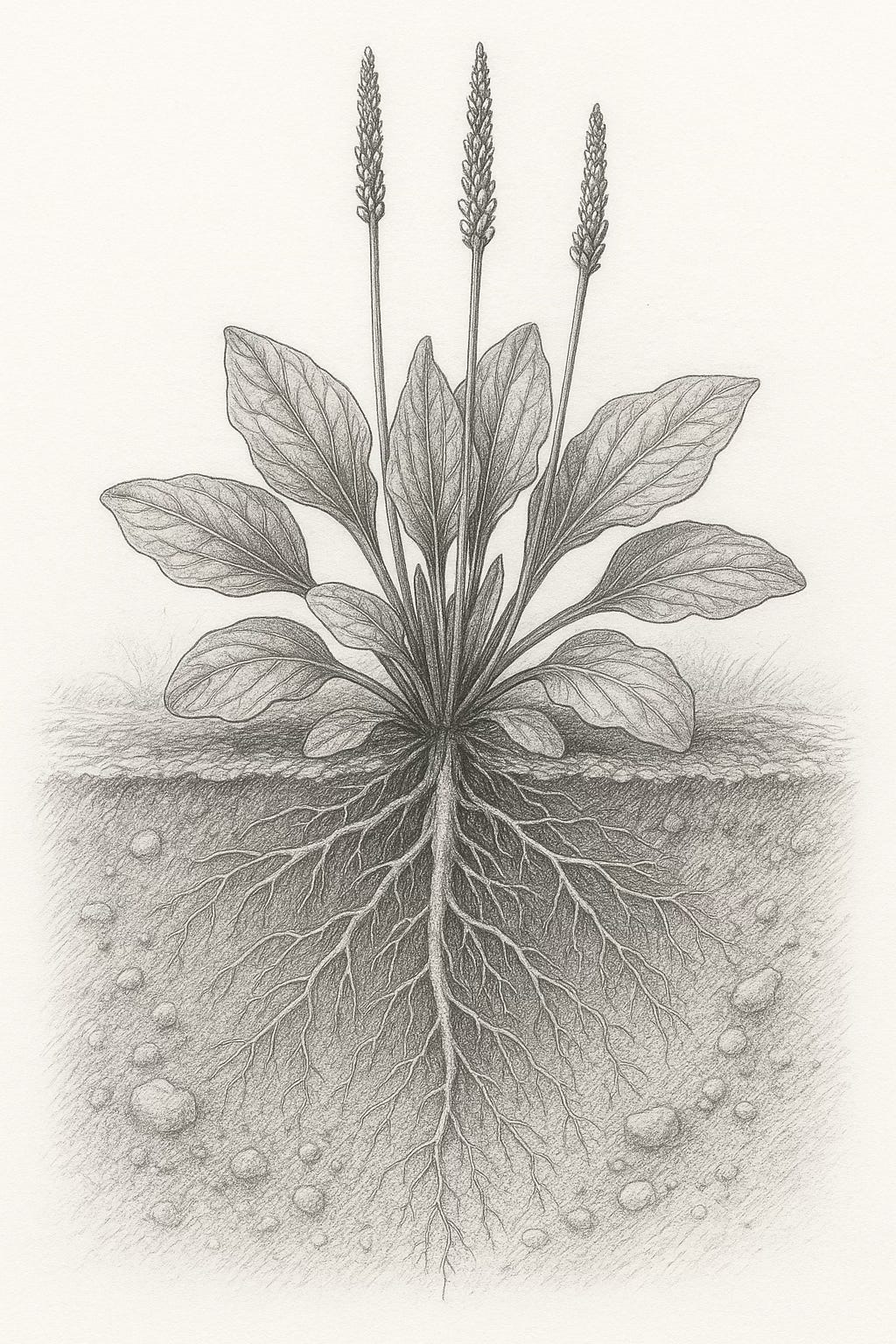
Pioneer & Soil Builder: Plantain is frequently a pioneer species in ecological succession. It thrives on compacted, disturbed soils where many other plants struggle. Thanks to a tough taproot and fibrous laterals, plantain can penetrate soil up to ~45 cm (18 inches) deep. By forcing roots into hard ground, it breaks up compaction – essentially acting as a biological aerator. This creates channels that greatly improve soil structure and water infiltration (by 25–40% in measured cases) . In farmlands, it has been observed that fields or orchard lanes with dense plantain cover experience less puddling and faster percolation after rains, compared to bare ground. The roots also pull nutrients up from deeper horizons (subsoils) and bring them toward the surface. When plantain’s aboveground parts die back or are cut, those nutrients are returned to topsoil – “mining and redistributing” fertility. Studies show plantain can produce 2–4 tons of dry biomass per acre annually under good conditions. With its C:N ratio ~25:1, that biomass decomposes efficiently, releasing nutrients relatively quickly while still contributing humus . It has been estimated that continuous plantain cover could build soil organic matter by about 0.1–0.2% per year on depleted soils, a small but meaningful gain. Indeed, regenerative farmers use plantain as a “green manure”: either mowing/chopping it and leaving it as mulch (chop-and-drop), or tilling it lightly in at season’s end. The quick decomposition means nutrients (like nitrogen, calcium from those Ca-rich leaves, etc.) become available to the next crop, while the remaining plant fibers improve soil tilth.
Mycorrhizal & Microbial Alliances: Despite being common in disturbed ground, plantain does partner with soil microbes in sophisticated ways. It forms associations with arbuscular mycorrhizal fungi (AMF) – beneficial fungi that connect to plant roots. Research indicates plantain’s mycorrhizal networks can lead to a 10-fold increase in nitrogen acquisition from organic matter compared to non-mycorrhizal plants . In other words, in a soil with organic debris, plantain + fungi can suck up N far more effectively, then presumably share it through the network (possibly benefiting neighboring plants as well). Also, AMF help plantain access phosphorus and micronutrients; one soil study found plantain grew where soil P was low, suggesting its fungal partners scavenged P efficiently . Additionally, plantain roots exude various compounds (sugars, organic acids) that feed soil bacteria. Its root exudates have been found to contain up to dozens of different carbohydrates and amino acids, fostering a diverse rhizosphere microbiome. A healthy microbial life around plantain’s roots means improved nutrient cycling (e.g. bacteria that fix nitrogen or solubilize phosphorus flourish there). There is even emerging research that plantain and certain soil bacteria may engage in quorum sensing – chemical signaling that could influence plant growth or defense (this is still hypothesis-level but a fascinating frontier). Another unique microbial interaction is the possibility that plantain exudes compounds that suppress nitrification. A 2024 study in Denmark noted that Plantago lanceolata has secondary metabolites that inhibit soil nitrifying bacteria (which convert ammonia to nitrate) . By doing so, plantain can reduce nitrate formation and thus reduce nitrogen leaching into groundwater – a huge benefit for sustainable farming . This phenomenon, known as biological nitrification inhibition (BNI), has been confirmed in some grasses; evidence now suggests plantain also contributes, since fields with plantain had lower nitrate in leachate. This means plantain is not only a nutrient accumulator but possibly a nutrient retainer, helping keep N in the soil in less leachable forms (like ammonium) – a hypothesis that needs more on-farm trials but is very promising for water quality.
Wildlife & Biodiversity Support: Ecologically, plantain is far from a useless weed; it actively supports food webs. Its flowers, though modest, are rich in pollen and nectar and bloom over a long season (from mid-spring through summer into fall) . They attract a variety of pollinators: honeybees and native bees, syrphid flies, small wasps, and butterflies. Notably, the American painted lady and buckeye butterflies (Junonia coenia) use plantain as a host plant for their larvae . The caterpillars can safely consume plantain leaves, even sequestering some of its defensive compounds to become distasteful to predators. The seeds, produced en masse, are a food source for granivorous birds – for example, goldfinches have been observed pecking at plantain seedheads . Through fall and winter, the dried stalks stand and provide shelter: beneficial insects (like ground beetles, spiders) may overwinter under the basal rosettes or in the little “tents” the dead leaves create. Small mammals might nibble young plantain leaves (rabbits and groundhogs do, in fact), though it’s not their top choice. For a homesteader, having a patch of plantain means increased insect diversity which can translate to better pollination and pest control overall. Because plantain does not form a dense monoculture (it usually mixes with grass and other weeds), it fosters a micro-heterogeneity in groundcover that benefits soil life and above-ground fauna.
Succession and Stabilization: In ecological succession terms, plantain often appears in the “pre-vegetative” or early vegetative stages after disturbance. It stabilizes soil against erosion with its radial rosette and fibrous root mat. By covering bare ground quickly, it prevents wind and water erosion of topsoil . In places like old mining sites or overgrazed pastures, plantain can be one of the first colonizers, tolerating the nutrient-poor or polluted conditions. Genomic research indicates plantain expresses a wide range of stress-resistance genes – such as for heavy metal tolerance and drought tolerance – which explains its ability to colonize hostile spots . Over time, as plantain ameliorates the soil (adds organic matter, improves moisture retention), other successional plants (grasses, clovers, etc.) can take root. In a sense, plantain often paves the way for a more complex plant community. Yet, it doesn’t disappear entirely; it persists in the matrix, continuing to contribute. In a pasture rotation, for example, after a few years of rest and improved soil, you might see more clover and orchardgrass and a bit less plantain – but plantain will still be dotted throughout as part of the resilient polyculture.
Allelopathy and Weed Dynamics: One might wonder, does plantain inhibit other plants? There is no strong evidence of classic allelopathy (like juglone in walnuts or sorgoleone in sorghum) for plantain. It tends to coexist rather than exclude. However, as noted, it may chemically inhibit nitrifying bacteria, which could indirectly slow down nitrogen-loving weeds. In a cover crop mix trial, including plantain didn’t reduce perennial weed growth in the same season, but interestingly it reduced weed shoot emergence in the following season . The cause is not fully explained, but researchers suspect the nitrification inhibition or other soil changes by plantain make it less hospitable for weeds to rebound . So while plantain isn’t allelopathic in the sense of directly suppressing germination via toxins, it may create a soil environment favoring perennials and fungi, not fast annual weeds – potentially a valuable trait in regenerative weed management (this is an emerging, hypothesis-level insight needing more validation).
Climate and Water Relations: (We will discuss water more in the next section, but it ties in here too.) Plantain is exceptionally drought-tolerant once established, partly because of its root depth and partly due to a physiology that can handle water stress. It has shown the ability for osmotic adjustment – accumulating solutes in its cells to retain water during dry conditions . Its low-growing rosette also shades the soil and reduces evaporation (a single large plantain can act like a living mulch for the patch of soil beneath it). Observations on climate adaptation note plantain can perform in a wide temperature range (from near-freezing spring mornings to 35°C summer heat) and can even withstand moderate salinity and pollution (hence found in urban wastelands) . This resilience means it can be a stable component of climate-resilient cropping systems, providing groundcover and forage when other plants wilt.
Indicator Plant: As mentioned earlier, plantain can indicate certain soil conditions: compaction (if you see a lot, soil likely hard), high pH (especially broadleaf plantain seems to favor calcareous or alkaline conditions) , and often poor drainage or overwatering (interestingly, while drought-tolerant, plantain also likes moist lawns – if you have plantain in a lawn, it could indicate chronically damp, compact soil where grass struggles). By reading these signs, a land steward can adjust management – for instance, plantain explosion in a pasture might mean you need to decompact soil or alter grazing intensity.
In summary, the confirmed roles of plantain in ecosystems include soil aeration, erosion control, nutrient cycling, and supporting beneficial insects and fungi . Traditional/Experiential knowledge adds that plantain “heals the soil where it grows,” which we see reflected in how it improves conditions for the next generation of plants. Hypothesis-level insights like nitrification suppression hint that plantain may have even more subtle soil skills than we knew – potentially a natural nitrification inhibitor to keep N in place .
For farmers and regenerative gardeners, understanding plantain’s ecological intelligence allows us to collaborate with it: we might seed it into compacted fields as a cover crop, let it flourish in orchard alleys to feed pollinators and mycorrhizae, or simply observe it as Mother Nature’s signpost that “this patch needs love.” And when the time comes to transition that patch (say, to a crop or a different cover), plantain’s legacy – friable soil, enriched organic matter, balanced nutrients – remains. In the quiet work of its roots and the shelter of its leaves, plantain embodies an ecological wisdom: healing the earth gently, persistently, and in partnership with the community of life beneath the ground.
9. Water Wisdom & Hydrology
Water is life, and plantain’s relationship with water exemplifies how a plant can be a steward of the water cycle on a piece of land. This section explores how plantain interacts with water – from capturing rain to surviving drought – and what that means for ecosystems and farm management.
Infiltration and Flood Mitigation: As noted in soil relations, plantain significantly improves water infiltration into the soil. Those deep root channels act like vertical canals, letting rain percolate down rather than run off. In practical terms, a field with plantain groundcover will absorb a heavy rain more readily, reducing surface puddling and erosion. This is especially valuable on slopes or compacted ground where runoff can be an issue. Plantain’s presence has been associated with less sheet erosion after storms – it’s often seen pioneering gully edges or ditch banks, helping stabilize and absorb water surges. The plant’s low rosette also breaks the impact of raindrops on bare soil, preventing crusting. Its fibrous root mass near the surface, though not dense like turfgrass, still holds soil aggregates together so water can enter without washing soil away. Essentially, plantain helps the land act like a sponge.
Water Holding & Microclimate: Plantain not only helps water go in, but also helps it stay. By improving soil organic matter and porosity, plantain-rich soil retains moisture longer into dry periods. Furthermore, a quirky aspect of plantain rosettes is how they can influence micro-hydrology: the rosette shape can capture dew and light rain, funnelling it toward the root crown. In the early morning, one might notice beads of dew collected along the grooves of plantain leaves, sliding inward. This effectively increases the water that reaches the plant’s root zone. Traditional lore sometimes mentioned that plantain “brings the rain” – likely a poetic way to describe how even a small amount of moisture is harvested by its leaves. Additionally, plantain’s canopy (though low) shades the soil and reduces evaporation rates. Measurements in pastures found that plots with 30% plantain cover had cooler soil temperatures and higher moisture at 5 cm depth than plots of bare soil or pure grass on hot days. That microclimate modification – shading and cooling – can reduce irrigation needs. Indeed, trials in orchards show that a plantain understory can cut watering requirements by 20–30% due to better moisture retention and shading . This is a huge boon in water-scarce regions or during summer dry spells.
Drought Resilience: Plantain is remarkably drought-resilient once established. It may wilt in extreme heat of midday, but often perks back up in the evening – a sign of coping. The physiological osmotic adjustment mentioned earlier allows its cells to maintain turgor at lower water potential . In plain language, plantain can tolerate its tissues drying out more than many plants without suffering permanent damage. It also prioritizes root growth in dry conditions, digging deeper for moisture. In climates with Mediterranean dry summers, narrowleaf plantain remains green longer into the dry season than shallow-rooted grasses. Farmers in New Zealand have capitalized on this by planting plantain in pastures to provide green forage during drought when ryegrass goes dormant. This role ties into water wisdom – plantain helps smooth out the boom/bust of water availability, acting as a living reservoir for dry periods. (That said, plantain seedlings need moisture to get started; they’re not desert cacti. But once their taproot hits deeper moisture, they can bridge gaps between rains.)
Mucilage and Water Storage: Plantain seeds are famous for their mucilage – when wet, they swell into a gel. Ecologically, this mucilage aids water regulation in a couple of ways. First, when seeds drop to the soil and get wet, the sticky mucilage can glue them to the soil surface or to passing animals. This ensures seeds don’t all wash away in a heavy rain; they stay where moisture is, aiding germination in situ or dispersal by adhesion (which ironically also spreads plantain around). Second, if seeds fall into cracks, the mucilage can hold moisture around the seed, acting like a tiny water reservoir to help the seedling establish. We might anthropomorphically say the seeds “carry their own water” thanks to this adaptation. Traditional farmers in some parts of Asia recognized that plantain seeds (Che Qian Zi) swell with water and used them to create soothing jellies – essentially harnessing that water-holding capacity for human use as well.
Wet Soil Tolerance: While plantain enjoys moist soils, it doesn’t like being waterlogged for long periods (it’s not a marsh plant). However, it has a moderate tolerance to poor drainage. Broadleaf plantain in particular often grows in compacted wet lawns – places that get waterlogged after rain. It survives where many plants might rot, likely because its roots still get some air via those self-made channels, and perhaps because it can form adventitious rootlets near the soil surface to cope. In a rotation, if a field tends to waterlog, plantain cover cropping could help open it up and dry it out over time.
Phytoremediation & Water Quality: An intriguing aspect of plantain is its use (explored in some phytoremediation research) to uptake and tolerate pollutants. Plantain can accumulate heavy metals like lead and cadmium in its roots and leaves. In doing so, it’s removing a tiny bit of those from the soil/water system. While it’s not a hyperaccumulator used widely for cleanup, it signals that it can survive in such conditions, helping hold soils and preventing contaminated runoff. Similarly, if manure-rich runoff is an issue (high nitrogen), plantain patches can capture that N into their biomass, preventing it from immediately leaching into streams. And as discussed, plantain’s nitrification inhibition means it encourages nitrogen to stay in ammonium form, which doesn’t leach into water as readily . This could mean less nitrate pollution in groundwater when plantain is part of the pasture – indeed, dairy farms in NZ including plantain have seen reduced nitrate leaching by up to 30–60%. Cleaner water leaving the field is a direct ecosystem service.
Rainwater Harvest Timing: Traditional ecological calendars often note that plantain’s growth can predict rain patterns. For instance, some folklore says if plantain stalks grow particularly tall, it’s a sign of a wet season (the plant invests in taller spikes if water is plentiful, to disperse seeds further). Conversely, in drought years, plantain may stay very low and hug the ground. Whether or not one believes in this predictive aspect, farmers have observed plantain is one of the first to green up after a rain – effectively capturing that flush of moisture.
Seasonal Hydrology: In temperate/boreal zones, plantain has a seasonal cycle interacting with water. In spring, it taps snowmelt and spring rains to grow vigorously (often outpacing grass early on). Its early presence means it covers ground when spring rains would otherwise cause erosion on bare soil. Through summer, it tolerates decreasing rainfall, maintaining some green. In fall, with renewed rains, it has a second wind of growth and flowers again (sometimes you see fresh plantain spikes in September). Over winter, plantain mostly dies back above ground (though some semi-green rosettes of P. lanceolata might persist under snow). Crucially, the root channels it created remain, allowing winter precipitation to infiltrate deeply and replenish soil moisture for the next spring. If plantain is used as a cover crop, letting it stand over winter (as opposed to tilling it under in fall) can protect soil from compaction by winter rains and improve spring moisture content by trapping snow. In boreal climates, plantain likely behaves as a short-lived perennial or even an annual (if winter is harsh, it re-seeds next year). In such cases, its ability to quickly take advantage of the short wet season is key – it germinates fast and covers soil during the spring meltwater period.
To sum up the water wisdom of plantain: it acts as a water facilitator on the landscape. Confirmed benefits include improved infiltration and reduced runoff , better soil moisture retention (hence lower irrigation demand) , and contribution to reducing water pollution via nitrate capture . Traditional observations have long noted plantain’s love of paths and damp lawns, hinting it thrives where water flow and human flow intersect – places compacted by footsteps and wet by puddles. Indeed, plantain teaches that where water meets earth under stress, a healing plant can step in to mediate. Hypothesis-level ideas like using plantain in constructed wetland filters (due to its pollutant tolerance) or as a buffer strip plant are being explored – it could hypothetically be planted along field edges to intercept nutrient runoff, for example, though grasses usually play that role; plantain might complement by adding deep infiltration channels.
For a regenerative farmer, water management is crucial, and plantain offers tools: sow it in areas where water pools to break hardpan; use it to cover and heal irrigation pond berms or ditches; include it in pasture mixes to mitigate both flooding and drought effects. It’s an example of a plant that doesn’t mind getting its feet wet or going thirsty for a while – making it a stabilizer across the extremes.
Water flows where there is openness; plantain creates that openness in the soil. Water is held by gentle strength; plantain’s roots and mucilage exemplify that gentle strength. In listening to plantain’s water wisdom, we learn to let rain sink in, to hold moisture in times of abundance and release it in times of need. The plant that bridges footprints and raindrops reminds us that healing the land is also about healing the water – one deep root and dewy leaf at a time.