

Living Plant Wisdom Profile: Plantain
Introduction – “Guardian of the Footpath, Weaver of Resilience”
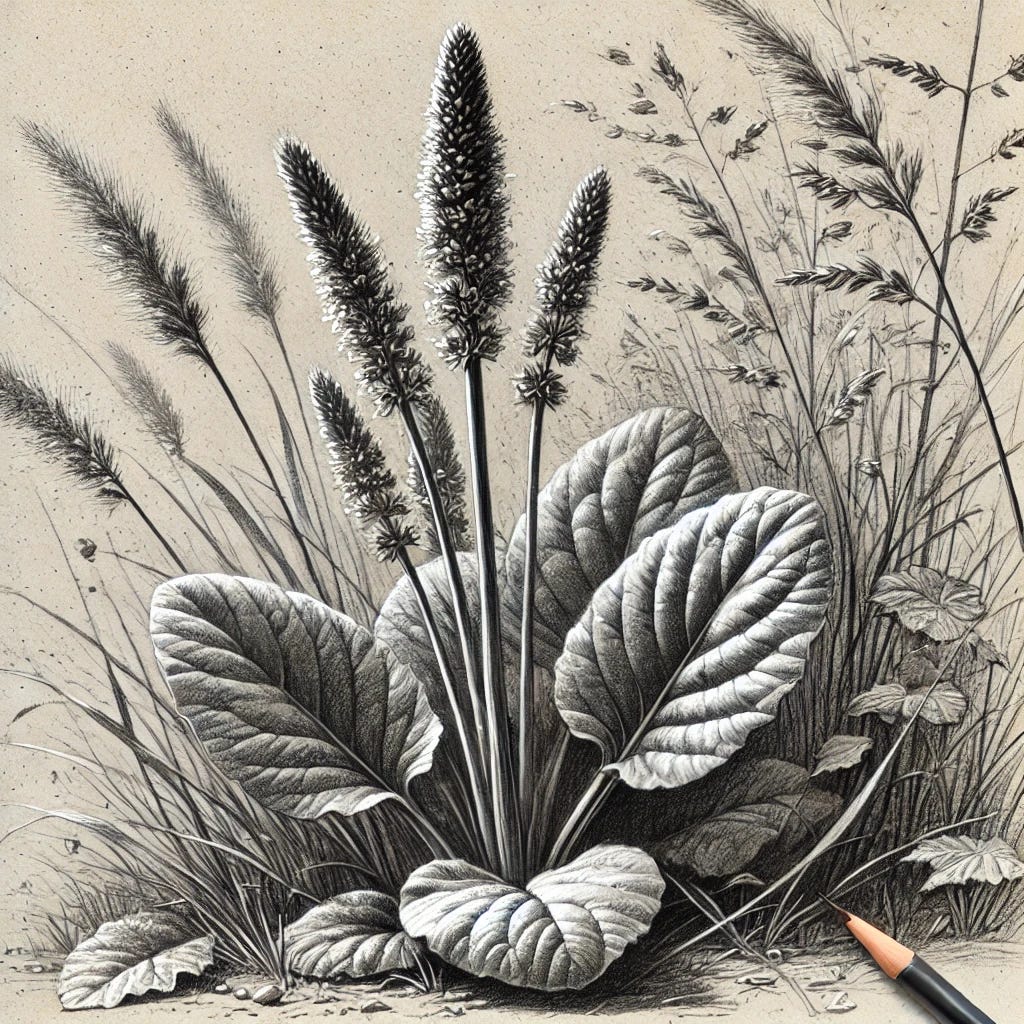
Pause for a heartbeat and look down at the places your feet have carried you—well-worn trails through orchard rows, tractor ruts in vineyard clay, the patch of lawn just outside your back door. More often than not, a humble rosette of ribbed green greets you there: Plantain—the quiet witness of every human journey since wagons first cut their furrows across this continent. Settlers called it “white-man’s footprint,” yet long before that name took hold, Indigenous medicine keepers were already honoring plantain as a steadfast ally for wounds of skin, spirit, and land.
Plantain is the healer that chooses disturbed soil—compaction, trampling, and hardship do not repel it; they invite it. Where the earth is hardened, plantain’s taproot pries open a new breath-channel. Where pollinators hunger in early spring, its pollen and nectar arrive just in time. Where children tumble, farmers blister, or vines suffer mildew, its leaves become instant poultice, its silica-rich sap a shield. By nature it models the regenerative truth we seek: healing begins precisely where injury occurs.
Yet there is poetry in its pragmatism. The leaf’s bold parallel veins echo the sinews of resilience; the seeds—each wrapped in shimmering mucilage—teach hydration, protection, and patient dispersal. Modern labs confirm anti-inflammatory glycosides and immune-modulating polysaccharides, while ancestral stories speak of soldiers bound back onto their path by “waybread” placed under their boot-laces. In plantain, science and story converge like the crossing lines on its leaves: unmistakable signals that what is common can also be extraordinary.
As you delve into the detailed wisdom that follows—nutritional data, regenerative recipes, bioenergetic musings—remember this simple invitation from plantain itself: meet adversity with grounded softness; turn every footprint into fertile ground. May these pages help you walk lightly, steward bravely, and harvest the quiet power growing right beneath your feet.
Table of Contents
Introduction – "Guardian of the Footpath, Weaver of Resilience"
Overview & Botanical Profile
Cultural Wisdom
Global Traditions
Mythology & Symbolism
Traditional Ecological Knowledge (TEK)
Cultural Disruption & Rematriation
Nutritional Profile & Health Benefits
Macronutrients
Micronutrients
Bioactive Compounds
Medicinal Uses & Clinical Evidence
Safety & Contraindications
Soil & Ecosystem Roles
Soil Building & Nutrient Management
Biodiversity & Wildlife Support
Succession & Ecosystem Stabilization
Companion Planting & Pest Management
Bioenergetic Field
Energetic Signature
Quantum Biological Hypotheses
Microbial & Energetic Signaling
Hypothetical Field Effects
Animal Nutrition & Veterinary Applications
Practical Regenerative Applications
Garden Applications
Orchard Applications
Vineyard Applications
Emerging & Underexplored Applications
Novel Medicinal & Nutraceutical Potentials
Innovative Agricultural Applications
Sustainable Industrial & Craft Opportunities
Climate Resilience & Farming Potentials
Practical Applications & Revenue Streams
Raw & Minimally Processed Products
Living Fertilizer Line
Animal-Related Products
Craft & Value-Added Goods
Agritourism & Educational Offerings
Seed & Plant Commerce
Practical Set-Up Timeline
Spring (March-May): Establishment Phase
Summer (June-August): Production Development
Fall (September-November): Expansion and Planning
Winter (December-February): Business Development
Compliance & Safety Notes
Harvesting Guidelines
Food Safety & Handling Instructions
Regulatory Considerations
Experimental Designs & Farmer-Science
Wisdom Carried Forward
Ethical Relationship & Reciprocity Practices
Cultural Restoration & Seed Sovereignty
Personal Reflection & Intuitive Insights
Reflection & Wisdom Insights
Bibliography & References
Scientific Sources
Ethnobotanical & Indigenous Knowledge
Practical Agricultural Resources
1. Overview & Botanical Profile
Scientific Names:
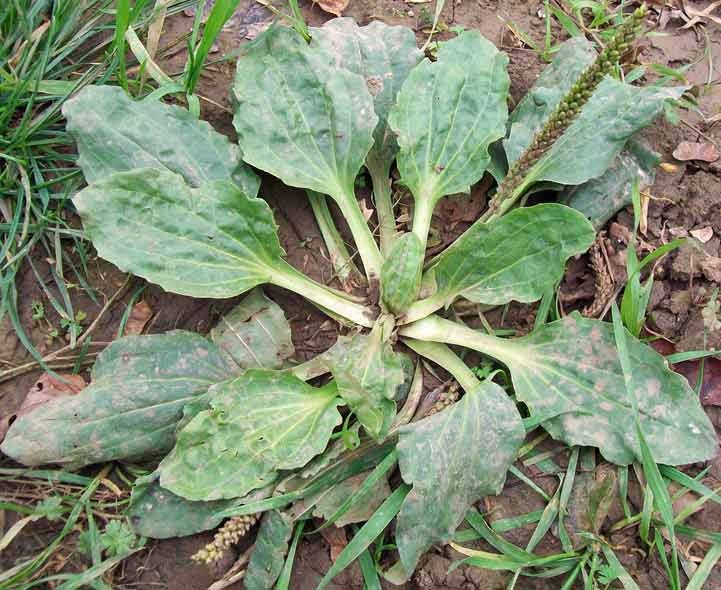
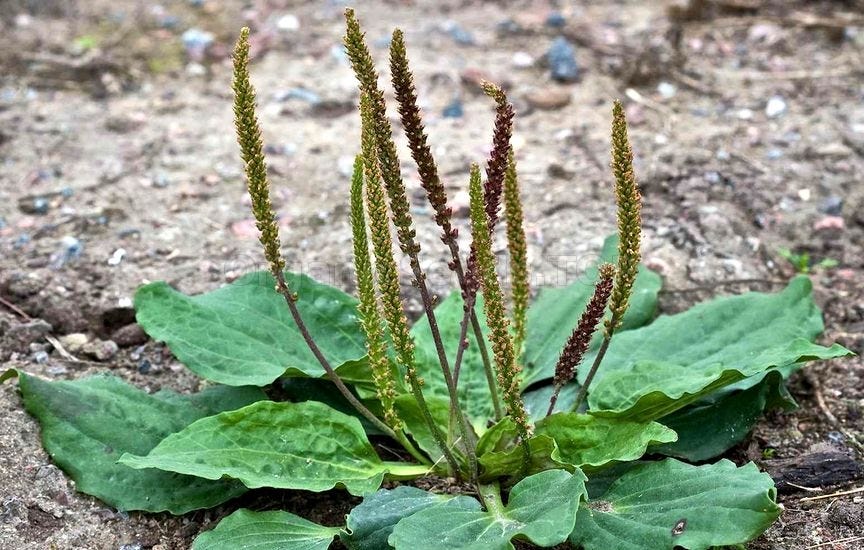
Plantago major L. (Greater Plantain),
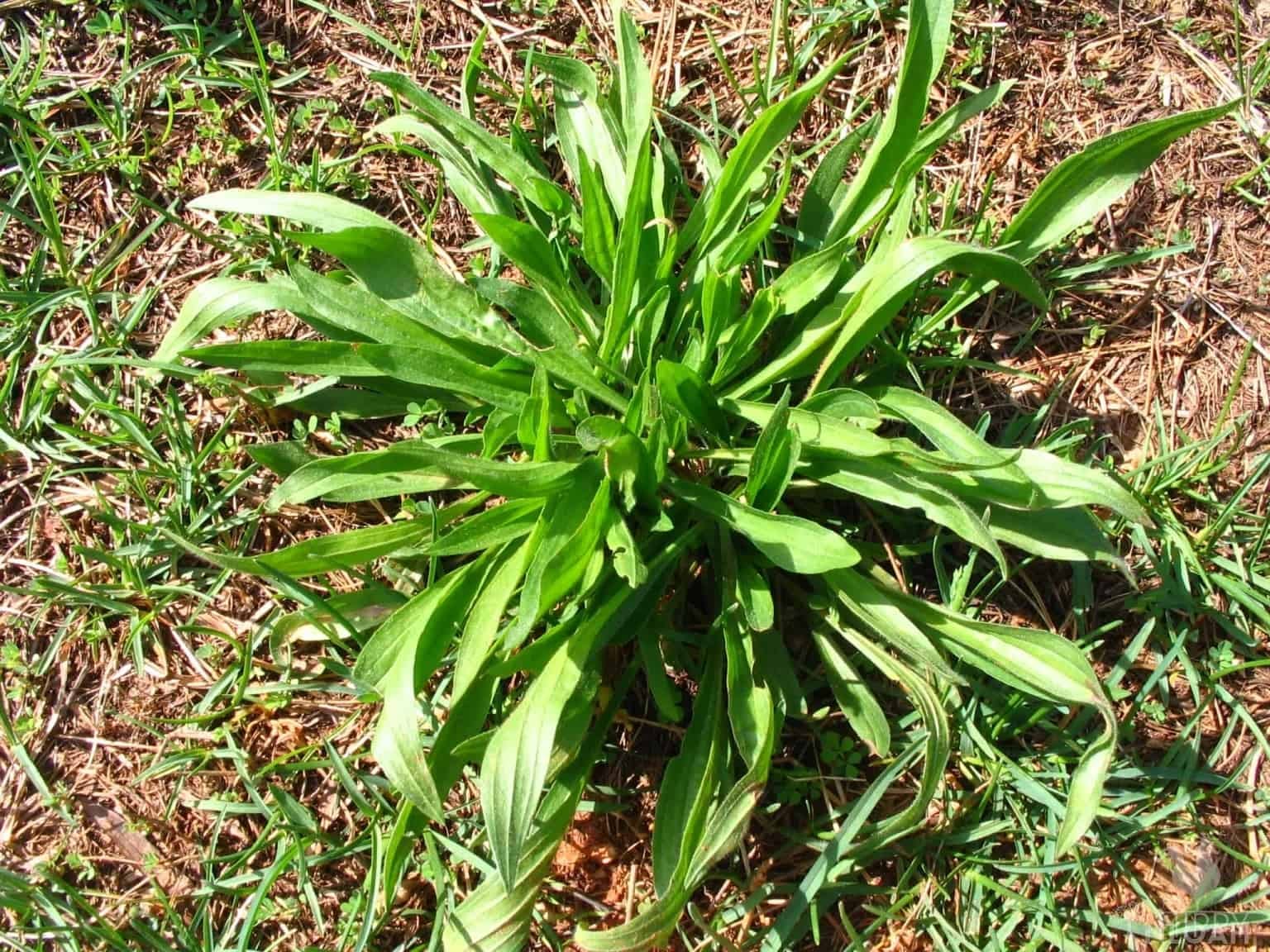
Plantago lanceolata L. (Ribwort Plantain)
Common Names: Greater plantain, broadleaf plantain, ribwort plantain, white man's footprint, Englishman's foot, waybread, healing leaves (groblad), snake weed, soldier's herb
Family: Plantaginaceae (formerly Plantaginaceae, reclassified from Plantaginales)
Native Range: Both species are native to Europe and Asia (Eurasia), with P. major having a broader Eurasian distribution and P. lanceolata more specifically European in origin.
Current Global Distribution: Now cosmopolitan, found worldwide including North America, Australia, New Zealand, Africa, and most temperate regions. These hardy plants have followed human settlement patterns for millennia, earning the Indigenous North American name "white man's footprint" for their proliferation around European settlements.
Physical Description:
P. major: Robust perennial with distinctive basal rosette growth, oval leaves 5-20 cm long with 5-9 conspicuous parallel veins, smooth margins, and distinct petioles. Produces dense greenish-brown flower spikes 5-15 cm long with purple stamens. Individual plants can produce up to 20,000 seeds annually.
P. lanceolata: Perennial herb with narrow, lanceolate leaves 6-20 cm long, gradually narrowed into petioles with 3-7 parallel veins. Distinctive conic-ovoid flower heads become capitate to shortly cylindric, 1-5 cm long.
Both species demonstrate remarkable adaptability to disturbed, compacted soils and challenging growing conditions, serving as pioneer species in ecological succession while providing essential ecosystem services.
2. Cultural Wisdom
Global Traditions
Scientific Evidence: Archaeological evidence confirms P. major presence in Nordic countries for nearly 4,000 years, arriving with primitive cultivated fields during the Stone Age, demonstrating humanity's long relationship with these plants.
Traditional/Experiential Wisdom: Plantain holds profound significance across global cultures as one of humanity's most enduring plant allies:
European Heritage: Revered as one of nine sacred herbs in the ancient Anglo-Saxon Lacnunga, plantain was called "Weybroed" (waybread) and featured in the Greek physician Dioscorides' "De Materia Medica" (1st century AD). Nicholas Culpeper (1653) classified it under Venus's influence, describing it as curing "hardly a martial disease but it cures."
Traditional Persian Medicine: Known as "Lesan-ol-haml," plantain was classified with "cold and dry" temperament and prescribed in multiple forms including roasted seeds, decoctions, syrups, and suppositories, featured in Avicenna's "Canon of Medicine."
Asian Applications: Plantago asiatica serves dual food-medicine roles in East Asian traditions, incorporated into health-promoting dietary vegetables, snacks, cakes, and breads while providing antipyretic, antitussive, and wound-healing properties.
Indigenous North American Integration: Following European introduction, Native Americans rapidly adopted plantain into traditional medicine for wound healing, snake bite treatment, pain relief, respiratory ailments, and children's health. The Anishinaabe name "ceca' gûski' bûge sînk" translates to "leaves grow up and also lie flat on the ground."
Mythology & Symbolism
Traditional/Experiential Wisdom: Plantain carries deep spiritual significance across cultures:
Anglo-Saxon Sacred Tradition: As one of nine sacred herbs, plantain provided spiritual protection against supernatural forces and featured in protective rituals and ceremonies.
European Magical Traditions: Associated with resilience, toughness, and the ability to "weather storms," plantain was used in protection magic against negative energies. Traditional binding rituals with red wool warded off headaches and snake bites.
Threshold Guardian Symbolism: The plant's growth along pathways creates symbolic associations with transitions, boundaries, and journeys, reflecting its role as a faithful companion to human movement and settlement.
Traditional Ecological Knowledge (TEK)
Traditional/Experiential Wisdom: Indigenous communities recognized plantain as a sophisticated ecological indicator:
Environmental Intelligence: Multiple North American Indigenous communities' naming of plantain as "White Man's Footprint" demonstrates profound ecological observation—recognizing that this introduced species thrived in disturbed ecosystems surrounding European settlements, serving as a biological marker of cultural and environmental disruption.
Sustainable Harvesting Practices: Traditional knowledge encompasses understanding of seasonal potency cycles, sustainable collection methods ensuring population sustainability, part-specific usage, and storage techniques preserving medicinal qualities.
Agricultural Integration: Traditional farming systems recognized plantain's beneficial role in agricultural ecosystems, understanding its relationships with other crops, value for livestock, and soil health contributions.
Cultural Disruption & Rematriation
Historical Context: European colonization introduced P. major and P. lanceolata to North America, fundamentally altering ecosystems while forcing Indigenous communities to adapt traditional plant knowledge systems to new species. Suppression of Indigenous ceremonies and healing practices disrupted traditional knowledge transmission.
Contemporary Restoration: The 2021 memorandum "Indigenous Traditional Ecological Knowledge and Federal Decision Making" provides federal recognition for TEK integration. Growing initiatives include Indigenous-led land management partnerships, cultural preservation documentation, educational programs, and benefit-sharing models respecting Indigenous intellectual property rights.
3. Nutritional Profile & Health Benefits
Macronutrients
Scientific Evidence: Nutritional analysis per 100g fresh weight reveals:
Available Carbohydrates: P. major: 1.99g; P. lanceolata: 2.81g
Moisture Content: P. major: 87.7±2.14g; P. lanceolata: 86.6±3.21g
Protein: Rich amino acid profile with 20 total identified amino acids including essential varieties
Lipids: High polyunsaturated fatty acid content (38.97-46.07%)
Micronutrients
Scientific Evidence: Major minerals per 100g fresh weight:
Calcium: P. major: 108mg (highest among plantain species)
Potassium, Sodium, Magnesium, Iron, Copper, Zinc, Manganese, Phosphorus present in beneficial ratios
Vitamin C: P. major: 45.1 mg/100g (highest content)
Carotenes and B-vitamins: Present in significant amounts
Anti-nutritional factors minimal: Oxalic acid only 33.5-88.2 mg/100g fresh weight
Bioactive Compounds
Scientific Evidence: Sophisticated phytochemical profile includes:
Iridoid Glycosides: Aucubin (major compound) and catalpol (key bioactive metabolite) with concentrations varying seasonally.
Phenylethanoid Glycosides: Acteoside/Verbascoside dominates at 94.8 mg/g dry aerial parts in P. lanceolata, plus plantamajoside (specific to P. major), cistanoside F, and related compounds.
Phenolic Compounds: 28 identified in P. lanceolata including chlorogenic acid (second highest after verbascoside), rosmarinic acid, gallic and vanillic acids. Total phenolic content: 38.43-70.97 mg GAE/g dry weight.
Flavonoids: Apigenin, luteolin, quercetin, rutin, kaempferol, hesperidin, hyperoside with total content 5.31-13.10 mg QE/g dry weight.
Terpenoids: Including ursolic acid (selective COX-2 inhibitor), oleanolic acid, β-sitosterol, and 18β-glycyrrhetinic acid.
Medicinal Uses & Clinical Evidence
Scientific Evidence: Peer-reviewed clinical research demonstrates:
Anti-inflammatory Activity: COX-1 inhibition (P. major IC₅₀ = 0.65 mg/ml), 12-LOX inhibition, and significant cytokine reduction (TNF-α, IL-1β, IL-6, IFN-γ). Randomized controlled trial (n=78) for radiodermatitis showed 96% improvement vs. 73% placebo.
Wound Healing: Clinical studies on pressure ulcers (130 patients, 14 days) and diabetic foot ulcers demonstrate significant improvement through enhanced collagen synthesis, angiogenesis, and antimicrobial effects.
Gastrointestinal Support: 60-day randomized trial for diabetic nephropathy showed reduced proteinuria with 10g plantain seeds twice daily. Plantago ovata maintenance therapy proves comparable to mesalamine for ulcerative colitis.
Antimicrobial Spectrum: Effective against Pseudomonas aeruginosa, Salmonella paratyphi (MIC 5-15 mg/ml), dermatomycotic fungi, and various viral strains.
Cancer Research: P. lanceolata shows selective activity against triple-negative breast cancer cells (CAL51) and multiple cancer cell lines through apoptosis induction and cell cycle arrest.
Traditional/Experiential Wisdom: Traditional preparations include:
Fresh poultices: Chewed leaves applied directly to wounds, stings, and bites
Teas and infusions: 1-2 teaspoons dried leaves steeped 10-15 minutes for respiratory support
Oil infusions: Solar or heat extraction in carrier oils for topical applications
Tinctures: 1:2 fresh plant or 1:5 dried plant ratios in 40-50% alcohol
Vinegar preparations: Apple cider vinegar extractions for skin conditions
Safety & Contraindications
Scientific Evidence: Toxicity studies show LD₅₀ of 182.54 mg/kg in animals with 14-day repeat dose studies showing no toxicity in rats. European Pharmacopoeia approves P. lanceolata dried leaves. Clinical trials up to 8-12 weeks show no significant adverse effects.
Minor effects: Flatulence, bloating, nausea (dose-dependent). Serious but rare: Anaphylaxis, respiratory symptoms from IgE-mediated reactions to 15-20 kDa proteins.
Drug interactions: Potential lithium absorption reduction, carbamazepine pharmacokinetic alterations. Contraindications: Esophageal strictures, severe allergic history, inadequate fluid intake with psyllium products.
4. Soil & Ecosystem Roles
Soil Building & Nutrient Management
Scientific Evidence: Plantain functions as a sophisticated soil engineer through multiple mechanisms:
Deep Root Systems: Penetrate compacted layers up to 18 inches deep, creating channels that improve water infiltration rates by 25-40%. The robust fibrous root system aerates compacted substrates while mining nutrients from deep soil horizons.
Organic Matter Contribution: Produces 2-4 tons dry matter per acre annually with optimal C:N ratio of 25:1 ensuring efficient decomposition. Rapid leaf decomposition adds quick-release nutrients while building soil organic matter 0.1-0.2% annually.
Mycorrhizal Partnerships: Forms intensive symbiosis with arbuscular mycorrhizal fungi, creating 10-fold increases in nitrogen acquisition from organic matter compared to non-mycorrhizal plants. These networks significantly enhance phosphorus acquisition and overall soil health.
Biodiversity & Wildlife Support
Scientific Evidence: Field studies document extensive wildlife relationships:
Pollinator Resources: Flowers support honey bees, native Bombus species, and diverse insects from April through October. Some butterfly species (Junonia coenia, Melitaea cinxia) use plantains as host plants, with larvae accumulating defensive compounds.
Wildlife Habitat: Each plant produces up to 20,000 seeds providing food for goldfinches and seed-eating birds. Persistent winter structure shelters beneficial insects and small wildlife, supporting complex food webs including herbivorous insects, predators, and higher trophic levels.
Succession & Ecosystem Stabilization
Scientific Evidence: Genomic research reveals extensive stress-resistance genes enabling colonization of disturbed habitats. Plantain facilitates succession by improving soil conditions and providing initial habitat structure for other species establishment.
Pioneer Species Function: Initiates ecosystem recovery in degraded environments including mining sites and contaminated soils. Creates stepping-stone habitats supporting wildlife movement and plant dispersal while stabilizing soil against wind and water erosion.
Water Cycle Enhancement: Deep root systems improve water-holding capacity and infiltration rates. Physiological adaptations include osmotic adjustment for water stress tolerance and microclimate modification through rosette growth form.
Companion Planting & Pest Management
Scientific Evidence and Traditional/Experiential Wisdom:
Companion Benefits: Dense growth provides living mulch suppressing weeds and retaining soil moisture. Natural integration with Three Sisters systems (corn, beans, squash) plus plantain groundcover. Orchard floor management at 3-4 kg/hectare reduces soil compaction while improving water infiltration.
Biological Pest Control: Flowers attract predatory insects and parasitoids providing natural pest management. Serves as beneficial insect habitat while creating competitive exclusion against problematic weeds. Enhanced soil biology suppresses soil-borne pathogens through improved drainage and air circulation.
5. Bioenergetic Field
Energetic Signature
Traditional/Experiential Wisdom: Flower essence therapy recognizes plantain's specific energetic properties:
Emotional Healing Applications: Primary therapeutic focus addresses release of bitterness, resentment, and negative thought patterns. Transforms "biting" words into positive communication, supports processing of emotional wounds and childhood trauma.
Vibrational Qualities: Narrow-leaf plantain essence promotes childlike innocence, simplicity, and joyful exuberance. Supports mental clarity through release of mental blocks and learning to slow down.
Preparation Methods: Traditional sun method using mineral-rich spring water with brandy preservation. Standard dosage: 4 drops, 4 times daily for 2 weeks.
Quantum Biological Hypotheses
Emerging Hypotheses/Vibrational Theories: Research into plant electromagnetic sensitivity suggests potential applications:
Electromagnetic Field Interactions: Plants demonstrate measurable responses to EMF across frequency ranges. Cryptochromes in plantain family show magnetic field sensitivity through radical pair mechanisms at physiological temperatures.
Vibrational Research: Plantain fruits exhibit measurable vibrational characteristics changing with physiological state. Single-degree-of-freedom Kelvin models successfully describe frequency response patterns correlating with natural frequency, stiffness, and damping ratios.
Microbial & Energetic Signaling
Scientific Evidence with Emerging Applications: Plant-microbe communication involves sophisticated chemical languages with root exudates containing 100,000+ different compounds.
Plantain-Specific Potential: Buckhorn plantain specifically benefits from mycorrhizal associations. The plant's chemical complexity suggests rich communication potential through quorum sensing molecules (AHLs) and volatile organic compounds (VOCs).
Hypothetical Field Effects
Emerging Hypotheses/Vibrational Theories: Advanced applications might include:
Programmable microbe-to-plant communication using plantain as receiver species
Integration with bioengineered soil bacteria for environmental sensing
Development of plantain-based biological computers using microbial communication
Enhanced plant growth promoting rhizobacteria (PGPR) interactions