


Living Plant Wisdom Profile: Horsetail (Equisetum arvense)
Horsetail (Equisetum arvense) is a living memory of Earth’s deep past—an evergreen whisper from the Paleozoic forests that once blanketed the planet long before flowering plants or humankind appeared. Today this humble, jointed stem still pushes up through riverbanks, orchard rows, and vineyard margins, carrying with it stores of silica, ancestral resilience, and a quiet invitation to remember nature’s original design.
This Living Plant Wisdom Profile is more than a catalog of facts; it is a bridge between worlds: modern science and Indigenous tradition, regenerative farming practice and subtle plant energetics. Within these pages you will find firmly rooted evidence—clinical studies on bone health, field trials on fungal resistance—alongside the experiential wisdom of elders who gathered horsetail at dawn for healing teas and the emerging hypotheses of biodynamic stewards who stir its essence into preparations that fortify entire fields.
May this guide serve you—farmer, herbalist, land steward, or curious life-long learner—as a practical manual and a source of reverent wonder. Let horsetail’s ancient rhythm remind us that true regeneration springs from partnership with living beings who have walked the Earth far longer than we have.
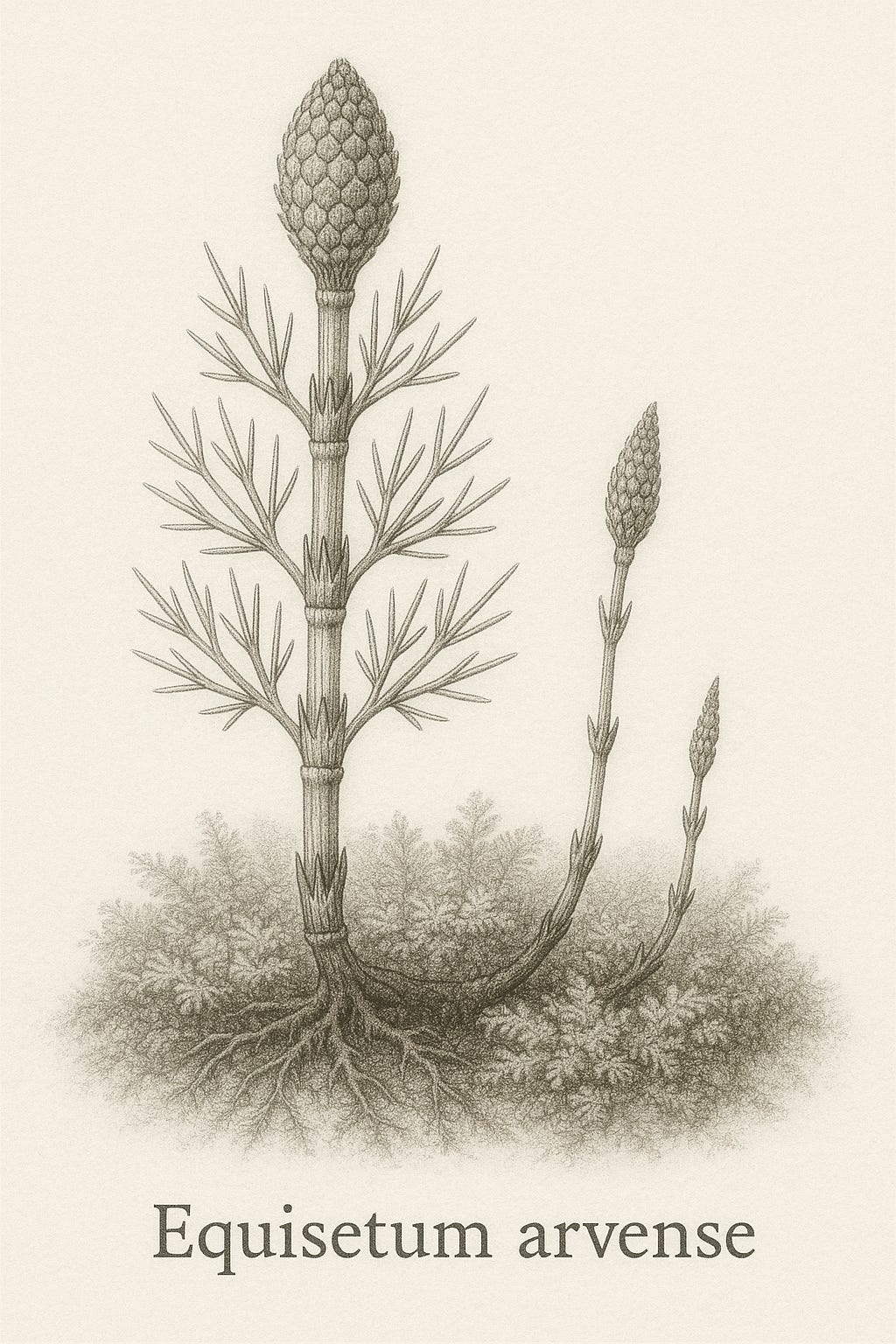
Overview & Botanical Profile
Plant (Scientific Name): Equisetum arvense L. – field or common horsetail.
Common Names: Field horsetail, common horsetail, scouring rush, snakegrass, horsetail fern, mare’s-tail (US/UK), bottle-brush, meadow-pine, pine-grass, foxtail-rush, horse pipes, devil’s guts, and others. (The Latin Equisetum means “horse bristle,” referencing its coarse, jointed stems.)
Family: Equisetaceae (the horsetail family); Equisetum is the only living genus in this ancient lineage (subclass Equisetidae). Horsetails are considered “living fossils” dating back over 300 million years.
Native Range: Circumboreal (circumglobal in northern latitudes). Native to temperate and arctic regions of the Northern Hemisphere – including most of Europe, Asia, and North America (north to ~83°N). It thrives in cool, moist climates and disturbed soils.
Current Global Distribution: Now widespread beyond its native range; introduced in parts of Mexico, South America, Africa and New Zealand. In North America it grows from Alaska (beyond the Arctic Circle) southward to Texas. It is not listed as threatened and is often considered invasive or a weed in many regions.
Physical Description: Perennial, non-flowering fern ally with hollow, jointed stems. In spring it sends up brown, spore-bearing (fertile) stems without chlorophyll, 10–25 cm tall. After releasing spores, these die back and are replaced by green, sterile stems 10–90 cm tall (often ~30–40 cm) bearing whorls of needle-like side branches. The stems are rough to the touch due to very high silica deposits in their walls. (See image below.) Stems are photosynthetic, with tightly reduced leaves forming inconspicuous sheaths. The extensive underground rhizome network (often penetrating soil to ~6 feet deep) allows the plant to spread and tolerate diverse conditions.
(Scientific Evidence) Horsetail’s two-part life cycle and morphology: spring’s brown spore cones (white tips) are followed by taller green stems with whorled branches. The stems are impregnated with silica, giving them an abrasive “scouring” texture. These jointed, hollow stems grow from a deep rhizomatous root, making horsetail exceptionally persistent.
1. Cultural Wisdom (Ethnobotany, Mythology, TEK)
Global Traditions:
Historical and Indigenous usage (medicine, food, ceremony): (b) Native American tribes (e.g. Iroquois) used horsetail herb to alleviate headaches, bleeding and bone ailments; it has been employed for wound poultices, diuresis (kidney/bladder cleansing), and as a general tonic. Traditional European herbalists (since Roman/Greek times) used it to stop bleeding, heal ulcers/wounds, and relieve lung and kidney issues. (a) Modern science confirms horsetail’s use as a diuretic and source of silica (a micronutrient for bone/skin). (c) Some esoteric traditions ascribe horsetail protective and energizing qualities, using it in rituals for strength and purification, though these uses lie outside mainstream science.
Integration into agricultural and seasonal cycles: (b) In traditional agrarian calendars, horsetail signals spring and moist soil conditions; spring shoots were harvested (often around full moon or May) to make tonics and preserved for year-round use. (a) Scientifically, fertile stems appear early in spring before green growth, providing one of the first available herb harvests. (c) In biodynamic gardening, horsetail’s lunar/sun influences are invoked (e.g. harvesting under specific moon phases) as part of rhythmic planting wisdom.
Mythology & Symbolism: (b) Folk traditions admire horsetail for its resilience and fertility. It has symbolized strength and durability (e.g. “resilience,” “longevity,” “vitality” in various folklores). Its bristly, tail-like appearance connects it to horse symbolism, and some cultures honor it as a talisman to ward off harm. (a) Practically, its name means “horse tail,” reflecting its bristly form. (c) Spiritually, some herbalists believe horsetail “rejuvenates” subtle energies and use it in essences or charms for protection or resolve, although such interpretations remain largely anecdotal.
Traditional Ecological Knowledge (TEK): (b) Many indigenous cultures recognize horsetail’s role in wetlands and riparian areas. They observed it as a soil stabilizer and water indicator, often using it in stewardship of waterways. For example, tribes have used horsetail as a cleansing agent in purification ceremonies (Japanese tea rituals with horsetail for utensil purification; North American rites linking it to water purification). (a) Ecologically, horsetail does stabilize soil and regulate moisture – its deep roots and spreading habit bind banks and pump nutrients upward. (c) Its long memory as an ancient plant invites metaphoric “listening” and reciprocity with the land in some holistic land-care philosophies.
Cultural Disruption & Rematriation: (b) Colonialism and modern development have often displaced horsetail-rich habitats and their cultural use. For instance, traditional gathering sites have been lost to construction and agriculture. This disruption means some communities have limited access to this medicine and experience a loss of related knowledge. (c) Efforts to “rematriate” the plant involve habitat restoration, re-establishing wetlands, and sharing indigenous stewardship practices to ensure horsetail populations (and associated traditional knowledge) continue.
2. Nutritional Profile & Health Benefits
Macronutrients: (a) Horsetail is primarily valued for minerals and phytonutrients rather than macronutrients. The sterile stems have roughly 10–14% protein and some fiber when dried, but very low fat. It provides modest carbohydrates (mostly as roughage) and small amounts of protein (some amino acids). (b) In folk use, it’s not eaten as a food crop; instead its “nutritional” value is seen in its richness in minerals and silica, not calories.
Micronutrients: (a) A standout is its silica content – up to ~25–60% of dry weight. Horsetail accumulates silica in stems, which correlates with its bone-health effects. It also contains vitamins (notably vitamin C and B1), and trace minerals: potassium, calcium, manganese, iron, sulfur, magnesium, zinc, chromium, selenium and phosphorus. (b) Indigenous practices recognize its mineral load: for example, using it as a tonic for bone and connective tissue health (attributed to its silica).
Bioactive Compounds: (a) Rich in antioxidants (flavonoids like quercetin, kaempferol, luteolin, apigenin, etc.), phenolic acids and phytosterols. Contains the alkaloid equisetine (a thiaminase enzyme). (b) Traditional herbalists note its astringent tannins and healing mucilage; (c) some modern authors attribute anti-inflammatory and antimicrobial effects to its phytochemicals, though clinical evidence is limited. Importantly, the thiaminase can deplete vitamin B1, especially if fed to animals or overused in humans.
Medicinal Uses & Clinical Evidence:
Traditional Preparations: (b) Horsetail has long been made into tea, tinctures, infusions, and poultices. Fresh or dried stems are steeped as a tea for kidney/bladder support and as a general tonic. Aided by legends, elders prepared concentrated succus (fresh plant juice) or alcohol tinctures (e.g. brandy macerated with spring shoots) for bone and wound healing. Topically, poultices of crushed stems or infused oils were used on wounds and inflammations to staunch bleeding. (a) Modern herbal medicine still uses horsetail preparations (mainly sterile-stem extracts) as diuretics (for urinary tract disorders) and as silica supplements for bone/skin. Laboratory and animal studies show horsetail extract inhibits bone resorption and stimulates bone formation, supporting its traditional use in osteoporosis and wound healing. (b) Clinically, it’s applied in folk medicine for urinary stones, cystitis, arthritis and skin conditions, consistent with its diuretic and anti-inflammatory reputation. (c) Emerging theories propose horsetail essences or vibrational remedies for “root strengthening,” but these lack scientific validation.
Safety & Contraindications: (a) Horsetail is generally safe in moderate, short-term use as tea or extract. However, its thiaminase activity means long-term use can cause vitamin B1 (thiamine) deficiency; potassium supplementation may be needed if used as a diuretic. It can increase bleeding risk (anticoagulant effect) and blood pressure, so caution is advised in people with hemorrhagic conditions or hypertension. (b) In folk wisdom, one limits a horsetail cure to ~2 weeks on, 1 week off. (a) High consumption has caused toxicosis in grazing livestock (horses especially) due to thiaminase, so it’s unsuitable as forage. (c) There are no major regulatory prohibitions for culinary/herbal use, but quality control is essential to avoid contaminants (heavy metals accumulate in horsetail).
3. Soil & Ecosystem Roles (Ecological, Agricultural, Regenerative)
Soil Building & Nutrient Management: (a) Horsetail rhizomes and deep roots pump nutrients from groundwater up into biomass. Field observations show E. arvense actively transports phosphorus, potassium and calcium from wet subsoil to the surface, enriching riparian soils. As the plant dies back, its silica-rich ash remains, gradually increasing soil mineral reserves. (b) Permaculturists use chopped horsetail as a compost activator or mineral additive; this is traditional knowledge based on its mineral content. (a) Its rhizome network also aerates soil, and decaying stems add organic matter (though high silica means slower decomposition). (c) Quantum-biology speculations suggest horsetail may interact with soil microbes via subtle energetic signals, but this remains unstudied.
Biodiversity & Wildlife Support: (a) Horsetail stands provide cover and habitat in wetlands and disturbed areas. Its presence often indicates moist, undisturbed soils (an ecological indicator). It stabilizes banks and offers microhabitats for invertebrates and amphibians. (b) Some traditional agroecosystems tolerated horsetail as a sign of healthy low-nitrogen soil, using its stems in cattle bedding or fodder sparingly (local knowledge). While not a palatable forage (toxic to many animals), occasional grazing by insects (sawfly larvae, certain beetles) or use as occasional feed (goats, sheep) have been noted. (c) It does not flower, so no pollinators rely on it, but its archetypal presence links prehistoric biodiversity (as a descendant of Paleozoic flora) to current ecosystems.
Succession & Ecosystem Stabilization: (a) Horsetail is a pioneer species on disturbed, especially wet sites. It tolerates flooding and poor soils, often colonizing newly deposited riverbanks and dunes. Studies in Great Lakes regions found E. arvense among the first plants to stabilize eroded bluffs. Its extensive roots hold soil in place and prevent erosion during heavy rains. (a) In forests, horsetail can appear in open understory after disturbances, contributing to groundcover. (c) Some biodynamic farmers believe horsetail “early spring emergence” sends signals of regeneration to the ecosystem, but this is a philosophical interpretation.
Companion Planting & Pest Management: (a) Horsetail is not typically a mutualistic companion (it’s more often a tough weed). However, its silica-rich foliage deters fungal pathogens when used as a spray. Gardeners find that adding horsetail tea to foliar sprays can help suppress powdery mildew and rust on susceptible crops. (a) It is used as a biodynamic preparation (BD #508) specifically for fungal disease prevention. (b) In traditional polycultures, horsetail was sometimes tolerated near damp fruit trees to help keep humidity-regime balance or provide mulch. (c) There’s an emerging idea that growing horsetail near potted plants infuses them with subtle “silica energy,” but this remains conjectural.
4. Bioenergetic Field (Quantum Biology & Vibrational Roles)
Energetic Signature (Flower Essences, Biodynamic Uses): (c) In biodynamic agriculture horsetail is the basis of Preparation 508, a fermented field spray used to strengthen plant immune response. It is applied to fields (in very dilute form) to build resistance to fungal diseases. (a) Scientifically, the active agent is silica (as soluble mono-silicic acid) which fortifies plant cell walls. (c) Herbalists also use horsetail flower essences or homeopathic tinctures, attributing to it a vibration of resilience and purification (though these effects are beyond current scientific validation).
Quantum Biological Hypotheses (Light, Electromagnetic Fields): (c) Some propose horsetail’s high silica might interact with light (e.g. UV capture by silica bodies) or terrestrial electromagnetic fields, hypothesizing that it tunes into earth energies. This is speculative; no empirical studies exist on horsetail electromagnetic biofields.
Microbial & Energetic Signaling: (c) A novel theory suggests plants communicate via light or bioelectrical signals in the soil. Horsetail’s robust microbial associations (especially with wetland fungi and bacteria) hint that it could partake in such networks. For example, fermenting horsetail releases nutrients for microbes, which may “train” a field’s microbiome. (a) Practically, we know fermented horsetail tea promotes beneficial soil bacteria (e.g. Lactobacilli, Bacilli), enhancing plant-microbe signaling in the rhizosphere.
Hypothetical Field Effects: (c) In some land-based spiritual traditions, horsetail’s persistence and ancient lineage make it a symbol of regenerative energy. It is sometimes used in permaculture ceremonies (for example, tossing horsetail tea into wells for “water memory”). These ideas are part of a vibrational worldview and not established by science.


