

Meeting Lamb’s Quarters (Chenopodium album)
Comprehensive Living Plant Wisdom Profile - Lamb’s Quarters (Chenopodium album)
Table of Contents
1. Introduction – The Weed That Heals the World
A poetic welcome to Lamb’s Quarters as plant, teacher, and quiet architect of renewal. Readers meet this “volunteer of abundance” and glimpse how it bridges ancient foodways and modern regeneration.
(Free Preview)
2. Cultural & Medicinal Legacy – From Famine Food to Forgotten Medicine
Travel across continents and centuries: from Himalayan terraces and Coast Salish gardens to Viking granaries. Learn how this unassuming weed nourished empires, treated ailments, and became a spiritual symbol of resilience.
(Free Preview — ends here)
End of Free Preview
You’ve met Lamb’s Quarters as food, as medicine, as ancestor.
Now comes the part most people never see—the part that happens under the soil.
Beneath those powder-dusted leaves is an intelligence we’ve barely begun to understand. Its roots rewrite the ground’s chemistry, its decay summons microbes like musicians returning to tune an orchestra. Farmers who once cursed it now use it as living compost, and scientists are finally confirming what Indigenous wisdom has whispered for generations: this weed knows how to heal the earth.
🔒 Section 3 — Soil Alchemy: How Lamb’s Quarters Rebuilds the Earth
Step underground with me. We’ll trace how this plant loosens compacted soil, balances nitrogen, and turns waste into fertility. You’ll learn when to let it grow, when to turn it in, and how its presence reveals the hidden mood of your land.
🔒 Section 4 — Microbial Symphony: The Hidden Network Beneath Its Feet
Soil is not dirt—it’s language. This section decodes how Lamb’s Quarters converses with bacteria instead of fungi, how it acts as a translator between disturbance and stability, and how you can harness that microbial dialogue through ferments and teas.
🔒 Section 5 — Wild Nutrition: The Complete Living Superfood
Inside those chalk-soft leaves lies a nutritional vault richer than spinach, kale, or quinoa. Unlock amino acid ratios, bioavailable minerals, and recipes that rebuild both blood and spirit.
🔒 Section 6 — Plant Medicine & Modern Science
When myth meets microscope: the new studies proving its liver-protective, anti-inflammatory, and anti-diabetic effects—and how folk medicine was right all along.
🔒 Section 7 — The Ethics of Harvesting
Where reverence meets realism. How to forage without depleting, compost without harm, and read the plant’s energetic cues before you cut.
Subscribe to unlock the full Living Plant Wisdom Profile
Join a growing community of stewards, herbalists, and soil whisperers learning to read the land again—one weed at a time.
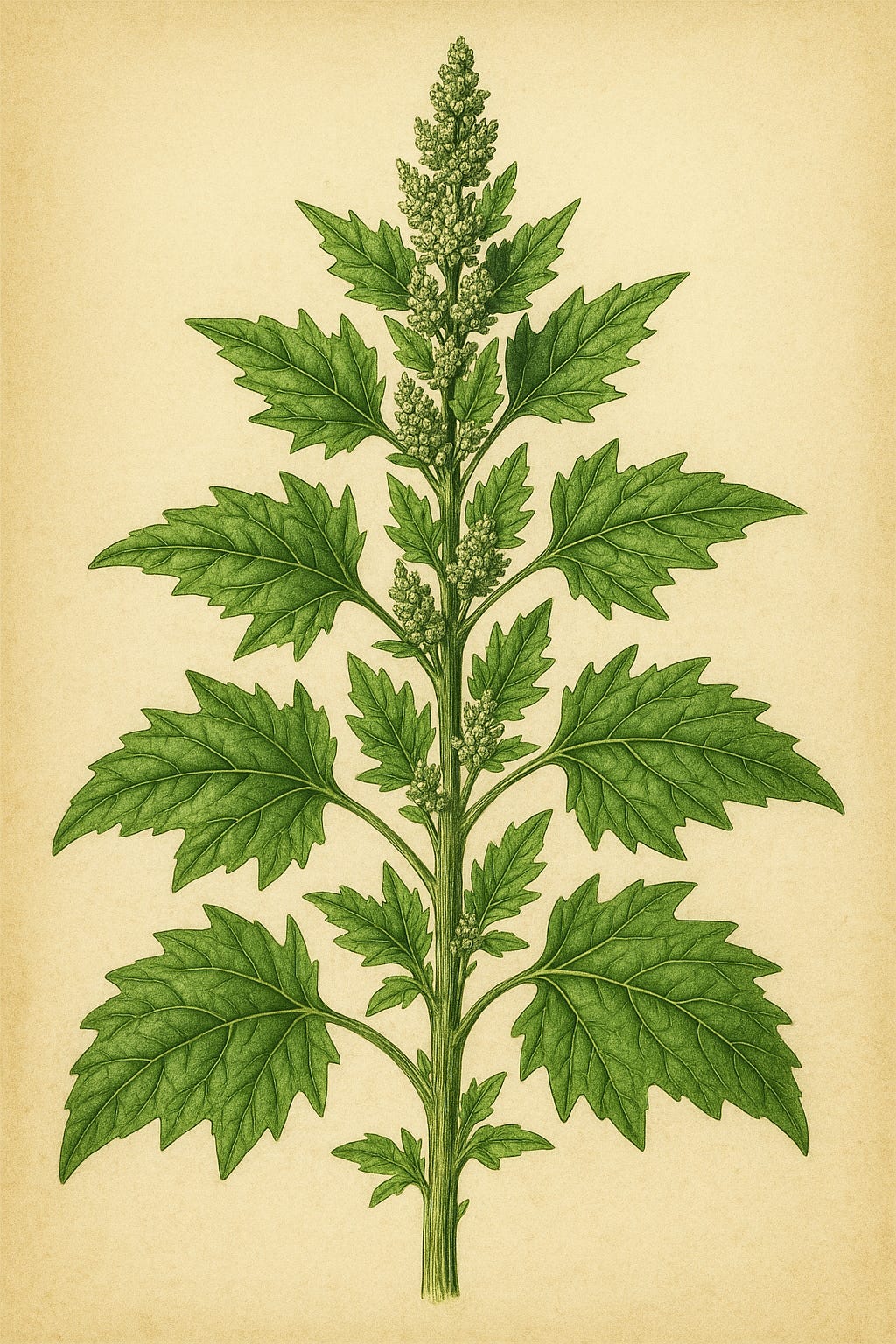
Imagine a lone green volunteer rising from a scuffed patch of earth—soft, dust‑silver leaves catching the sun like weathered coins. That humble stem is Lamb’s Quarters, and wherever it appears, restoration follows. As a pioneer species, Chenopodium album arrives first on disturbed ground and quietly begins repairing what was broken, rewriting the soil’s story with every root‑pulse and fallen leaf .
Beneath the surface, a muscular tap‑root dives deep, loosening hardpan, sipping up hidden minerals, and stitching new channels for water, air, and microbes. It is living sub‑soil architecture—nature’s own de‑compactor and nitrogen broker rolled into one .
Above ground, those powder‑dusted leaves are a quiet superfood: richer in complete protein than spinach, brimming with calcium, magnesium, and potassium, and blazing with vitamins A, C, and K . For foragers, it’s a free farmers‑market; for herbalists, an ancient ally against inflammation and fatigue; for regenerative growers, a self‑seeding cover crop that cycles nutrients, lures pollinators, and even moonlights as a trap‑crop for aphids.
This guide—and the conversation that follows—will walk you through Lamb’s Quarters as plant, teacher, and ecological orchestrator: how to recognize its chalk‑kissed leaves, harvest it ethically, fold it into salads or fermented plant juices, and partner with it in living guilds that heal land and people at once. By the end, you may see every so‑called “weed” as a quiet invitation: a reminder that resilience is already rooted in the edges, waiting for us to notice, taste, and join the restoration.
Lamb's Quarters (Chenopodium album) – Complete Living Plant Wisdom Profile
Introduction
What if the most generous teacher in your garden has been quietly standing at your elbow all along, inviting you, season after season, to taste, to heal, to listen? Lamb’s Quarters (Chenopodium album) is that humble companion. From Himalayan terraces to Coast Salish homesteads, its powder-dusted leaves have fed empires in times of feast and cradled communities in times of famine. It greens war-torn fields, steadies eroding riverbanks, and slips seed after glittering seed into the beaks of winter birds. Yet most of us pass it by, mistaking quiet abundance for irrelevance.
This Living Plant Wisdom Profile pulls back the curtain on a plant that is far more than “just a weed.” Here you will meet Lamb’s Quarters as elders once knew it: a nutrient powerhouse richer than spinach, an anthelmintic medicine carried in pocket-sized bundles across continents, a pioneer species that stitches wounded soil back together, and a cultural bridge that reconnects modern eaters to ancestral foodways. Layer by layer, you will see how its taproot taps not only subsoil minerals but also deep seams of myth, resilience, and reciprocity.
As you turn these pages, imagine Lamb’s Quarters as a master key: slip it into the locks of nutrition, ethnobotany, regenerative agriculture, and microbial symphony, and watch doors swing open. Let its stories challenge your definition of “crop” and “competition.” Let its chemistry surprise your sense of what a wild green can do in the human body and the wider biome. Most of all, let its omnipresence remind you that wisdom need not be exotic to be profound; sometimes it is simply waiting for our attention.
Lean in, taste the metaphorical dust of its leaves, and follow the trail of insights this unassuming plant has scattered at our feet. The journey promises to recalibrate how you see every patch of “waste ground” and, perhaps, how you see yourself as a steward of land and life.
Overview & Botanical Profile
Plant: Chenopodium album
Common Names: Lamb's quarters, white goosefoot, melde, wild spinach, fat-hen (also known by regional names like bathua in India, q'exmín in Coast Salish, ts'axmíin in Ditidaht).
Family: Amaranthaceae (Goosefoot subfamily).
Native Range: Temperate Eurasia (most of Europe to East Asia, Indian subcontinent, North Africa). Some varieties are native in eastern/central North America, while others were introduced.
Current Global Distribution: Nearly cosmopolitan; naturalized on every continent except Antarctica. Thrives in nitrogen-rich, disturbed soils worldwide. Often found in gardens, farms, wastelands and nutrient-rich soils.
Physical Description: An erect annual herb 10–150 cm tall (occasionally larger). Leaves are alternate, green on top with a whitish mealy coating beneath, resembling a goose's foot in shape. Small greenish flowers form dense clusters at stem tips and leaf axils, yielding thousands of tiny black seeds. Chenopodium album has a short branched taproot. (a) Botanically, it is a fast-growing pioneer plant with high phenotypic plasticity and seed dormancy strategies that ensure its persistence in the soil seed bank. (b) Note: Traditionally, foragers distinguish it by the white "powdery" leaf undersides; caution is advised not to confuse young lamb's quarters with superficially similar poisonous plants (e.g. young nightshade, which lacks the white coating).
1. Cultural Wisdom (Ethnobotany, Mythology, TEK)
Global Traditions
Traditional / Experiential Wisdom: Lamb's quarters has nourished people on nearly every continent as a wild quelite (edible green). It has been gathered or cultivated as a food and medicine since ancient times. In North America, Indigenous peoples incorporated it into their diets and remedies: the Zuni in the Southwest cooked the young greens as a vegetable, the Potawatomi ate it to prevent scurvy (for its vitamin C), and the Inupiat in Alaska mixed it with beans to reduce gas (recognizing its carminative effect). Some First Nations also used it as a topical wash for aches or burns. European colonists and farmers in America similarly used lamb's quarters as "wild spinach," appreciating its abundance in gardens and fields.
In the Pacific Northwest, although C. album was introduced to the region (likely arriving with early European contact in the late 18th–19th centuries), it quickly naturalized and was embraced by many Indigenous communities. Ethnobotanical records show that Pacific Northwest Coast First Nations across diverse regions, from Coast Salish territories in southern British Columbia to Haida and Tlingit in the north – recognized, named, and used lamb's quarters. Coast Salish communities (e.g. Squamish, Sechelt) know this plant as q'exmín (or variants thereof) and remember it as a commonly gathered wild vegetable. The greens were often eaten with fish or rich broths; incorporating a bit of oil or grease was customary to improve flavor and nutrient uptake. During the Depression era and World War II, coastal and interior Aboriginal people gathered lamb's quarters (along with other "weed" greens like mustard and dandelion) as important supplements to their diet. The Nuu-chah-nulth communities (west coast of Vancouver Island) know it as ts'axmíin, and fascinatingly, the Ditidaht have an alternate name ʕaʕayxwawsiʔ, which translates to "medicine for codfish lure" – fishermen would rub lamb's quarters on their wooden fish lures as a form of ritual medicine to ensure a good catch.
In Mesoamerica, it is related to the domesticated huauzontle and was part of the wild diet. In South America, while Chenopodium quinoa was the famous crop, the wild C. album also naturalized; rural communities have eaten it as a pot herb. In Europe, lamb's quarters (called "fat hen") was historically important for rural peoples: its leaves were eaten in soups or as boiled greens especially in times of scarcity, and its protein-rich seeds were often ground and mixed with grains – archaeologists have found Chenopodium seeds in Viking-age and Iron Age food remains. The very name "fat hen" reflects its use as poultry feed – farmers would toss this nutritious weed to chickens and geese to fatten them (an observation encoded in folklore). In Asia, lamb's quarters has long been embraced. In India and Nepal it is known as bathua or bethu: a common winter green for curries, breads (e.g. bathua paratha), soups, and raita (yogurt dishes). It is a beloved part of traditional cuisine in North India, often foraged from wheat fields or home gardens in the cooler months. Ayurvedic medicine regarded bathua as a healthful herb useful for treating various ailments (e.g. digestive issues, parasites), though these uses are based on observation and not clinically verified. In parts of Africa (e.g. South Africa, East Africa), lamb's quarters is a valued wild green as well: it has been gathered as a famine food during droughts and accepted as a free vegetable by local communities. For instance, Afrikaans speakers call it varkbossie and include it in dishes similarly to spinach. Across cultures, this humble plant has provided vitamins and minerals to people when cultivated crops were unavailable – an enduring legacy as an "emergency" or supplemental food.
(a) Scientific Evidence: Ethnobotanical studies and nutritional analyses validate many of these traditional uses. The leaves are exceptionally high in vitamin A, vitamin C, calcium, iron and protein, which explains their value in preventing scurvy and boosting nutrition. Archaeological evidence from Europe confirms Chenopodium seeds were indeed part of the human diet millennia ago, mixed into grain stores and even found in preserved human gut contents. Agronomists note that in India and Africa, C. album has even been semi-cultivated: in the Himalayas it's grown as a pseudo-cereal grain and potherb. Modern food science recognizes lamb's quarters as a "non-conventional edible plant" with immense nutritional density, supporting the folk reputation of being superior to spinach in nutrient content.
(c) Emerging Hypotheses / Vibrational Theories: One interesting aspect of global traditional use is how lamb's quarters often appears in fields alongside staple crops, almost as if co-evolving with agriculture. Some regenerative farmers muse that this plant's presence in crop fields is not accidental – it might be "called in" by the land to provide missing nutrients to people and soil alike. In this view, the weed acts as an adapter, ensuring human and ecosystem health during hard times (an intuitive hypothesis bridging ecology and spirituality). Additionally, the resilience of lamb's quarters in so many climates suggests an underlying energetic adaptability; some herbal lore considers that ingesting this wild green helps attune a person to their local land energies and seasons (speculative, but rooted in the idea that wild foods carry the vibrational imprint of their environment).
Integration into agricultural and seasonal cycles: (b) Traditional farming systems often allowed or even encouraged lamb's quarters within certain cycles. In India, farmers would say that bathua "comes with the wheat" – emerging in winter wheat fields, to be thinned and eaten by farming families (thus integrating weed foraging into the crop cycle). European peasant farmers likewise timed their collection of "fat hen" during late spring and summer when the tender leaves were plenty, and then cleared it before seed-set to prevent overgrowth in their plots. Many Indigenous North American gardeners tolerated patches of lamb's quarter in their corn or bean fields as a complementary harvest of greens. In the Pacific Northwest, Coast Salish and other groups would gather it from the margins of maize or potato fields, effectively practicing a form of companion planting or multi-use gardening. Seasonal rituals also developed: for example, in some places it was customary to eat wild greens like lamb's quarters in spring as a cleansing tonic for the body after winter (a practice aligned with its nutrient boost). Some Coast Salish elders recall that the first batch of wild greens in spring would be shared or ritually acknowledged – akin to "first fruit" ceremonies for berries or eulachon fish. As one elder put it, "after the first salmon, we thank the first greens too." Lamb's quarters, being among the earliest and most abundant greens, would be part of these informal thanks to the land.
(a) Phenologically, lamb's quarters germinates in late spring (once soils warm ~12°C) and continues emerging through summer with adequate moisture. It grows rapidly during long days, often peaking in leaf abundance mid-summer. Traditional use took advantage of this, with harvests of greens in spring and summer, and sometimes a second harvest of protein-rich seeds in early autumn. This seasonal integration ensured food availability beyond cultivated crops' schedule. (c) In an ecological sense, one might say lamb's quarters follows the "disturbance cycle" – appearing after the earth has been turned by plow or hoof, then disappearing as perennial stability returns. Some land stewards intuit that its seasonal dance – sprouting after spring tillage, vanishing with winter frost – is the land's way of balancing the agricultural disruption, a kind of agreement where the weed feeds the farmer (and soil) in return for occupying otherwise bare ground.
Mythology & Symbolism
(b) Traditional / Experiential Wisdom: Despite its wide use, lamb's quarters has relatively little recorded mythology, likely because it was so common as to be taken for granted. However, clues to its symbolic role survive in language and lore. In Europe, the very name "Lamb's Quarters" is believed to originate from Lammas-quarter, the ancient Gaelic and Anglo-Saxon festival of Lughnasadh at the start of the grain harvest (August 1st). During Lammas, people gave thanks for the first fruits, and folklore says that a lamb was sacrificed accompanied by an abundance of white goosefoot, our plant, which was revered for its "special powers" in old harvest ceremonies. This hints that medieval wise folk and perhaps witches saw Chenopodium as more than a weed: it was considered a magical vegetable that protected and blessed the harvest. In witchcraft traditions, white goosefoot was indeed valued, possibly for its ability to appear miraculously and provide food, symbolizing providence and protection from hunger. In some folklore it was one of the herbs thrown into the harvest bonfires or used in charms for abundance. The genus name Chenopodium ("goose-foot") also fed into symbolic interpretation, geese were sacred to certain deities of agriculture, and a plant named for goose foot might be seen as carrying the essence of the harvest goose (a bit of folk analogy).
Beyond Europe, we see symbolic uses among Indigenous peoples. Navajo (Diné) and Ramah healers had a practice of fashioning lamb's quarters plants into the shape of a snake as an antidote for snakebite, a clear example of "sympathetic magic" where the plant's form was used symbolically to draw out venom. This ritual underscores the reverence for the plant's power in folk medicine and its role in the mythic imagination as a protector (the snake being a potent symbol of danger and healing). In some cultures, lamb's quarters' prolific seeds symbolized fertility and continuity. Farmers would note how one plant produces tens of thousands of seeds and say it teaches generosity and resilience. In parts of rural India, bathua is associated with the cycle of renewal, it springs up with the winter crops, and there is a saying that eating bathua "strengthens the blood for the new year," almost a symbolic rebirth of vitality. Folk names also carry mythic impressions: for instance, an old English name "Allgood" suggests that at one time the plant was considered a panacea or at least wholly beneficial. Likewise, French ansérine (goose-foot) tied it to the lore of geese (which in Celtic myth can travel between worlds), perhaps hinting at the plant's bridging of wild and cultivated realms.
In Pacific Northwest traditions, while lamb's quarters did not figure in high ritual in the way sacred plants like red cedar or western hemlock did, its very presence in many Indigenous languages, at least nine distinct languages of the Pacific Northwest have recorded names for C. album, is testimony to its integration into daily culture and knowledge. The names often categorize it with other edible greens or describe its appearance. Several Coast Salish languages (Comox, Sechelt, Squamish) use variants of q'exmín/q'éxemín, referring to the plant's tiny seeds or perhaps meaning "sprouts that glow" (an etymology suggesting vibrant green shoots). The Kwak'wala name gúnsiʔ for lamb's quarters appears to be a borrowing, indicating knowledge transfer between neighboring nations about this plant. Such linguistic data reflect a shared folk status of lamb's quarters as a noteworthy plant, not sacred, but certainly recognized and exchanged in intertribal knowledge.
(a) Scientific Perspective: There is no "laboratory" evidence for the mystical attributes assigned to lamb's quarters, but anthropology and linguistics help us understand their origins. The link between "Lammas quarter" and lamb's quarter is well documented, and historians note that many Pagan harvest customs were later Christianized or faded, leaving behind plant names as clues. The fact that C. album was used in ritual contexts (harvest festivals, protective charms) is unsurprising given its importance as a nourishing food, cultures often sanctify the plants crucial to survival. The Navajo practice of snakebite remedy with this plant likely emerged from observation (perhaps its mild antidotal effects due to certain compounds, or simply the ritual's psychological power). While no phytochemical directly "antidotes" snake venom, the use of ascaridole-bearing herbs (related epazote, for example) as antiparasitics is scientifically noted, hinting at a broader theme of expelling poisons that traditional healers symbolically extended to snake venom. In summary, science can acknowledge that lamb's quarters' role in myth and magic was a cultural response to its real-life virtues: high nutrition (warding off famine, hence "abundance" magic) and mild medicinal properties (hence its inclusion in healing rites).
(c) Emerging Hypotheses / Vibrational Theories: Modern herbalists and flower essence practitioners have begun to articulate the energetic signature of lamb's quarters in spiritual terms. One perspective sees this plant as a harmonizer of the mind and heart. For example, an Alaskan flower essence made from lamb's quarters is said to "heal the separation between heart and mind, encouraging a softer, heart-centered perspective". This suggests that on a vibrational level, the plant helps integrate intuition (heart) with intellect (mind). Interestingly, this mirrors its cultural story: bridging wild and cultivated, bridging survival (physical nourishment) with spirit (harvest thanksgiving). Some intuit that lamb's quarters carries an energy of humility and hidden wealth, it is common and humble, yet full of nourishment, teaching us that great gifts often go unrecognized. The Emerson quote, "A weed is a plant whose virtue has not yet been discovered," perfectly fits this plant. Energetically, lamb's quarters might be perceived as an embodiment of Mother Earth's quiet generosity, offering sustenance freely to those who pay attention. In folklore it was even "sacrificed" with the lamb at Lammas, indicating a belief that the plant's spirit cooperates in the cycle of giving life. While these interpretations are speculative, they inspire land stewards and healers to relate to the plant not as an enemy to eradicate, but as a wise presence with lessons on gratitude, adaptability, and balance.
Traditional Ecological Knowledge (TEK)
(b) Traditional / Experiential Wisdom: From an indigenous and traditional farmer perspective, lamb's quarters is recognized as more than just an edible weed, it also plays important roles in the ecosystem and in human stewardship practices. Ecological roles and stewardship practices: Many Traditional Ecological Knowledge holders observe that lamb's quarters is often one of the first plants to cover bare, disturbed earth, preventing erosion and sun scorch on the soil. In this way, it acts as an early successional healer of the land. For example, First Nations farmers on the Great Plains noted that after a field was cleared or a prairie dog mound disturbed soil, goosefoot would appear to protect that spot; they would say the plant was "packing the earth's wounds with green." The plant's fast growth and dense leaf canopy shade the ground, conserving moisture, traditional gardeners would sometimes leave a few lamb's quarters around young seedlings as a living mulch until the crop got established. Its deep taproot was known to break up hardpan and bring up nutrients. Some Cherokee and Iroquois gardeners reportedly tolerated lamb's quarters in the Three Sisters fields for these reasons, pulling it only when it threatened to outcompete corn. In traditional companion planting wisdom, every weed had a purpose; lamb's quarters' purpose was to nurse poor soil back to richness and indicate when soil was fertile (since it thrives on rich soils). Thus, stewardship practices included selective weeding, leaving some plants in situ for soil health and food, rather than total removal.
In the Pacific Northwest, Indigenous observers long ago noticed that lamb's quarters thrives in disturbed habitats, village middens, garden edges, recently tilled or burned ground, and other human-touched sites. On old village sites of the Coast, after people vacated, lamb's quarters often grew densely (benefiting from the nitrogen-rich soils of shellfish debris and camp refuse). Thus, some Haida and Tlingit consider lamb's quarters a "settlement plant," appearing wherever people continually enrich the earth. First Nations developed a practical TEK regarding this plant's ecology. They understood that lamb's quarters "follows" disturbance, after fields were dug or areas burned, up it sprang. Among interior Salish farmers who adopted European crops, it was observed that lamb's quarters would come up in cornfields or potato patches; rather than always weeding it out, people often left a portion to harvest as greens. This reflects an indigenous form of companion planting or multi-use gardening: the weed was semi-tolerated as a bonus crop. In the Fraser Valley, Sto:lo and Hul'q'umi'num' people remembered lamb's quarters coming up on spent berry patches or old potato gardens, and they would "take what the Creator gives", harvesting the greens and then turning the plants under before they set too much seed.
Ethical relationships and ceremonies: In many indigenous traditions, even "weeds" like this require offering and respect when harvested. For instance, some Great Lakes tribes would offer a prayer or a bit of tobacco to the first lamb's quarter plant harvested each season, acknowledging it as a gift. The Navajo, who used it medicinally, likely included it in blessingway ceremonies for healing. The ethical approach is one of reciprocity: only take what you need, and ensure the plant can reseed or remain for other beings. The respect shown to lamb's quarters in stories (e.g. calling it one of the "plants that take care of us") indicates an understanding that it cares for the people and the land, so people must care for it in return.
(a) Scientific Perspective: Modern ecology affirms much of this traditional knowledge. Lamb's quarters is indeed a pioneer species that colonizes disturbed, nutrient-rich soil, thereby stabilizing it. Its quick cover and substantial biomass protect against erosion by wind and rain. When it dies back or is turned under, it contributes significant organic matter, improving soil structure and fertility. Agronomists have found that C. album tissues contain high levels of nitrogen, phosphorus, potassium, calcium, and other minerals, especially in young plants. This supports the TEK view of it as a nutrient accumulator; by growing and then decomposing, it cycles fertility back into the earth. Traditional observations that it indicates fertile soil are also backed by science: lamb's quarters thrives in high-nitrate environments and is often absent in poor soils. In weed ecology it's known as a nitrophile. Regarding mycorrhizal relationships, scientific studies show that lamb's quarters is non-mycorrhizal, its roots do not form symbiotic arbuscular mycorrhizae. This is typical of the Chenopodium/Amaranth family and explains some stewardship practices: in low-fungus, high-bacteria disturbed soils, lamb's quarters can grow where mycorrhizal-dependent plants can't. Traditional farmers may not have known the term "mycorrhizae," but they observed which plants like lamb's quarters would grow in over-tilled or over-fertilized plots where others struggled. In that sense, Chenopodium album is an ecological indicator and tool, it tells the farmer the soil is high in quick-release nutrients and low in fungal network, and it sets the stage for later plants that are mycorrhizal by improving conditions (adding organic matter and shading soil). Traditional burning or fallowing cycles often see a flush of lamb's quarters, which then paves way for grasses and perennials, a successional pattern scientists have documented.
(c) Emerging Hypotheses / Vibrational Theories: Integrating TEK and modern holistic ecology, some propose that lamb's quarters operates as an "ecosystem communicator." Because it does not partner with mycorrhizal fungi, it might rely on chemical signaling with soil bacteria and perhaps even emit its own subtle field to coordinate its growth with neighboring plants. A hypothesis is that lamb's quarters could engage in allelopathic signaling, releasing compounds that momentarily inhibit other plants (as some studies hint), thereby securing space to do its remedial work on disturbed soil. Then as it decays, those compounds break down and the nutrients free up for the next successional stage. From a vibrational standpoint, one could say lamb's quarters "knows" when its job is done, it tends not to persist once shrubs or a healthy cover crop takes over. TEK often anthropomorphizes this by saying the plant has agency: it comes when needed and leaves when its duty is fulfilled, much like a healer visiting a patient. This perspective encourages modern land stewards to view weeds like lamb's quarters as partners in regeneration rather than foes. Indeed, some biodynamic practitioners are now experimenting with lamb's quarters in compost preparations or soil sprays, operating on the intuitive theory that it brings a balancing energy to soil microbiomes (this remains speculative). The emerging view is holistic: lamb's quarters is seen as carrying an energy of renewal and protection for the land, an idea long held in TEK and now finding resonance in regenerative farming circles that blend science with spirituality.
Cultural Disruption & Rematriation
(b) Traditional / Experiential Wisdom: The story of lamb's quarters also includes chapters of disruption and revival. Impact of colonialism or modernization: In North America, colonial agriculture initially ignored or vilified this plant. European settlers, who themselves had used it in the Old World, came to call it a "pesky weed" in their new monoculture farms, contributing to a decline in its deliberate use as a food. Indigenous agricultural practices that included wild-harvest of plants like lamb's quarters were disrupted by forced removal and the introduction of commercial crops. Knowledge of how to cook and use these wild greens waned in many communities under the pressure of commodified food systems. Similarly in India and other parts of Asia, modernization brought commercially bred spinach and cabbage, and bathua began to be seen as a "poor man's food", something older generations ate, but which modern urban folks might neglect or even scorn. The spread of chemical herbicides in 20th-century farming also meant that lamb's quarters, once welcomed at the edge of fields, was now targeted for eradication. This shift from appreciation to aversion is a direct outcome of changing cultural values: from seeing land as an ecosystem to seeing it as an input-output system where any non-crop is an enemy. Many elders have lamented that "people don't gather wild spinach anymore," highlighting a loss of intergenerational knowledge. Lamb's quarters itself, however, continued to thrive (often to the chagrin of conventional farmers, it's noted as a very competitive weed that can reduce yields if uncontrolled). In some places, its tenacity even led to official labels as an "invasive weed." For example, Australia lists it as an environmental weed (though not legally noxious), and some U.S. states monitor its populations. Thus, modernization created a paradox: a plant long integral to food security became rebranded as a valueless invader. This reflects a broader cultural disruption where human-plant relationships were fragmented.
Efforts for restoration or protection (Rematriation): In recent years, there has been a revival of interest in lamb's quarters as people reconnect with wild foods and indigenous traditions. This is a form of rematriation, returning the plant and its associated knowledge to the people. Indigenous chefs and knowledge-keepers like Linda Black Elk (Lakota ethnobotanist) have actively promoted the use of lamb's quarters in contemporary cuisine and healing, reframing it as a "superfood" and a cultural treasure rather than a weed. For instance, First Nations and Native American communities hosting foraging workshops now include lamb's quarters, teaching youth how to identify, harvest, and cook it, thereby reclaiming food sovereignty. In South Asia, there's a renaissance of traditional foods, and bathua is making its way from rural tables to urban farmers' markets. Some Indian organic farmers now intentionally grow bathua for sale, and NGOs encourage its use to combat malnutrition (since it's often more nutritious and affordable than store-bought greens).
In the Pacific Northwest, there is a growing movement of Indigenous food sovereignty and ethnobotanical revitalization that casts a friendly light on lamb's quarters. Workshops on traditional foods now highlight lamb's quarters as a "free gift from the land", a prolific, nutritious green that sustained ancestors. For example, in some First Nations community gardens, elders encourage letting lamb's quarters grow in one corner to harvest instead of spraying it. Nutritional studies have confirmed what Native people intuitively knew: lamb's quarters is exceptionally rich in vitamins and minerals. This has spurred renewed interest in integrating it into diets to combat diabetes and poor nutrition in Indigenous communities. Tribal health programs in Alaska and BC sometimes include recipes for lamb's quarters (like pestos, soups, or simply steamed greens) as part of reintroducing local wild foods. There is also linguistic revitalization: documenting the Indigenous names for lamb's quarters has been part of broader language revival projects, validating that words like q'exmín or ts'axmíin carry traditional ecological knowledge.
Globally, the permaculture movement has cast a friendly eye on lamb's quarters, calling it a "volunteer vegetable" that can be part of regenerative gardens. Cookbooks on wild foraging feature lamb's quarters pesto, spanakopita, and smoothies, bringing it back to kitchens. On the academic side, researchers have been spotlighting Chenopodium album in scientific literature as an "underutilized crop" with significant potential. This scholarly attention further legitimizes the plant. Efforts like seed saving and exchange are also part of rematriation: heirloom seed circles in Europe and North America trade lamb's quarters seeds (sometimes the magenta-leaf variety for visual appeal) to ensure it remains available to growers who want it. Culturally, rematriation of lamb's quarters includes storytelling, reminding communities that this "weed" fed their ancestors and carries their heritage. We see it in articles, blogs, and social media where foragers proudly share lamb's quarters recipes and recollections of grandparents eating it. Essentially, lamb's quarters is being reclaimed as a symbol of resilient, locally adapted food. It is a gentle rebellion against the homogenization of diets, a green flag for biodiversity and tradition.
(a) Scientific Perspective: The trend of renewed interest is supported by scientific findings that confirm lamb's quarters' value, making it easier to persuade communities to restore it to their foodways. Studies have documented its high nutrient content and health benefits, providing modern justification for traditional knowledge (e.g. identifying its antioxidant levels, flavonoids, and even anti-diabetic potential). This evidence has been important in nutrition programs that reintroduce wild greens. Additionally, researchers have noted the decline in use and are explicitly calling for Chenopodium album to be considered in sustainable agriculture and food security plans, essentially echoing what indigenous people have long known. This synergy of science and tradition strengthens rematriation efforts. Conservation-wise, lamb's quarters doesn't need protection in the wild (it protects itself quite well by being weedy and prolific), but knowledge about it does need conserving. Ethnobotanical records (like those by Castetter 1935 or contemporary surveys) act as scientific documentation of cultural use. They serve as a bridge to reconnect people with the plant. One could say the "virtue" of lamb's quarters is finally being rediscovered in a scientific light, aiding its cultural rehabilitation.
(c) Emerging Hypotheses / Vibrational Theories: In the context of cultural restoration, some spiritual ecologists view the resurgence of lamb's quarters in our consciousness as the plant's own spirit coming back to help us. There is a sense of destiny or full-circle: the very weed cast aside by industrial farming returns as a teacher for regenerative farming. This almost poetic justice can be seen as the Earth's way of healing the rift between humans and the land. "Rematriation" is an interesting term often used, it implies bringing something back to the Mother (Earth or community). In a vibrational sense, one might say lamb's quarters carries the Mother archetype energy: nourishing, forgiving, and persistent. Its rematriation, then, is actually the restoration of the feminine principle in agriculture, valuing wild nourishment, diversity, and reciprocity. Healers who work with plant spirit medicine might suggest meditating with lamb's quarters to receive insights into resilience and humility, helping modern people root themselves in ancestral wisdom. While such ideas aren't traditionally documented, they represent a contemporary spiritual engagement with the plant. In summary, cultural disruption separated us from lamb's quarters for a time, but the plant remained at our doorsteps, patiently waiting. Now, as we invite it back into our gardens and plates, both science and spirit affirm that an old ally has been returned to its rightful place.
2. Nutritional Profile & Health Benefits
Macronutrients
(a) Scientific Evidence: Rich in proteins and fiber: Lamb's quarters leaves are notable for their high protein content for a leafy vegetable about 4.2 g protein per 100 g fresh (approximately 21% protein on a dry weight basis). This includes a good balance of essential amino acids (e.g. lysine, often limited in plant foods). The fresh greens are low in fat (~0.8 g/100 g) and contain ~7.3 g carbohydrates per 100 g, of which about 4 g is dietary fiber. At ~43 kcal per 100 g raw, they are a light yet nutrient-dense food. Traditional cultures often valued lamb's quarters as a sustaining food partly due to this protein content, modern analysis confirms it can supplement protein in diets especially when combined with grains (its seed, similarly, contains ~16% protein dry weight). Carbohydrates and energy: The plant's seeds and dried leaves contain significant starches; seeds are ~49% carbohydrate and historically provided energy when ground into flour. While fresh leaves aren't calorically dense, their complex carbs and fiber aid digestion. (b) Traditional Wisdom: People noticed that eating lamb's quarters is quite filling ("stick to your ribs"), likely thanks to the fiber and protein. Some farming communities even called it "pigweed" because pigs fattened well on it, testament to its macronutrient value. Blending lamb's quarters with beans or grains (as done traditionally by Inupiat and others) creates a balanced meal, a practice now understood scientifically as complementary proteins. (c) Emerging Perspective: In an era of alternative proteins and plant-based diets, lamb's quarters offers an intriguing local "supergreen." Some envision developing lamb's quarters powder as a protein supplement or survival ration, tapping into what ancestral farmers intuitively knew: that this common weed can help sustain us when staple crops are scarce.
Micronutrients
(a) Scientific Evidence: Vitamins: Lamb's quarters leaves are packed with vitamins. Notably, they are extremely high in vitamin A (mainly as beta-carotene): fresh leaves provide about 5800 µg per 100 g (64–73% of Daily Value) – that's higher per serving than spinach or carrots in vitamin A activity. They are also rich in vitamin C, ~80 mg per 100 g (89–96% DV), which aligns with traditional use to prevent scurvy. B-complex vitamins are present in notable amounts, especially riboflavin (B2 ~0.4 mg, 34% DV) and vitamin B6 (~0.27 mg, 16% DV). Minerals: Chenopodium album shines as a mineral accumulator. It is an excellent source of calcium (~309 mg/100 g, ~30% DV) and manganese (~0.78 mg, 34% DV). It also provides meaningful iron (~1.2 mg, 7% DV), magnesium (~34 mg, 8% DV), potassium (~452 mg, 15% DV), and phosphorus (~72 mg, 6% DV) in a 100 g fresh serving. Dried lamb's quarter leaf is even more concentrated: PFAF reports dry leaves contain around 25 mg iron and 2300 mg calcium per 100 g dry weight, showing how nutrient-dense the biomass is. These numbers validate why traditional diets valued this plant, especially for women and children (to boost iron and calcium). Phytonutrients: Beyond classical vitamins/minerals, lamb's quarters contains lutein and other carotenoids, as well as potassium and magnesium in higher amounts than many domesticated greens. (b) Traditional Wisdom: Healers and elders might not have cited milligrams, but they observed the effects: Lamb's quarters was known to "strengthen the blood" (likely due to its iron and folate helping anemia), improve bone and teeth health (calcium), and generally "give strength." For instance, Potawatomi and other tribes gave postpartum mothers a broth of wild greens including lamb's quarter, implicitly leveraging its mineral content to replenish the mother. In Himalayan villages, bathua was recommended for "weakness", again, reflecting its multivitamin punch. Many cultures associated its dark green color with vitality (indeed, the chlorophyll, magnesium and carotenoids are energy-giving micronutrients). (c) Speculative Insights: Some herbalists suggest that the blue-green mealy coating on lamb's quarter leaves (from mineral-rich trichomes) indicates its high mineral content energetically, a sort of "signature" that it carries salt and earth elements. In vibrational nutrition theory, consuming a wild plant so rich in earth minerals can ground and center a person, supporting not just physical health but also energetic stability. Modern nutritional therapy might explore using lamb's quarters concentrates as natural supplements to address micronutrient deficiencies in a holistic way, resonating with the plant's evolutionary role as a nutrient donor on disturbed land.
Bioactive Compounds
(a) Scientific Evidence: Lamb's quarters contains a variety of phytochemicals and bioactive compounds that contribute to its medicinal effects. Notably, it is rich in flavonoids and phenolic acids, compounds with antioxidant, anti-inflammatory, and antimicrobial properties. Studies have identified flavonoids like kaempferol and quercetin derivatives in the leaves, which likely give lamb's quarters its high antioxidant capacity (free radical scavenging ability). The plant also harbors saponins, especially in its seeds and possibly leaves (these are soap-like compounds): for example, Chenopodium album seeds contain saponins similar to those in its cousin quinoa, which is why traditional prep involves soaking seeds to remove bitterness. Saponins can have anti-parasitic and cholesterol-lowering effects. Importantly, the essential oil of lamb's quarters (particularly in the flowering tops) contains ascaridole, a monoterpenoid compound. Ascaridole is well-known as the active ingredient in epazote (Chenopodium ambrosioides), valued for expelling intestinal worms (anthelmintic). C. album has lesser amounts but still enough to contribute to worm-expelling folk remedies. Other volatile constituents identified include p-cymene, carvacrol, alpha-terpinene, and various terpenoids. These give the plant mild antimicrobial and perhaps insect-repellent qualities. Beyond this, lamb's quarters contains oxalic acid (as do spinach and chard) which can bind minerals but also has some antioxidant role. It also has phytic acid in seeds (an anti-nutrient that chelates minerals). Interestingly, researchers have isolated unique proteins from the plant, such as "CAP" antiviral proteins that showed activity against plant viruses (tobacco mosaic virus), hinting at novel bioactive potential. In summary, Chenopodium album is a chemically rich plant: vitamins and minerals we've covered, plus a host of secondary metabolites that justify its medicinal uses (antioxidants, anthelmintic, antimicrobial). (b) Traditional Wisdom: Traditional healers might not name "flavonoids" but they recognized that lamb's quarters had medicinal "strength." The anthelmintic property, for example, was utilized—Ayurvedic practitioners gave bathua seed or leaf preparations to eliminate intestinal worms in children, which aligns with the presence of ascaridole. Likewise, the mild astringency and bitter tones of the plant (due to tannins and saponins) were taken as signs of its ability to "clean the stomach and blood." Infusions were used to "purify blood" and resolve skin conditions, likely effective partly because of anti-inflammatory phenolics. The fact that lamb's quarters juice was used on sunburn and freckles (recorded in ethnobotany) suggests traditional knowledge of its skin-soothing and perhaps melanin-inhibiting compounds. Chenopodium album was also described as slightly bitter and salty; in herbal energetics, salty-bitter herbs are known to clear heat and dampness, which is consistent with its use in treating rheumatic conditions and swelling (could be related to anti-inflammatory constituents and mild diuretic effect). (c) Emerging Hypotheses: Modern herbalists speculate about energetic compounds: for instance, the high chlorophyll content in lamb's quarters might confer a "detoxifying vibration" in the body, aligning with its historical use for cleansing (like spring tonics). Some also wonder if the plant's resilience to pests (few insects eat it heavily due to its coating) indicates presence of natural pest-deterring compounds that could be harnessed, indeed, compounds like carvacrol are insecticidal. There's an emerging hypothesis that regular consumption of wild phenolic-rich plants like lamb's quarters could help modulate human gut microbiota beneficially, acting almost like a prebiotic and gentle antimicrobial to balance intestinal flora (this ties traditional usage for digestive issues with cutting-edge microbiome science). All in all, Chenopodium album serves as a reminder that our "weeds" are chemical factories offering a suite of bioactive molecules we are only beginning to fully understand.
Medicinal Uses & Clinical Evidence
Traditional preparations (teas, salves, tinctures)
(b) Traditional / Experiential Wisdom: Lamb's quarters has been used in many folk medicine systems. Internal preparations: A common traditional preparation is a herbal infusion or tea of the leaves. For example, in Pakistan and India, a tea of bathua leaves is given to alleviate kidney stones and urinary difficulty, reflecting the plant's mild diuretic and lithotropic reputation. In Central Asia, the tea is also used for gastric upsets and as a mild laxative. Across Africa, a decoction of the plant has been used to treat hookworm and other intestinal parasites (tying into its anthelmintic nature). In the Pacific Northwest, local knowledge in some Coast Salish communities holds that a tea of lamb's quarters can help "stomach troubles" or act as a mild laxative. The young shoots were sometimes chewed or juiced as a remedy for constipation, and the mild bitter quality of the leaves was known to stimulate appetite and digestion.
Poultices and washes: Externally, mashed fresh lamb's quarters leaves have long been applied as a poultice or wash. Indigenous peoples such as the Navajo applied poultices of C. album to burns to reduce pain and promote healing. European folk remedy books suggest using the juice or a wash of "fat hen" leaves on insect bites, sunburn, and swelling, records note its use for bug bites, sunstroke, and even to soothe rheumatic joints. A wash made from boiling the plant was also used for skin irritations and rashes. In the Pacific Northwest, knowledge from the Interior Salish and neighboring groups describes crushed lamb's quarters leaves applied as a poultice or wash for minor aches, insect stings, or burns, probably because the leaves have cooling, soothing properties when crushed (similar to plantain). For coastal peoples, specific records are sparse, but it's noted that Ditidaht (Nuu-chah-nulth) and some Kwakwaka'wakw healers considered ts'axmíin as having "refreshing" or cleansing qualities, occasionally added to herbal steam baths or rubs for general aches. One early ethnographic source mentions a Coast Salish practice of applying the juice of lamb's quarters to itchy skin rashes, although more potent medicinal plants were usually preferred for serious conditions.
Miscellaneous traditional uses: In some cultures, lamb's quarters was a component of herbal mixtures: Russian traditional medicine combined it with nettle and sorrel in a spring soup said to "clean the blood." The seeds were sometimes consumed or made into gruel specifically as a mild laxative and to "strengthen the back" (there are references to seed use for urinary and reproductive issues, such as relieving spermatorrhea and as a postpartum tonic). Some Native American tribes (e.g. Pima) ate the seeds and noted improvement in endurance, perhaps an observation of improved nutrition. Bathua seeds in Ayurveda were used as well, sometimes fried in ghee and taken to help with "vata" disorders (joint pains, etc.), indicating an anti-rheumatic belief. Lamb's quarters has also been used in Ayurvedic formulations for spleen and liver health (jaundice, hepatitis) and as part of cleansing diets. In Traditional Chinese Medicine, Chenopodium album doesn't appear prominently (they have a similar species Chenopodium ambrosioides known as Chinese epazote), but where used, it was for intestinal complaints and to stop bleeding. In all, traditional preparations were simple: teas, juices, poultices, and eating the plant as a vegetable, the method of delivery depending on whether the ailment was internal or external.
Modern herbal insights and pharmacological actions
(a) Scientific Evidence: Modern research has begun to validate several of these traditional medicinal uses. Anthelmintic and antiparasitic: As noted, the presence of ascaridole and related compounds gives lamb's quarters measurable worm-expelling power. Lab studies have shown extracts of C. album can paralyze or kill certain nematodes and intestinal parasites. While Chenopodium ambrosioides (epazote) is stronger and was used pharmaceutically as a vermifuge, C. album still contributes to worm remedies in folk use, and researchers suggest it could be a gentler anthelmintic agent. Anti-inflammatory and analgesic: Extracts of lamb's quarters leaves have demonstrated anti-inflammatory effects in animal models, for instance, reducing paw edema and showing analgesic (pain-relieving) activity comparable to mild NSAIDs in rats. This supports its use on rheumatic joints and internal inflammatory conditions. Antioxidant and organ-protective: Its high flavonoid content confers strong antioxidant properties; studies have found C. album extracts scavenge free radicals and protect cells from oxidative stress. One study in rats even showed a Chenopodium album extract provided hepatoprotection, helping to prevent liver damage better than standard silymarin in a controlled experiment. This echoes the Ayurvedic use for liver disorders. Gastroprotective: A fascinating finding is that lamb's quarters has shown potential in treating or preventing ulcers, aligning with that mention that it's one of the few herbs cited traditionally for peptic ulcer. Scientific experiments indicate its extracts can reduce ulcer severity in animal models by lowering gastric acidity and protecting the mucosa. Antibacterial and antifungal: Lab assays have demonstrated that C. album leaf extracts inhibit a range of pathogens. For example, methanolic extracts created clear zones of inhibition against Staphylococcus aureus, E. coli, Pseudomonas aeruginosa, and even Candida yeast. Traditional uses for infections (skin and urinary) are thus pharmacologically plausible, the aqueous extract was especially noted to be effective against S. aureus. Antidiabetic: Preliminary studies suggest lamb's quarters may help in diabetes management, likely through its fiber, nutrient content and possibly insulin-mimetic trace minerals or compounds. In folk medicine, the plant was given for "excessive urination" (possibly diabetes) and modern research shows it can lower blood glucose in diabetic rats. Anticancer: Some in vitro studies have found that compounds from C. album can induce apoptosis in cancer cell lines or prevent DNA damage. While very early-stage, these studies point to Chenopodium's rich phenolics (like caffeic and ferulic acid derivatives) having anti-proliferative effects. Reproductive health: A striking pharmacological insight is the finding that Chenopodium album might have contraceptive properties; a study on rabbits showed a compound from the plant acting as a safe spermicidal agent without significant irritation. This is quite fascinating, considering some traditional hints like its use to "suppress estrus" in animals when fed heavily (noted in old PFAF references). Modern herbalists are looking at this as a potential natural contraceptive lead, though more research is needed. Overall, modern herbal medicine regards lamb's quarters as a potent nutritive tonic with gentle medicinal actions, a sort of super-nutritious green that also supports detoxification, digestion, and inflammation reduction. It hasn't been commercialized into major supplements yet, but researchers have proposed developing nutraceutical products from it given its efficacy and safety.
(b) Integration with Experience: Contemporary herbalists working with clients have reported success using lamb's quarters in green juices or as powders for chronic fatigue and anemia (owing to its nutrient density). Some make tinctures of the fresh flowering tops; while not common, this tincture is said to be a mild nervine and digestive bitter, used when someone needs both nutrient restoration and gut support. Healers also incorporate lamb's quarters in poultice form much as ancestors did, e.g. one herbalist recounts using a mashed lamb's quarter and plantain leaf poultice on a wasp sting to great effect in reducing pain and swelling (the cool, mucilaginous nature likely soothes, and any anti-itch compounds help). In homeopathy, Chenopodium album is not a major remedy, but some practitioners have used a homeopathic preparation for certain liver ailments or muscular pains, drawing on the plant's traditional reputation. It's worth noting that eating the plant fresh remains perhaps the best "preparation", many herbal experts say, why extract into pills what you can simply forage and eat? Thus, lamb's quarters bridges the gap between food and medicine, exemplifying Hippocrates' "Let food be thy medicine." People who reintroduce it into their diet often report increased energy and improved digestion (some attribute this to its bitter edge stimulating digestive juices).
Safety & Contraindications
(a) Scientific Evidence: Allergies: Lamb's quarters pollen is known to cause hay fever in sensitive individuals. So those with pollen allergies should be aware that being around flowering stands might trigger symptoms. However, allergic reactions to eating the plant are uncommon. Oxalates: Like spinach and other "greens," lamb's quarters contains oxalic acid, particularly in older leaves. High oxalate intake can contribute to kidney stone formation in susceptible individuals. Thus, consuming very large amounts of raw lamb's quarters daily is not advised. Traditional wisdom usually involves cooking the greens, which greatly reduces oxalate content and improves mineral bioavailability. Nitrates: This plant can accumulate nitrates from soil (especially if growing on manured or fertilized ground). If harvested from fields with heavy nitrogen, the nitrate levels can be high enough that, in theory, excessive consumption might cause issues (nitrates can convert to nitrites, affecting oxygen transport in blood). Cases of nitrate poisoning in livestock have occurred when animals grazed on abundant lamb's quarters grown on heavily fertilized soil. In humans, normal culinary intake is unlikely to reach dangerous nitrate levels, but it's a consideration. Cyanogenic compounds: There are minor reports that lamb's quarters can contain trace amounts of cyanogenic glycosides (compounds that can release cyanide) in the leaves. However, these are at very low concentrations and only a concern if one were to eat an extremely large raw quantity. Cooking renders any such compounds harmless. Toxicity: Overall, Chenopodium album is considered safe as an edible; toxicology studies show no significant acute toxicity. Its close relative Chenopodium ambrosioides (epazote) can be toxic in large doses due to ascaridole, but lamb's quarters has much less of that compound. Nonetheless, the essential oil of lamb's quarters (if distilled) would contain ascaridole and could be toxic if ingested in pure form – so internal use of the essential oil is not recommended. Drug interactions: There's no well-documented interaction with pharmaceuticals. Theoretically, high vitamin K content means those on blood-thinning medication (warfarin) should monitor intake, similar to other leafy greens, to avoid counteracting their medication. Pregnancy and breastfeeding: Lamb's quarters as a food is generally fine (many cultures fed it to pregnant women for nutrition). However, in medicinal amounts or concentrates, there's not much research. Out of caution, some sources advise pregnant women not to use strong lamb's quarters preparations because of its slight uterine stimulant reputation in folklore (and possibly due to the small cyanogenic potential). But eating it as a vegetable in normal quantities is considered safe and likely beneficial (lots of folate and iron). Poisonous lookalikes: One safety note is identification: as mentioned earlier, not confusing it with poisonous wild plants (thankfully, lamb's quarters has pretty distinct features like the whitish leaf undersides and no berries – whereas the somewhat similar young black nightshade has darker green, non-mealy leaves and later produces black berries). Teaching proper ID is part of safe harvesting.
(b) Traditional Guidelines: Traditional users had intuitive safety practices. They seldom ate lamb's quarters raw in large amounts – usually it was boiled or steamed, which inadvertently leaches out some anti-nutrients (the cooking water was often discarded). They also often mixed it with other greens, diluting any potential issues. Regarding pregnancy, some midwives actually recommended lamb's quarters as a wild spinach for pregnant women due to its high nutrient content, with no records of harm – suggesting that as a food it's fine. The caution about overconsumption is echoed in old texts: a 16th-century herbal noted that eating "too much of fat hen may upset the belly" – likely referring to its laxative effect or oxalates causing stomach ache (which matches reports that very large quantities can cause gastric pain and even nervous symptoms like tingling). This is rare and requires excessive intake. Communities also knew not to harvest greens from polluted areas; a saying in some country locales: "Don't pick greens by the outhouse or road." This is important because lamb's quarters can accumulate heavy metals from contaminated soils. So for safety today, one should avoid harvesting it from roadsides (lead contamination) or chemically treated lawns. Handling: There's little mention of contact dermatitis or anything; most people handle it fine. Washing the greens is recommended, as the mealy coating can hold onto soil particles (and possibly any pathogens in manure-rich soil). Livestock: Farmers historically knew to be careful when turning hungry cattle or sheep into a dense patch of lamb's quarters (especially drought-stunted ones high in nitrates). Gradual introduction or mixing with other forage prevents any bloat or nitrate issues. Ruminants can detoxify moderate oxalates, and they usually instinctively avoid overindulging in any one weed if other forage is present. There are documented cases of lamb's quarters poisoning in livestock when it's the only green available; symptoms included staggering and weakness (due to nitrates converting to nitrite causing methemoglobinemia). The remedy in vet medicine is intravenous methylene blue to reverse nitrite poisoning. Fortunately these situations are preventable by proper pasture management.
(c) Emerging Precautions and Ethical Considerations: As lamb's quarters gains popularity as a "superfood," there have been some voices urging moderation – reminding folks that more isn't always better. For example, while its high vitamin K is great for most, those on blood thinners should treat it like other dark leafy greens in consistency of intake. Also, the idea of turning it into concentrated supplements raises questions: isolating certain compounds could potentially lead to side effects not seen when consuming the whole plant. The holistic perspective suggests using the plant in the form nature provides (whole food or simple water-based preparations) to minimize risk. An ethical safety note: foraging ethics dictate to avoid harvesting lamb's quarters from areas that may have been sprayed with herbicides or areas contaminated with industrial waste, as the plant could uptake chemicals. Urban foragers are cautioned that lamb's quarters on vacant lots might have uptaken lead or other heavy metals – thus testing or avoidance is wise. In the spirit of reciprocity, ensuring the plant's safety includes ensuring the environment's safety (clean soil, etc.). On a vibrational level, some herbalists say if you feel a slight numbing or tingling on the tongue when eating raw lamb's quarter, that indicates high oxalate – a signal to cook it or eat less at that time. In sum, lamb's quarters is very safe when used wisely, much like any common vegetable, with a few special caveats that both traditional knowledge and modern science highlight: cook it if eating a lot, don't take extremely concentrated forms in pregnancy, and be mindful of where it grows.
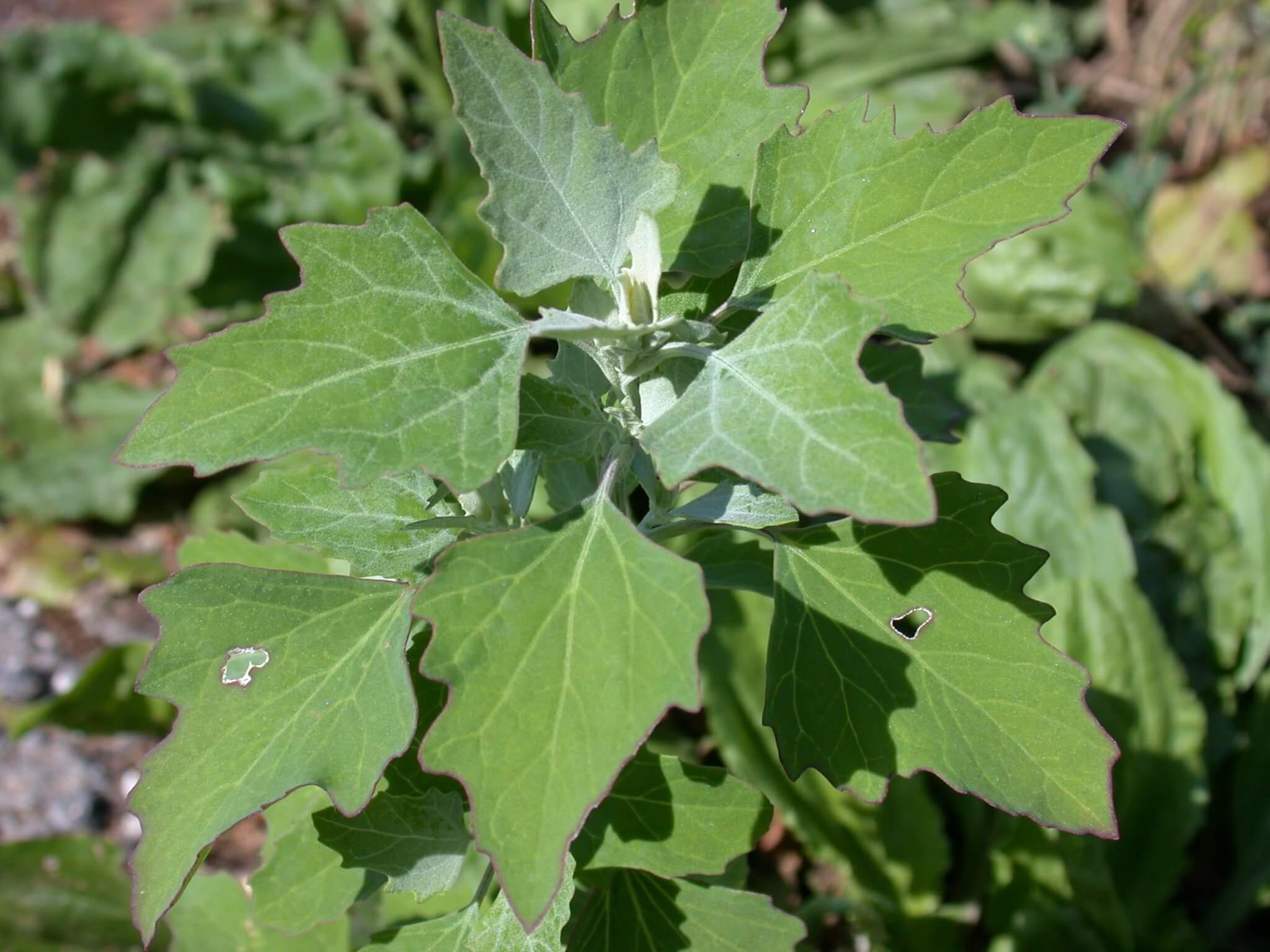
To keep going is to join the conversation between soil, microbe, and human.
🔒 Unlock the rest of the Living Plant Wisdom profile and read what the Earth has been whispering through weeds.