

Horsetail: Ancient Wisdom for Modern Agriculture
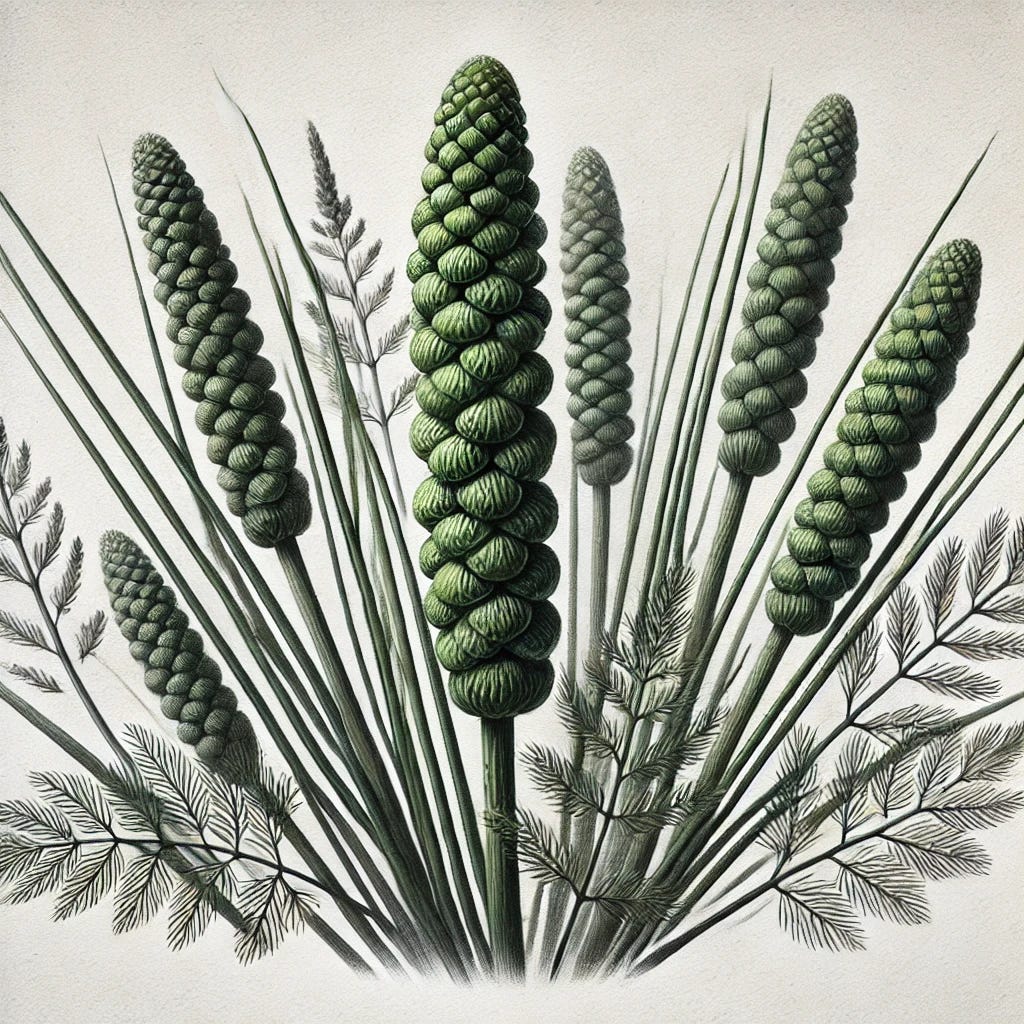
In the world of regenerative agriculture, few plants can claim the deep historical lineage of horsetail (Equisetum arvense). As a living fossil that has remained largely unchanged since the Paleozoic era, horsetail offers unique properties that make it particularly valuable in modern agricultural systems. Its survival through multiple extinction events speaks to its resilience and adaptability – qualities that are increasingly relevant in today's changing agricultural landscape.
Beyond the Ancient Lineage
While horsetail's prehistoric origins are fascinating, its contemporary value lies in its unique biochemical and structural properties. This remarkable plant stands out for its exceptional mineral accumulation capabilities, particularly silicon, making it a powerful tool for soil enhancement and plant health support.
Silicon Dynamics: Horsetail's Superpower
What truly sets horsetail apart from other agricultural allies is its extraordinary relationship with silicon:
Silicon Accumulation and Cycling
Concentrates up to 7% silicon in dried form
Transforms inorganic silicon into bioavailable forms
Creates silicon-rich soil environments
Enhances silicon availability for neighboring plants
Structural Innovation
Silica-reinforced cell walls
Unique hollow stem architecture
Extensive rhizome system reaching 6 feet deep
Natural soil aeration properties
Strategic Integration Points
For farmers looking to leverage horsetail's unique properties, several key applications emerge:
Soil Enhancement
Natural silicon supplementation
Soil structure improvement
Deep soil decompaction
Mineral cycling enhancement
Plant Health Support
Disease Resistance Building
Silicon-mediated immunity enhancement
Natural fungal protection
Structural reinforcement effects
Enhanced stress tolerance
Crop Quality Improvement
Enhanced nutrient uptake
Improved fruit quality
Better storage characteristics
Increased crop resilience
Unique Properties and Applications
Horsetail's distinctive characteristics make it particularly valuable in several agricultural applications:
Bioactive Preparations
Fermented plant extracts
Silica-rich sprays
Compost activators
Natural fungal suppressants
Soil Remediation
Heavy metal binding
Soil structure rehabilitation
Erosion control
Water retention improvement
Climate Resilience Features
In the context of climate change, horsetail offers several advantageous traits:
Deep water access through extensive root systems
Efficient water utilization
Temperature stress tolerance
Soil stabilization capabilities
Enhanced ecosystem resilience
Bridging Disciplines: Lesser-Known Aspects
Looking deeper into horsetail's role in agricultural ecosystems reveals some fascinating characteristics:
Silicon Technology
Unlike any other plant, horsetail possesses a unique ability to transform inorganic silicon into biologically active forms through a process that scientists are still working to fully understand. This silicon transformation capability makes it an invaluable tool for enhancing crop resilience and soil health in ways that artificial silicon supplements cannot match.
Hydrological Engineering
Horsetail demonstrates sophisticated water management capabilities through its segmented stem structure and deep rhizome system. These adaptations not only support its own survival but also create beneficial hydrological patterns in the soil that can help neighboring plants access water more effectively.
Mineral Transmutation
Research suggests that horsetail may be capable of facilitating unique mineral transformations in the soil, particularly in situations of mineral deficiency. This ability appears to be linked to its ancient evolutionary history and could explain its success in nutrient-poor environments.
Electromagnetic Properties
The high silica content and unique structural organization of horsetail create interesting electromagnetic properties that may influence soil dynamics and plant growth in subtle but important ways. This characteristic makes it particularly valuable in areas with electromagnetic stress or soil structural issues.
Microbial Synergies
Horsetail forms unique associations with soil microorganisms, particularly those involved in silicon cycling. These relationships appear to enhance the overall silicon availability in the soil ecosystem, benefiting not just horsetail but entire plant communities.
Practical Implementation
Successful integration of horsetail requires understanding its growth patterns and management needs:
Establishment Strategies
Controlled introduction to specific areas
Rhizome system management
Water level monitoring
Containment planning
Management Considerations
Regular monitoring of spread
Strategic harvest timing
Integration with other systems
Boundary maintenance
Economic Opportunities
Horsetail offers several potential revenue streams:
Direct Markets
Medicinal herb supply
Cosmetic industry materials
Biodynamic preparations
Agricultural amendments
Value-Added Processing
Silicon-rich extracts
Fermented preparations
Therapeutic products
Agricultural sprays
Future Research Directions
Several promising areas of research could expand our understanding of horsetail's potential:
Silicon Dynamics
Mechanisms of silicon transformation
Impact on soil biology
Effects on crop quality
Climate resilience applications
Agricultural Applications
Optimal preparation methods
Integration strategies
Synergistic combinations
Economic viability studies
Looking Forward
The future of horsetail in agricultural systems presents unique opportunities that distinguish it from other beneficial plants. Its extraordinary silicon-cycling capabilities position it as a key player in developing more resilient agricultural systems, particularly as we face increasing challenges from climate change and soil degradation.
The growing interest in silicon's role in plant health and stress resistance creates new opportunities for horsetail-based preparations and treatments. Early research suggests that horsetail-derived silicon supplements may be more effective than synthetic alternatives, potentially opening new markets for innovative farmers.
Particularly promising is horsetail's potential in addressing emerging agricultural challenges:
Climate Resilience
Enhanced drought resistance through silicon-mediated stress tolerance
Improved pest and disease resistance
Better crop quality and storage life
Natural soil structure improvement
Soil Regeneration
Deep soil decompaction through rhizome activity
Enhanced mineral cycling
Improved water retention
Natural soil structure building
Ecosystem Services
Water purification capabilities
Erosion control
Biodiversity support
Soil microbiome enhancement
For farmers looking to work with horsetail, several specific pathways show promise:
Developing silicon-rich agricultural amendments
Creating specialized preparations for crop health
Establishing managed horsetail plots for harvest
Integrating horsetail into water management systems
Participating in research on silicon dynamics in agriculture
The key to maximizing horsetail's potential lies in understanding and working with its unique biological capabilities rather than treating it as just another beneficial plant. Its combination of silicon transformation abilities, soil improvement properties, and stress resistance enhancement makes it particularly valuable as agriculture faces increasing environmental challenges.
As our understanding of silicon's role in agriculture deepens, horsetail's importance is likely to grow. Its demonstrated ability to enhance crop resilience while providing multiple ecosystem services positions it as a unique and valuable ally in the evolution of regenerative agriculture. The plant's ancient lineage offers wisdom from Earth's past that may prove crucial for agriculture's future.
This is excellent info. Thank you. I hadn’t yet discovered the power and utility of horsetail!